Feeling unwell during a holiday in Sardinia is stressful enough without worrying about a language barrier. If you are visiting from the United States or another English-speaking country, can you find a doctor who speaks English through your travel insurance or a local clinic?
English-speaking medical care can be found in Sardinia, but it is not guaranteed at every clinic or at every hour. Larger towns offer more healthcare options than small villages, and your travel insurer's assistance service may be the best first contact for a non-emergency appointment. Before choosing a provider, confirm that an English-speaking clinician is actually available and that the insurer will cover the visit.
Should I contact my travel insurance first?
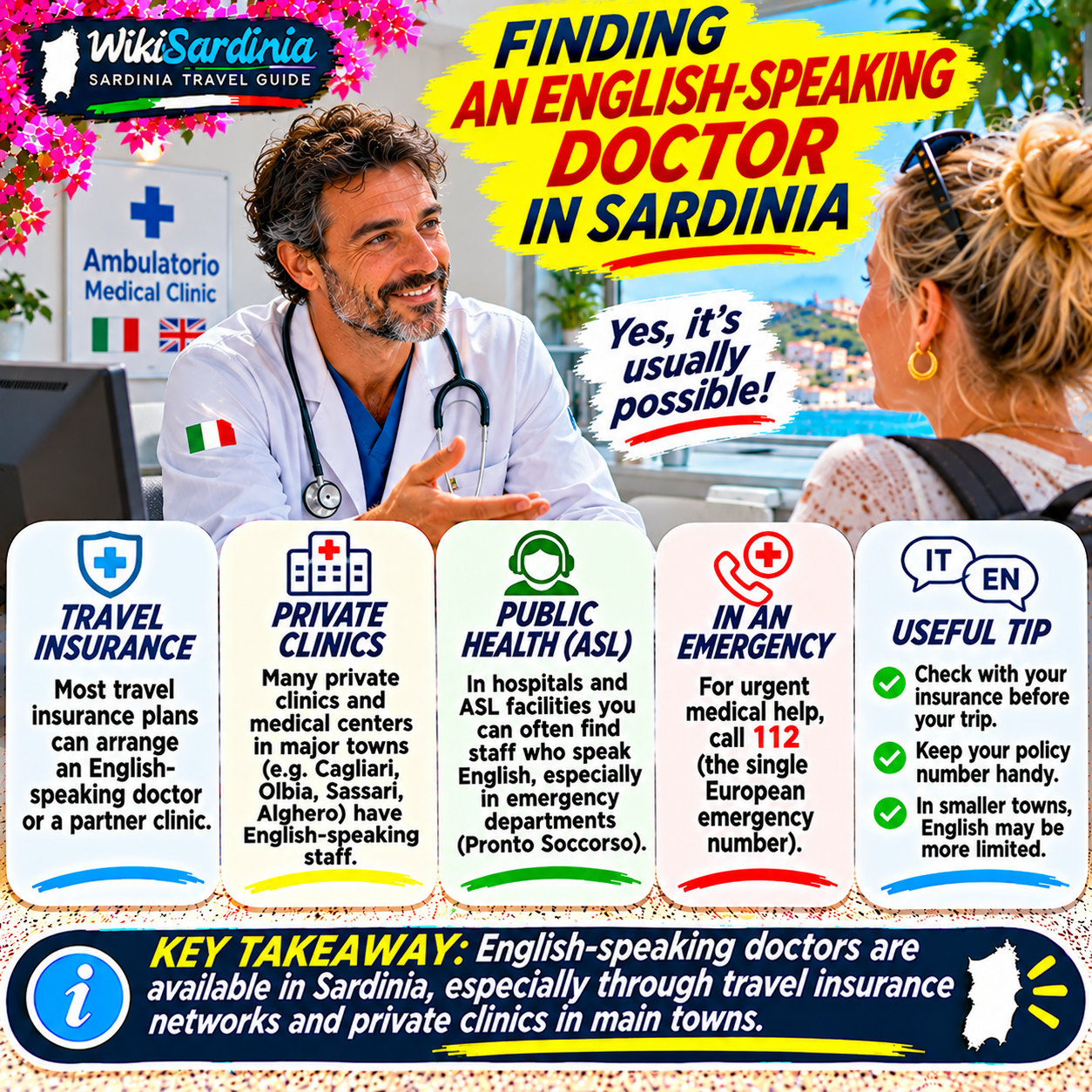
For a non-emergency medical problem, check your policy's 24-hour assistance number or app. Depending on the policy, the assistance team may recommend a provider, arrange an appointment, offer a translation service or authorize a telemedicine consultation. Some insurers have direct-billing arrangements with certain clinics; others require you to pay upfront and claim reimbursement. Do not assume your insurance company guarantees an English-speaking doctor or cashless treatment. Ask about the network, language, authorization requirements and any deductible before your visit.
Can I find an English-speaking doctor at a private clinic?
Private medical practices and clinics in places such as Cagliari, Olbia, Sassari and Alghero may be options for visitors seeking an appointment, but staff language skills vary. When contacting a clinic, ask whether the specific doctor seeing you speaks English, whether an interpreter is available, how soon you can be seen and what the consultation costs. An English-language website or a receptionist who speaks English does not necessarily mean the clinician does.
What if I am staying in a small Sardinian village?
Medical services may be more limited in smaller or remote communities, particularly outside normal office hours. Your accommodation host may be able to identify a nearby doctor or the appropriate local service, but do not rely solely on informal recommendations when the problem is urgent. Your insurer may suggest a provider in a larger town or a remote consultation if suitable. Ask how far the clinic is and whether you need a car or taxi.
Can I use the Italian public healthcare system?
Italy has a public health service, the Servizio Sanitario Nazionale (SSN), organized locally through health authorities and facilities. Visitors may be able to access necessary care, but fees and entitlements depend on residency, nationality, applicable agreements and the type of service. US visitors should not assume that a US health insurance card gives them free treatment in Italy. A European Health Insurance Card, where applicable, operates under different rules and is not a substitute for comprehensive travel insurance. Ask the facility and your insurer about expected charges.
What is a guardia medica or continuità assistenziale?
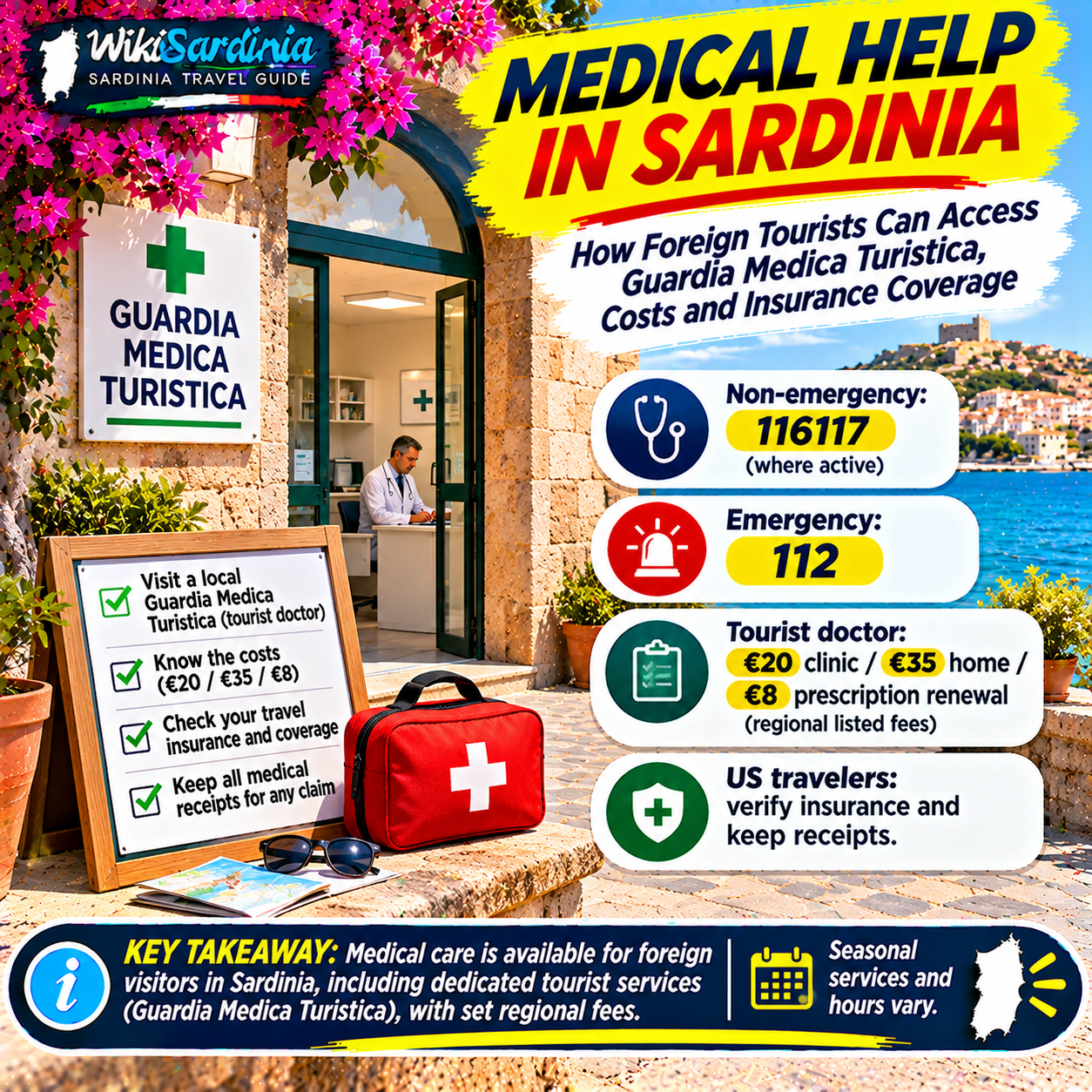
Continuità assistenziale, often called guardia medica, is an out-of-hours medical service for health concerns that cannot wait until a regular doctor's next working day but do not require emergency intervention. Access methods, service hours and eligibility can vary by local health authority, and language assistance is not guaranteed. Ask your accommodation, insurer or local health service how to contact the appropriate service in your area. Some tourist destinations may also offer seasonal healthcare services, but these should be verified for the exact date of travel.
What if I need emergency medical care?
For a life-threatening emergency, such as severe breathing difficulty, signs of a stroke, chest pain or major trauma, call 112 immediately. Do not wait for approval from your travel insurer. Emergency departments are called Pronto Soccorso. Staff may be able to communicate in English, but this cannot be guaranteed; ask for language support where available. Be ready to state your location, symptoms and any important medical conditions or medications. If communication is difficult, use short, clear phrases and ask someone nearby to help translate without delaying care.
Will I have to pay upfront?
Possibly. Some private clinics expect payment at the time of the appointment. Public facilities may charge according to the visitor's entitlement and treatment. Whether an insurer pays directly depends on the policy and provider. Request an itemized invoice, proof of payment and a medical report, and retain prescriptions and pharmacy receipts. Ask your insurer whether original documents or particular forms are required.
Can I arrange a video consultation in English?
Some travel insurers and independent medical providers offer telemedicine. This can be useful for certain non-emergency problems, but it is not suitable for every symptom and may not replace a physical examination or local prescription. Confirm the clinician's qualifications, the service's jurisdiction and how prescriptions would be handled in Italy. If symptoms are severe or worsening, seek in-person care.
What should I bring to the appointment?
Bring your passport or other identification, travel insurance details, a list of medications and allergies, and any relevant medical documents. If you take prescription medicines, keep the packaging or a photo showing the active ingredient and dosage. A short written description of your symptoms and when they started can help bridge language gaps. Ask whether the clinic can provide the medical report in English if you need it for your insurer.
Useful Italian phrases
“C'è un medico che parla inglese?” means “Is there a doctor who speaks English?” “Vorrei prenotare una visita medica.” means “I would like to book a medical appointment.” “Ho un'assicurazione di viaggio.” means “I have travel insurance.” “Devo pagare in anticipo?” means “Do I need to pay upfront?” And “Mi serve assistenza medica urgente.” means “I need urgent medical assistance.”
How to prepare before your trip
Save your insurer's emergency assistance number, policy number and coverage conditions offline. Check whether your policy covers pre-existing conditions, outpatient visits, telemedicine, emergency transport and repatriation, and whether you must call for authorization before non-emergency care. If language support is essential, ask your insurer what it can actually arrange in Sardinia before you travel. Download a translation tool for offline use, but never rely on an app alone for urgent medical decisions.
The WikiSardinia takeaway
English-speaking doctors are available in some parts of Sardinia, but access is not universal or guaranteed. For non-emergency problems, contact your travel insurer and confirm the clinician's language, appointment availability and payment arrangements. For a serious emergency, call 112 immediately and seek the nearest appropriate emergency care, regardless of language concerns.