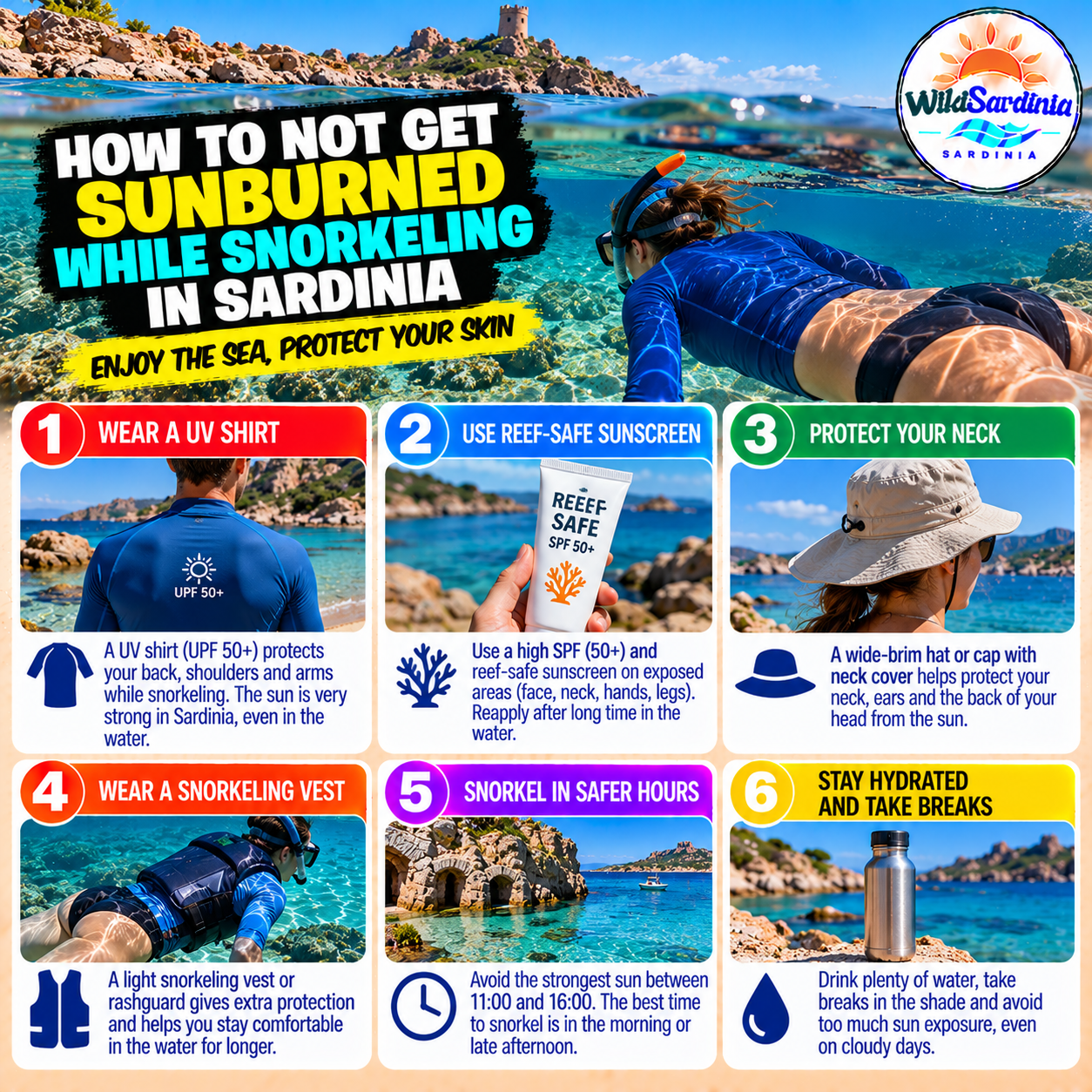
Snorkelling in Sardinia is a wonderful way to see clear water and rocky coves, but it is surprisingly easy to get sunburned while looking underwater. Your back, shoulders, calves and the backs of your legs can stay exposed for a long time, especially when you float face-down and do not notice the sun. The best strategy is to cover up first, then protect the skin that remains exposed.
1. Wear a long-sleeved UV rash guard
A lightweight, long-sleeved rash guard with a stated UPF rating is one of the most practical options for snorkelling. It helps protect your back, shoulders and arms without needing to reapply sunscreen to all those areas. Choose a close-fitting swim top designed for water use, and consider UV-protective swim leggings if your legs burn easily.
A regular T-shirt may become heavy when wet and does not necessarily provide a reliable level of UV protection. Look for a garment labelled UPF 50 or UPF 50+ and follow the care instructions, since wear and stretching can affect performance.
2. Apply water-resistant sunscreen to exposed skin
Use broad-spectrum sunscreen with SPF 30 or higher on skin not covered by your clothing, including the back of your neck, ears, face, hands and lower legs. Apply it according to the label before going into the water. No sunscreen is completely waterproof: water-resistant products still need to be reapplied as directed, including after swimming, towel-drying or heavy sweating.
Ask a pharmacist or healthcare professional if you need help choosing a sunscreen for sensitive skin. Keep sunscreen out of your eyes and avoid applying it to equipment surfaces where it could make them slippery.
3. Remember that water does not block UV rays
Being in the sea does not remove the risk of sunburn. UV exposure can remain significant near the water, and reflections from the surrounding environment may add to exposure. A cool breeze or comfortable water temperature can make it harder to notice how much sun you are getting.
4. Take breaks in shade
Plan shorter snorkelling sessions and return to shade between swims, especially around the middle of the day when UV levels are often high. Check the local UV index and weather forecast, and consider snorkelling earlier or later when conditions are suitable. Do not extend a session just because you feel cool in the water.
5. Protect the back of your legs and feet
If you snorkel face-down, the backs of your thighs and calves may be exposed for a long time. UV swim leggings can help, while water shoes protect your feet from rough ground but should not be treated as sun protection for uncovered skin. Check the fit of all clothing and equipment before entering the sea.
6. Snorkel safely as well as comfortably
- Choose a sheltered spot and check wind, currents and sea conditions before entering.
- Never snorkel alone in unfamiliar water; stay with a buddy and keep track of the exit point.
- Drink water and take breaks on shore.
- Stop if you feel dizzy, weak, unusually hot or unwell.
- Keep a top or cover-up ready for the walk back and avoid prolonged exposure after the swim.
What if you already have sunburn?
Get out of the sun, cool the skin with a cool shower or damp cloth, drink water and avoid further UV exposure until the skin has healed. Seek medical advice if you have severe blistering, extensive burns, fever, confusion or signs of dehydration.
The easiest snorkelling sun-protection routine
Before heading into the water, put on a long-sleeved UPF rash guard, apply water-resistant sunscreen to all exposed skin and plan shade breaks. Reapply sunscreen as directed on its label and check the UV forecast. In Sardinia’s bright coastal conditions, protecting your back before you snorkel is much easier than dealing with a painful burn afterwards.