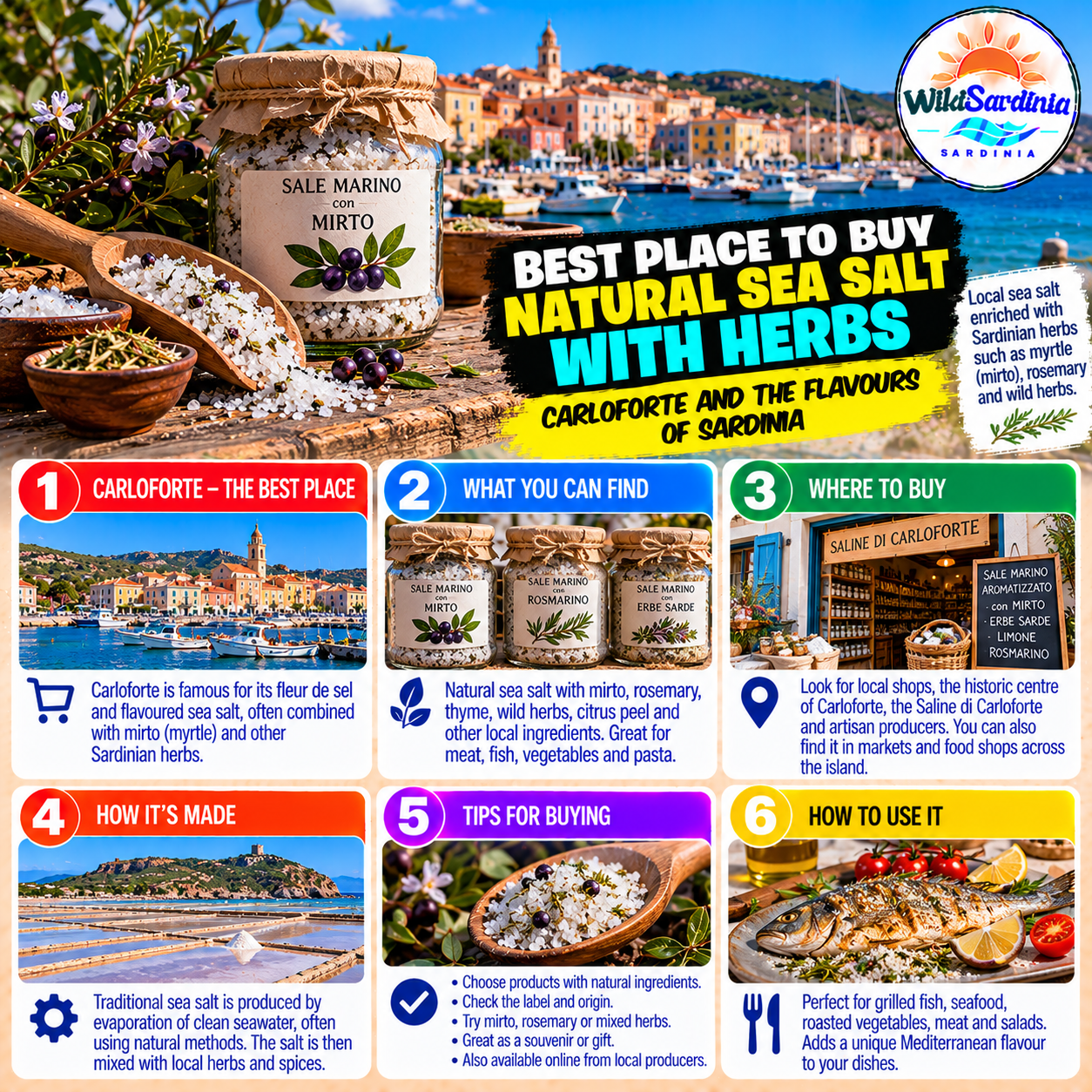
A small jar of sea salt flavoured with herbs can make a useful souvenir from Sardinia, especially if you enjoy cooking with Mediterranean ingredients. If you are visiting Carloforte, explore local food shops and artisan-producer outlets and ask whether they stock salt flavoured with myrtle (mirto), rosemary or other herbs. Availability varies, so treat these as products to look for rather than guaranteed local specialities at every shop.
Why look in Carloforte?
Carloforte, on San Pietro Island, is known for its distinctive Ligurian-influenced culture and local food traditions. It is a pleasant place to browse regional products, but do not assume that every jar labelled as Sardinian herb salt was produced there. Check the label or ask the seller where the salt was harvested, processed and flavoured.
Where to look for flavoured salt
- Local food shops: ask for sale aromatizzato or sale marino alle erbe.
- Artisan and farm-product outlets: look for jars that identify the producer and list all ingredients.
- Markets and food fairs: browse carefully and check whether the seller can explain the origin of the product.
- Specialist Sardinian-food shops: these may carry products from different parts of the island, so distinguish locally made salt from regional products sourced elsewhere.
Before making a special trip for a particular brand or variety, contact the shop or producer to confirm current stock and opening hours.
What flavours might you find?
Depending on the producer, flavoured sea salts may include myrtle, rosemary, thyme, wild herbs, citrus zest or other seasonings. Recipes differ, and the phrase “natural” does not mean that every product has the same ingredients or production method. Read the ingredient list, especially if you have allergies or need to limit sodium.
How to choose a good product
- Read the ingredients: check whether the herbs are listed clearly and whether any additives are included.
- Check the origin: find out where the salt was produced and where the herbs were grown or collected.
- Look for producer details: a named producer and contact information make it easier to ask questions.
- Inspect the packaging: choose a sealed, food-safe container with clear labelling.
- Compare the blend: some salts have a strong herbal aroma, while others are more subtle.
How to use Sardinian herb salt
A little flavoured salt can season grilled fish, roasted vegetables, potatoes, legumes, salads or simple tomato dishes. Add it gradually because the saltiness and intensity of the herbs vary between blends. If the mix contains aromatic ingredients such as myrtle or rosemary, try it first on a simple dish where the flavour can stand out.
Useful Italian phrases
- “Avete sale marino aromatizzato alle erbe?” — Do you have sea salt flavoured with herbs?
- “È aromatizzato al mirto?” — Is it flavoured with myrtle?
- “Dove viene prodotto il sale?” — Where is the salt produced?
- “Quali ingredienti contiene?” — What ingredients does it contain?
A practical Sardinian food souvenir
Carloforte is a good stop for exploring local food shops and asking about regional products. If you find a jar of herb salt, check the ingredients, producer and origin rather than relying on the packaging or a traditional-looking label alone. That way, you can choose a flavour you enjoy and understand exactly what you are taking home.