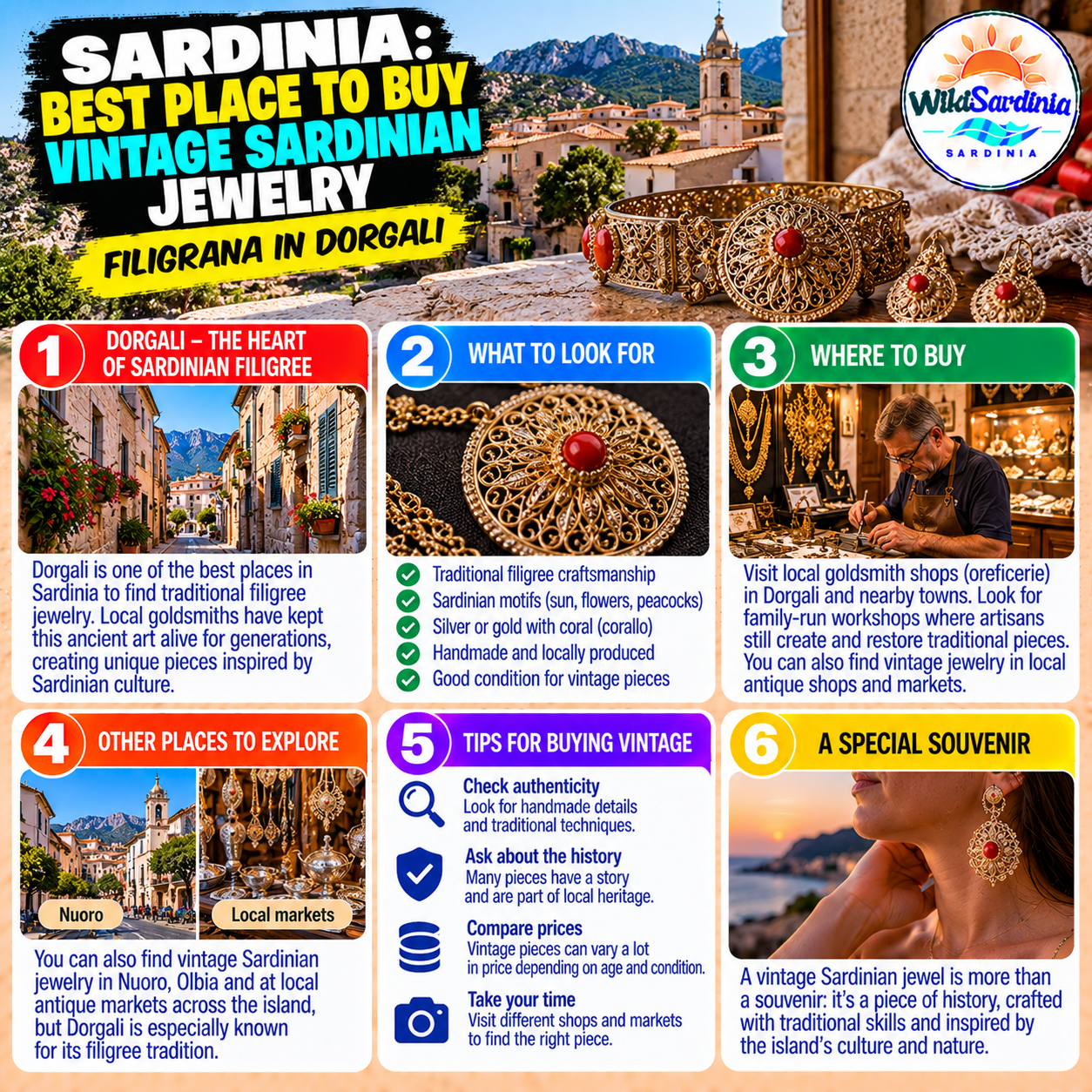
A piece of vintage jewellery can be a memorable souvenir of Sardinia, especially when it reflects the island’s traditional metalworking and filigree skills. If you are interested in delicate gold or silver designs, Dorgali is a worthwhile place to start exploring: the town is associated with Sardinian craft traditions, including jewellery. For a genuine vintage find, however, look beyond the style and ask about the individual piece’s age, materials and maker.
Why start in Dorgali?
Dorgali, in eastern Sardinia near the Gulf of Orosei, is known for its local craft heritage. You can look for jewellers, artisan workshops and shops that sell Sardinian-made pieces. Some focus on contemporary work inspired by traditional designs rather than vintage jewellery, so ask specifically whether they have older pieces or can recommend a reputable seller.
Shop opening hours and stock change, and not every workshop operates as a walk-in shop. Check current details before making a special trip.
What is Sardinian filigree?
Filigree is a technique that uses fine threads of precious metal, twisted or arranged into delicate decorative patterns and joined together. Sardinian jewellery includes a range of regional styles and motifs, and the materials and techniques vary by maker and period. A piece that resembles traditional filigree is not automatically old or locally made.
Where to look for vintage pieces
- Established jewellers in Dorgali: ask whether they sell pre-owned or vintage jewellery and whether they can provide documentation.
- Artisan workshops: useful for learning about traditional techniques and comparing old pieces with newly made designs.
- Antique shops and specialist dealers: check the seller’s reputation and ask for a written description of the item.
- Local markets and fairs: browse carefully, but do not assume an item is antique or Sardinian-made just because it is sold locally.
You can also explore jewellery shops and antique dealers in other Sardinian towns, including Nuoro and Olbia. Availability varies, so confirm that a seller has the type of piece you want before travelling.
How to check a vintage Sardinian jewel
Vintage jewellery can differ greatly in age, condition and value. Before buying, ask the seller to explain what is known about the item and what can actually be verified.
- Materials: check whether the piece is gold, silver, plated metal or a combination. Look for appropriate hallmarks, while remembering that marks alone may need expert interpretation.
- Age and provenance: ask when and where it was made, and whether the seller has receipts, records or other supporting information.
- Craftsmanship: inspect joins, clasps, settings and fine wirework for damage or repairs.
- Condition: check for missing components, loose stones, worn clasps or repairs that could affect the price.
- Documentation: request an itemised receipt with the seller’s details and a clear description of the materials.
If the piece is expensive, consider having it assessed by a qualified jeweller or independent expert before committing to the purchase. Do not rely only on a seller’s claim that an item is antique, rare or made from precious metal.
Questions to ask in Italian
- “È un gioiello vintage o di nuova produzione?” — Is this vintage or newly made?
- “È realizzato in filigrana?” — Is it made using filigree?
- “Di che materiale è?” — What material is it made from?
- “Si conoscono l’epoca e la provenienza?” — Are its age and provenance known?
- “È possibile avere una ricevuta con la descrizione del pezzo?” — Can I have a receipt describing the item?
Vintage or newly made: which should you choose?
A newly made jewel from a local artisan can be a good choice if you want to support a craftsperson and know who made your piece. Vintage jewellery may offer a different character and history, but its age and origin can be harder to establish. Decide whether your priority is traditional design, verified age, precious-metal content or the story behind the object.
Take home a piece with a story
Dorgali is a rewarding starting point for discovering Sardinian jewellery traditions, including filigree-inspired work. Visit reputable sellers, ask clear questions and check the materials, condition and provenance of any vintage item. The best purchase is not simply the one that looks traditional, but the one whose quality and history are explained honestly.