A traditional knife from Pattada can be a memorable Sardinian souvenir, especially if you buy it directly from an artisan who can explain how it was made. But not every knife sold to visitors has the same origin, materials or level of craftsmanship. Before paying, take a few minutes to check the maker, ask clear questions and get the details in writing.
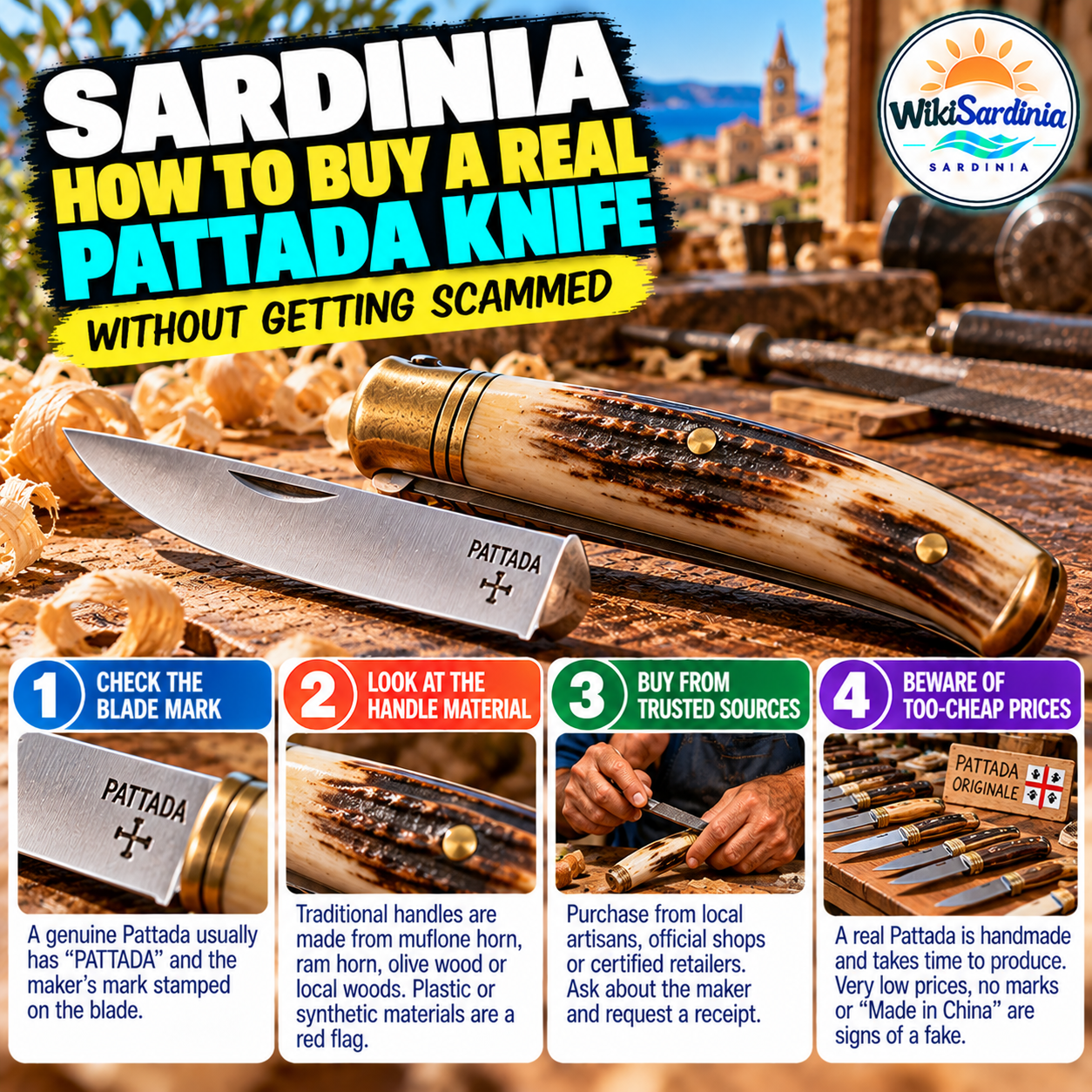
The Pattadese knife, often called resolza pattadesa, is associated with the town of Pattada in northern Sardinia. Its traditional design typically features a folding steel blade and a curved handle made from horn. The regional tourism authority highlights Pattada’s knife-making tradition and its workshops. See the official SardegnaTurismo guide to Pattada.
1. Buy from a maker who can tell you who made it
If authenticity matters, start with an artisan’s workshop or a reputable seller who can identify the maker. Ask for the maker’s full name, workshop location and whether the knife was made by them or sourced from another producer. A seller who can explain the piece’s origin is a better starting point than a vague “Sardinian style” label.
Pattada has working knife-making workshops, and the Sardinian Artisan Crafts archive entry for the Pattada knife describes the traditional form and handmade production. Use it to learn the vocabulary and features, not as a claim that every authentic knife must look identical.
2. Look for the maker’s mark—but do not trust a stamp alone
Ask whether the blade or another part of the knife carries the maker’s name, logo or stamp. Then ask the seller to identify that mark and show you how it connects to the workshop. A genuine-looking stamp can be copied, and not every handmade piece uses the same marking system, so the mark should support the story rather than replace it.
Check that the information on the product description, receipt and maker’s explanation matches. If the seller cannot name the maker, gives conflicting answers or claims that a generic stamp automatically proves authenticity, pause before buying.
3. Understand the horn handle
The traditional Pattadese handle is often made from horn, including ram or mouflon horn. The natural grain and colour variations can make each handle distinctive. The Corporazione Sarda Coltellinai guide to Sardinian knives explains the different traditional forms and materials used in local knife-making.
However, a horn handle alone does not prove that a knife was made in Pattada. Horn from different animals and other materials may be used across Sardinian knife traditions, and individual artisans offer different models. Ask the seller to specify the handle material for that exact piece. If they advertise it as mouflon horn, ask them to confirm that claim on the receipt or product description.
4. Examine the workmanship carefully
Look closely at how the handle scales, pins and metal fittings meet. They should look deliberately fitted, without obvious loose parts, rough unfinished edges or unexplained gaps. Open and close the knife only if the seller permits it, and observe whether the mechanism feels consistent and secure. The blade should be finished cleanly, and any decorative details should be described accurately.
Handmade objects naturally vary, so small differences are not automatically defects. Focus on the overall quality and whether the finish matches the price and the seller’s claims. If you are buying a collector’s piece, ask what makes that particular knife different from a simpler model.
5. Ask for a receipt and written details
Before paying, request a receipt showing the seller’s business details, price and a useful description of the knife. If you are paying extra for a named maker, a specific horn type, damascus steel or custom engraving, ask for that feature to be recorded. Keep the receipt and any product card, packaging or authenticity documentation together.
Be cautious of pressure to pay immediately, unexplained discounts on supposedly rare pieces, or claims such as “museum quality” without a clear explanation. Compare a few examples from identifiable makers before deciding whether the price makes sense.
6. Know what you are buying: souvenir, working tool or collector’s piece
Not every traditional knife is made to the same specification. Some are simple craft pieces; others feature elaborate finishes, unusual steels or custom details. Ask what materials are used, where the knife was made and what maintenance it needs. A higher price should come with a clear reason, not just a dramatic story.
If you want to learn more about the tradition, the official regional tourism page for Pattada describes the town’s knife-making heritage, while the Sardinian Artisan Crafts archive provides a useful description of the Pattadese form.
7. Remember that buying a knife is not the same as being allowed to carry it
A traditional craft object may still be subject to rules on carrying, transporting or taking it across borders. Do not assume that a purchase receipt gives you permission to carry the knife in public. Check the current Italian rules and the requirements of your airline or other transport provider before travelling with it, and keep it packed safely during transport.
Your quick checklist before paying
- Can the seller identify the maker and the workshop?
- Have you checked the maker’s mark, if one is present, and asked what it means?
- Has the seller clearly identified the handle material rather than relying on appearance alone?
- Does the workmanship match the price and description?
- Will you receive a receipt with the seller’s details and any important material or maker claims?
- Have you checked the rules for transporting the knife after purchase?
Buy the craft, not just the label
The best way to avoid being misled is to buy from an identifiable artisan, ask specific questions and keep written proof of what was promised. A maker’s mark and a horn handle can be useful clues, but neither is a magic guarantee on its own. Take your time, compare pieces and choose a knife whose origin and craftsmanship the seller can explain with confidence.