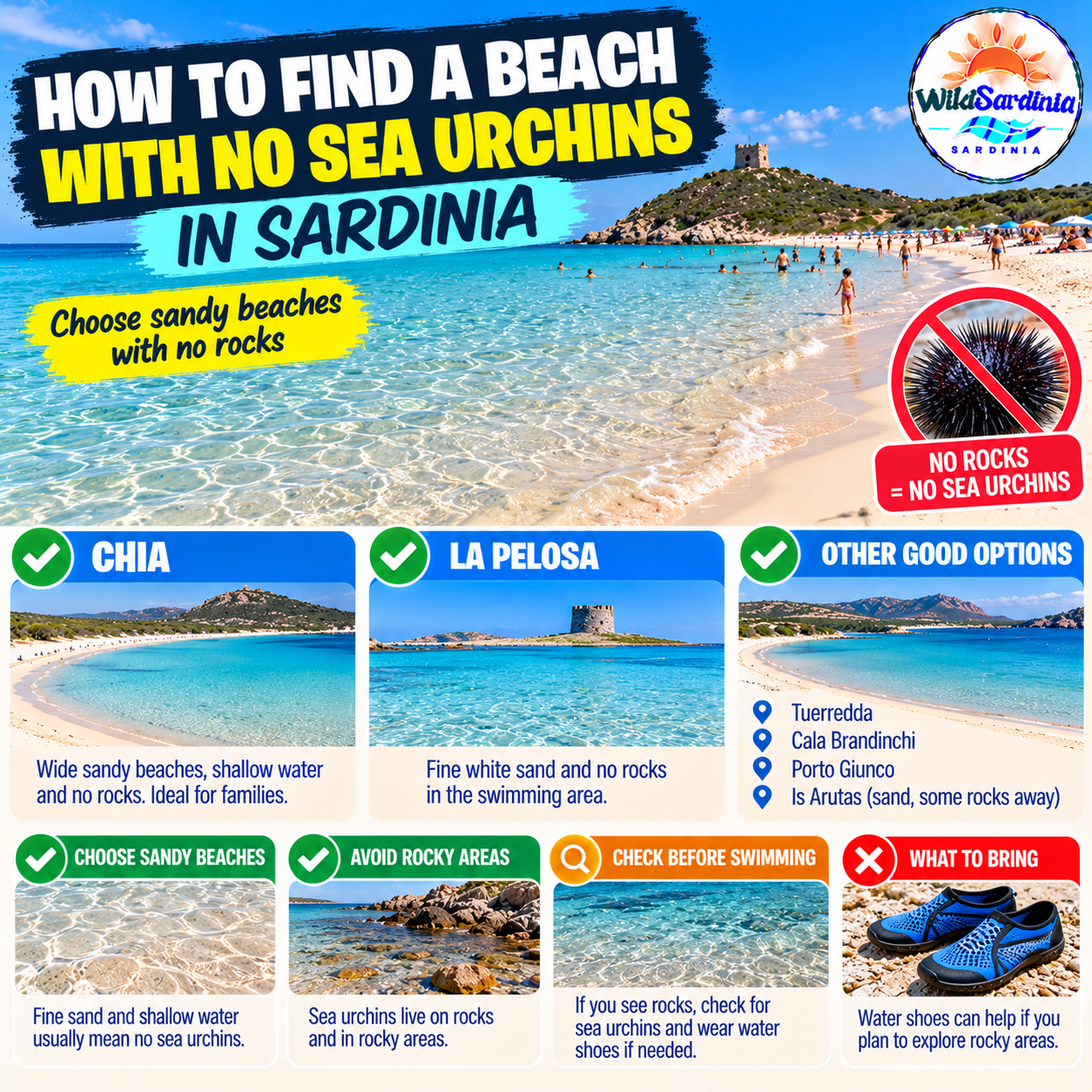
If you want to swim in Sardinia without worrying too much about sea urchins, start by choosing a beach with a broad sandy seabed and an easy sandy entry into the water. Beaches such as Chia in southern Sardinia and La Pelosa near Stintino are known for their sandy shoreline and shallow turquoise water. However, no beach can be guaranteed completely free of sea urchins: they are more commonly associated with rocky areas, and conditions can vary from one section of the coast to another.
1. Look for sand both on the beach and underwater
A wide sandy beach is a useful starting point, but the seabed matters too. Sea urchins often shelter among rocks and crevices, so a sandy entry point with fewer nearby rocks may reduce the chance of encountering them. Check the water from shore before entering and avoid stepping into rocky patches where you cannot see your footing clearly.
2. Chia: choose the sandy sections
The beaches around Chia are known for pale sand and clear water. Choose a section where the shoreline continues into a sandy seabed, rather than entering near rocks or rocky headlands. Conditions can differ across the same beach, so look carefully before swimming and follow any local safety signs.
3. La Pelosa: beautiful sand, but still check the seabed
La Pelosa, near Stintino, is famous for its pale sand and shallow water. The main sandy areas can be a good option for swimmers who prefer to avoid rocky entry points, but that does not mean sea urchins are impossible to find nearby. Check the exact spot where you plan to enter and do not wade over submerged rocks just because the water looks clear.
4. Use water shoes when the seabed is uncertain
Water shoes with a sturdy sole can help protect your feet when entering the sea, especially around mixed sand-and-rock shorelines. They are not a reason to walk blindly over rocks, and they do not replace looking where you step. On soft sand, you may not need them, but they can be useful if the seabed changes a few metres from shore.
5. Avoid rocky areas and never handle sea urchins
- Enter the water over visible sand where possible.
- Stay away from rocky crevices and submerged boulders.
- Do not stand on rocks or reach into holes to inspect the seabed.
- Keep children close and explain not to touch marine life.
- Follow lifeguard instructions and local beach notices.
Can you find a beach with no sea urchins at all?
There is no reliable way to promise that a beach has zero sea urchins. Their presence depends on habitat and local conditions, and even a mostly sandy beach can have rocky sections nearby. It is more accurate to choose a sandy access point and check the seabed than to rely on a list claiming a beach is completely sea-urchin-free.
What if you step on a sea urchin?
Get out of the water carefully and avoid putting more weight on the injured area. Sea urchin spines can break in the skin; do not dig deeply for fragments or attempt risky removal. Seek medical advice if spines are embedded, pain is severe, the injury is near a joint or sensitive area, or you notice signs of infection. If you are unsure how serious the injury is, ask a lifeguard or healthcare professional for help.
The simplest rule for a worry-free swim
For a lower-risk starting point, look for sandy entry areas at Chia or La Pelosa, inspect the seabed before stepping in and avoid rocky patches. Neither destination is guaranteed sea-urchin-free, but choosing sand over rocks and watching your footing can help you enjoy Sardinia’s clear water with greater peace of mind.