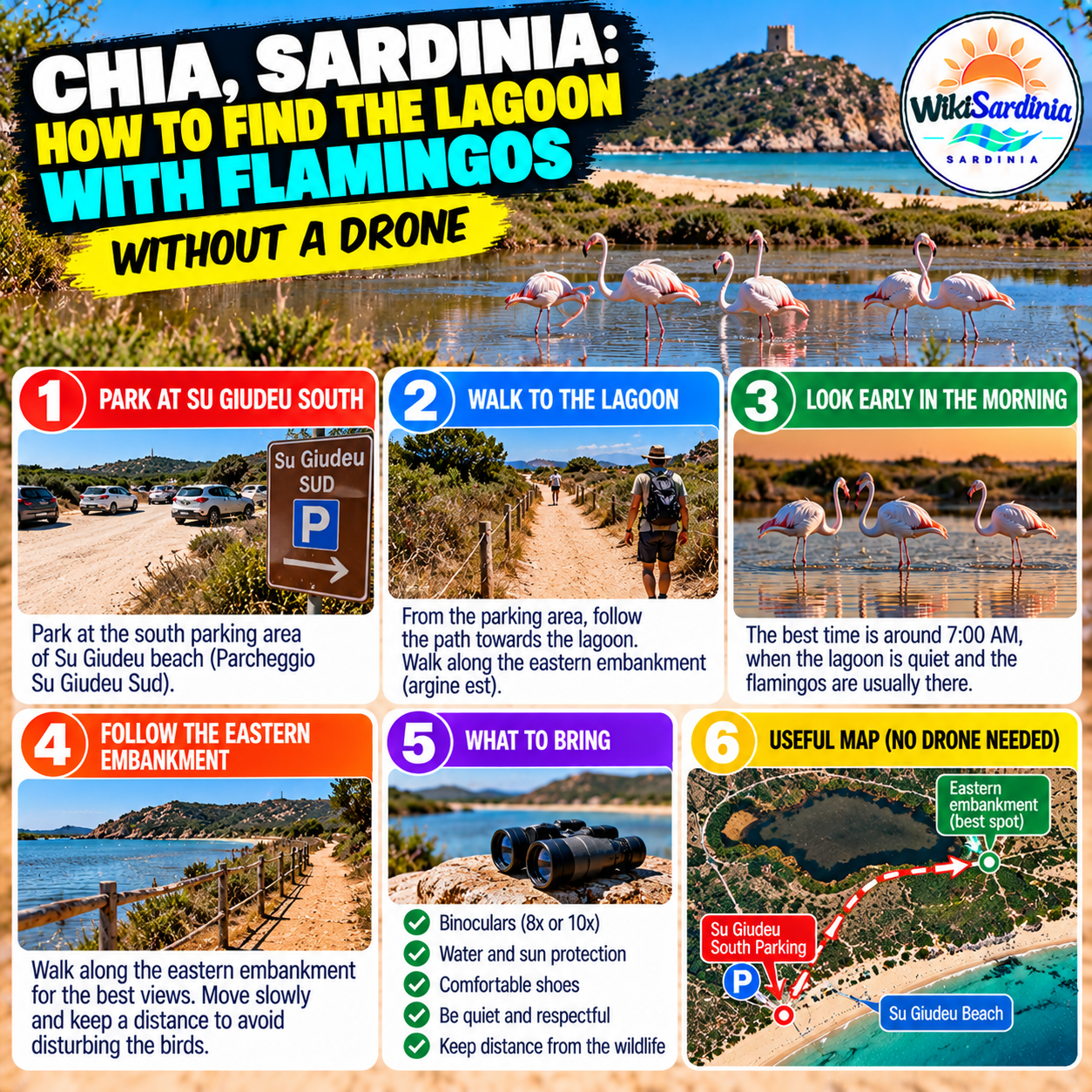
You do not need a drone to enjoy the flamingos around Chia in southern Sardinia. With a little patience, binoculars and a respectful distance, you may be able to spot these elegant birds from shore. The lagoons and wetlands near Su Giudeu can attract birdlife, but flamingos move between feeding areas, and sightings are never guaranteed at a particular spot or hour.
Where to look around Chia
Start by checking the lagoon and wetland areas near Chia and Su Giudeu from public, permitted viewpoints. The landscape includes beaches, shallow water and sensitive wetland margins, so do not assume every embankment or track is open to visitors. Follow signs, barriers and local guidance, and stay on established paths.
Some visitors recommend approaching from the southern Su Giudeu parking area and looking along the lagoon’s eastern edge. Treat this only as a possible orientation tip, not a guaranteed route or an official flamingo viewing point. Access conditions can change, and some margins may be unsuitable or restricted. Check current local information before setting off.
When is the best time to see flamingos?
Early morning can be a pleasant time for birdwatching: the light is softer, the area may be quieter and temperatures are often more comfortable. Around 7 a.m. can be worth trying, especially in warmer months, but it is not a reliable promise that flamingos will be present. Their location depends on feeding, water levels, weather and seasonal movements.
If you do not see any birds, give the area time and scan the shallows patiently. Never cross a barrier or approach the water’s edge just to get a closer look.
How to spot them without a drone
- Bring binoculars. An 8x or 10x pair can help you observe birds from a respectful distance.
- Scan slowly. Look for groups of pale pink birds in shallow water, then check carefully for movement and long legs.
- Use the light. Morning or late-afternoon light can make it easier to see birds against the water, depending on the direction you are facing.
- Stay quiet and still. Sudden movement and loud voices can disturb wildlife.
- Skip the drone. A drone can stress birds and may be restricted under local rules, especially in sensitive natural areas. Enjoy the view from the ground instead.
Protect the lagoon and its wildlife
Wetlands are important feeding and resting areas for birds. Keep a generous distance from flamingos and other wildlife, never try to make them fly for a photograph, and do not feed them. Avoid entering shallow water, reeds or muddy margins, where nests and feeding areas may be difficult to see.
- Stay on marked or clearly permitted paths.
- Respect fences, signs and any seasonal access restrictions.
- Do not leave litter or food scraps.
- Keep dogs under control and away from birds; follow local rules on dogs near beaches and wetlands.
- Use a camera zoom or binoculars instead of approaching the birds.
What to bring
A pair of binoculars, drinking water, sun protection and comfortable walking shoes are usually enough for a short birdwatching stop. Bring a charged phone and check your route before leaving, but do not rely on a map pin as proof that a path is public. In warm weather, avoid long walks during the hottest part of the day.
If the flamingos are not there
Wildlife is unpredictable. If the lagoon looks empty, do not chase sightings by walking through protected vegetation or driving onto unofficial tracks. Enjoy the beach and surrounding landscape, or ask a local visitor information service whether there are current, responsible birdwatching viewpoints nearby.
A quiet way to enjoy Chia’s flamingos
For the best chance of seeing flamingos around Chia, arrive early if it suits your plans, bring binoculars and observe from a safe, permitted viewpoint. The Su Giudeu area is a useful place to investigate, but neither a particular embankment nor 7 a.m. guarantees a sighting. The best wildlife encounter is one that leaves the birds undisturbed—and does not require a drone.