
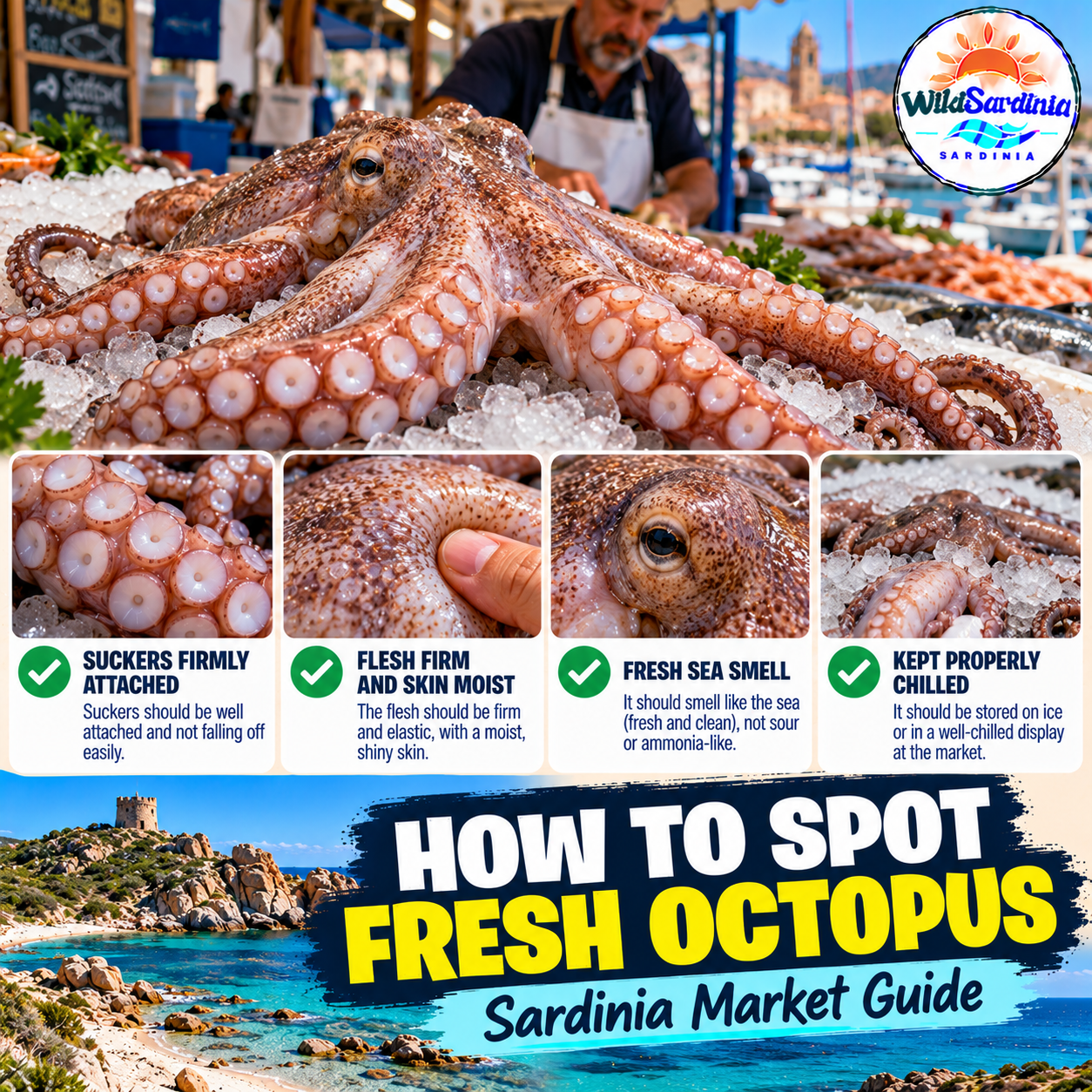
Fresh octopus is a favourite in Sardinian seafood cooking, but it helps to know what to look for at the fish counter. The main clues are the condition of the skin, the firmness of the flesh, the suckers and—especially—the smell. No single visual sign can guarantee freshness, so assess the whole product and buy from a reputable fishmonger who keeps seafood properly chilled.
1. Check the suckers
The suckers should be attached to the arms rather than falling off or looking badly damaged. Well-adhered suckers are one useful freshness clue for octopus and other cephalopods. Do not pull at the tentacles yourself; ask the fishmonger if you need a closer inspection.
2. Look for firm, moist flesh
The body and arms should look intact and moist, not dried out, mushy or breaking down. The skin should generally remain attached to the flesh. Avoid octopus with extensive yellowing or pinkish discolouration, skin that peels away easily, or a visibly deteriorated surface.
3. Smell it: fresh sea, not sour or ammonia-like
A fresh octopus should have a mild, clean marine smell. A strong sour, rotten or ammonia-like odour is a warning sign. If the seafood counter itself smells unpleasant, choose another seller. Never taste raw seafood to test whether it is fresh.
4. Make sure it is kept cold
Octopus is a perishable product and should be kept properly refrigerated or displayed close to melting ice. Avoid seafood that has been left warm or is sitting in an unclean pool of liquid. Ask the vendor how the product has been stored and take it home promptly in a cool bag if the journey will take time.
5. Ask whether it is fresh or thawed
Octopus may be sold fresh or after thawing, and thawed product can still be good quality when handled correctly. Ask the fishmonger directly whether it has been previously frozen, and check the required product information. Appearance alone cannot reliably tell you the full storage history.
6. Buy from a seller you trust
- Choose a clean counter with good refrigeration and careful handling.
- Look for intact arms and skin rather than damaged or deteriorating parts.
- Ask about origin, catch or production information, and whether it has been thawed.
- Have the fishmonger handle the octopus if a closer check is needed.
- Transport it cold and follow safe storage and cooking guidance.
Do attached suckers guarantee freshness?
No. Suckers that remain attached are a useful sign, but they do not prove that the octopus is safe to eat. Smell, skin condition, flesh texture, refrigeration and the seller’s handling practices all matter. If you are unsure, choose another specimen or ask the fishmonger for advice.
A quick checklist at the Sardinian market
Look for firmly attached suckers, intact moist skin and firm-looking flesh; expect a clean sea-like smell; and make sure the octopus is properly chilled. Avoid sour or ammonia-like odours, mushy flesh and skin that comes away easily. These checks can help you make a better choice, but they cannot replace proper cold storage and safe preparation at home.
Further reading: Altroconsumo — How to recognise fresh molluscs; FDA — Selecting and serving fresh and frozen seafood safely.