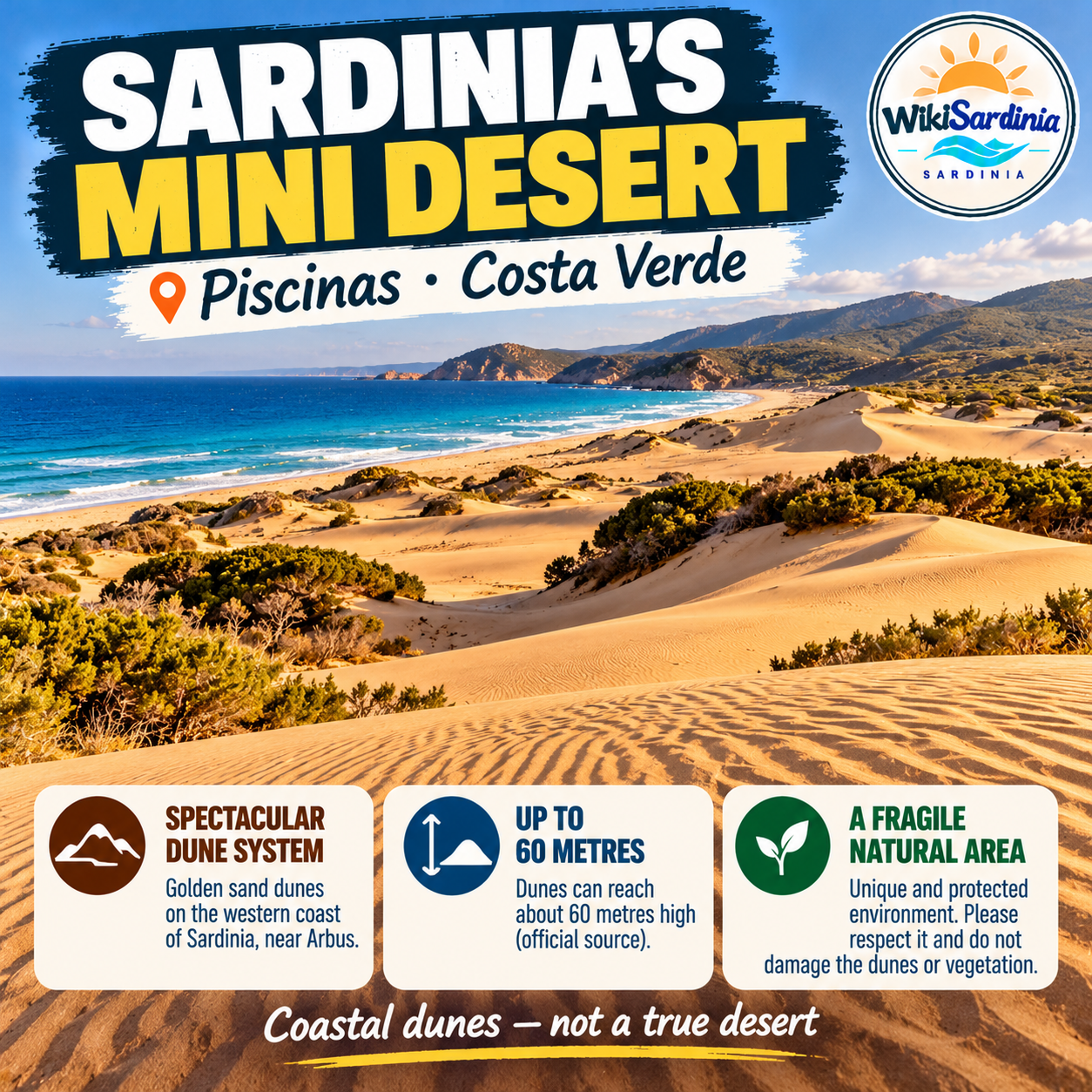
Yes and no: Sardinia does not have a true climatic desert, but it does have a landscape that can look surprisingly Saharan. The Dunes of Piscinas, on the Costa Verde in the municipality of Arbus, form a spectacular system of golden coastal dunes beside the Mediterranean Sea. They are often described as Sardinia’s “mini desert.”
Where is Sardinia’s mini desert?
Piscinas lies on the island’s west coast, in south-western Sardinia. The dunes stretch inland from a long, wild beach, with Mediterranean scrub and wind-shaped vegetation breaking up the golden sand. The area feels remote compared with many of Sardinia’s better-known summer resorts, and the surrounding coast is exposed to the Mistral wind.
The official SardegnaTurismo guide describes dunes reaching around 60 metres high and extending for several kilometres towards the sea. The broader dune system is one of the most striking coastal landscapes in the Mediterranean.
Is Piscinas really a desert?
Not in the strict geographical or climatic sense. A desert is defined by very low precipitation, while Piscinas is a coastal dune ecosystem with native plants, wildlife and seasonal rainfall. “Mini desert” is a nickname that describes its appearance: vast, shifting sand ridges, warm ochre colours and a seemingly endless shoreline.
What makes the dunes so special?
The dunes are shaped by wind, especially the Mistral, which moves sand into ridges and slopes that change over time. Unlike a barren desert, Piscinas supports Mediterranean vegetation such as juniper, mastic and wild olive. The surrounding coast is also important for wildlife: Sardinian deer may be seen in the area, and sea turtles nest on parts of the shoreline.
The dune system is fragile. Plants help stabilise the sand, and trampling or driving across the dunes can damage vegetation and accelerate erosion.
How to visit Piscinas
Access is from the Arbus area along rural roads towards the Costa Verde. The final approach can include rough or sandy stretches, so check road conditions and use permitted routes. Facilities are limited compared with urban beaches, and the sea can become rough in windy weather. The seabed deepens quickly in places, so pay attention to local warnings and swim only when conditions are safe.
- Stay on authorised paths: do not climb over protected vegetation or cut new tracks through the dunes.
- Do not drive on the dunes: vehicles can damage a fragile coastal habitat.
- Bring water and sun protection: shade is limited in exposed sandy areas.
- Check the sea conditions: the Costa Verde is often windy and waves can be powerful.
- Leave no trace: take rubbish away and never remove sand or other coastal material.
When is the best time to go?
Spring and early autumn can offer pleasant temperatures for exploring the landscape, while summer brings long days and strong sunlight. Wind and weather can change the experience at any time of year, so check the forecast before travelling. Early or late daylight can make the dunes glow in shades of gold and orange, but avoid entering restricted areas for photographs.
A desert-like landscape with a Sardinian soul
Piscinas is proof that you do not need to travel to North Africa to see a dramatic sea of sand. Its dunes may look like a miniature Sahara, but they are part of a living Mediterranean coastal ecosystem. Visit for the views, respect the fragile vegetation and remember that the best way to preserve Sardinia’s “desert” is to leave it untouched.
Useful sources: SardegnaTurismo — Piscinas, Costa Verde; Italian cultural heritage portal — Piscinas Beach and Dune.