Some traditional Sardinian rural houses appear to have no chimney, and the reason is closely linked to how families cooked and baked bread. But there was no single design across the island: traditional Sardinian homes varied considerably by region, and some did have indoor hearths or chimneys.
The outdoor bread oven
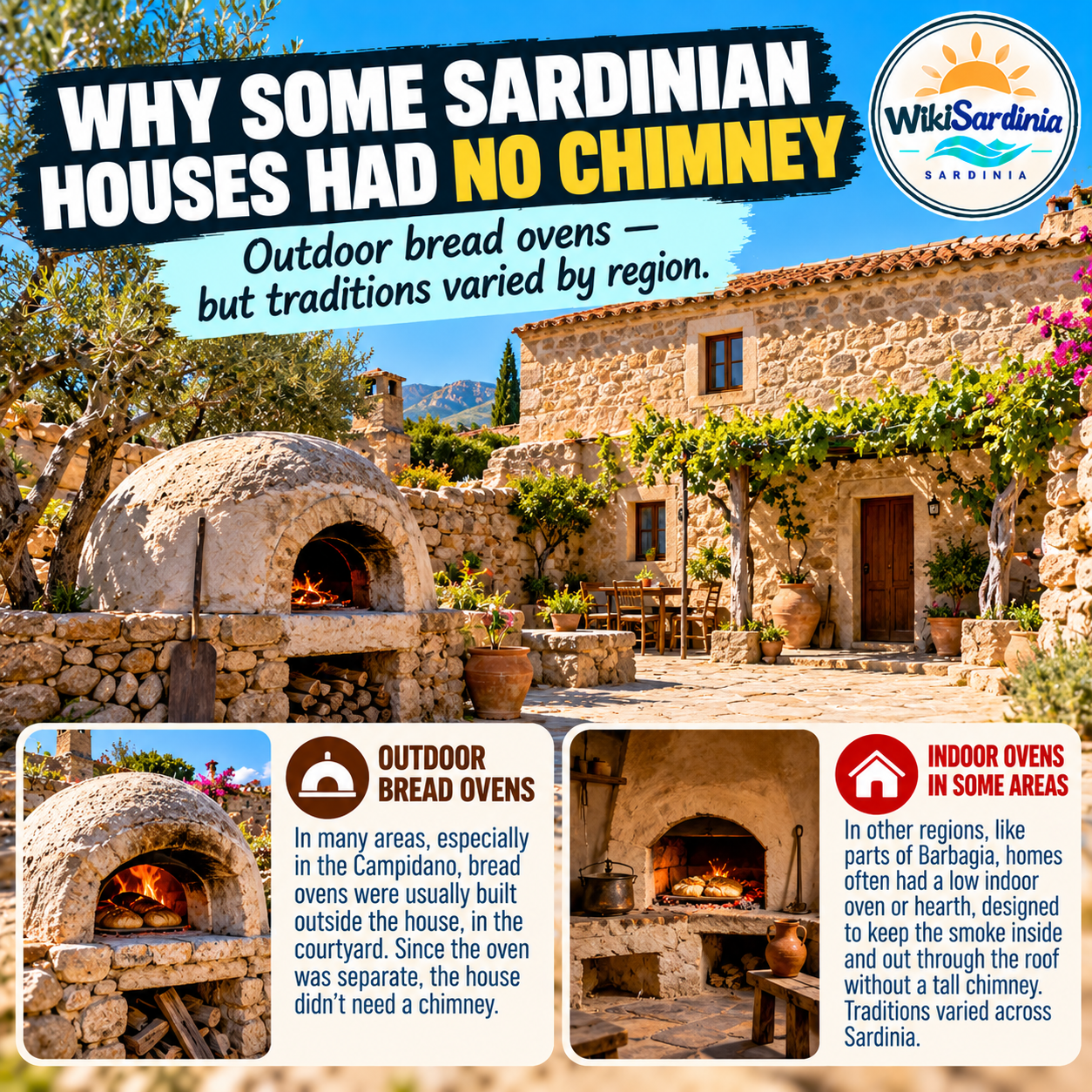
In the Campidano and many of Sardinia’s lowland and hilly areas, the traditional bread oven was often built outside the main house, usually in the courtyard or beside a covered work area. These domed ovens were used to bake bread for the household, while the main cooking arrangements inside the home could be different. Because the bread oven stood outside, it did not need a chimney rising through the house roof.
The courtyard was also a practical working space. In traditional farmhouses, it could contain the oven, a well, storage areas and other tools needed for daily agricultural life. The outdoor oven was part of a wider household layout, not simply a decorative feature.
Why did some mountain homes have low ovens without chimneys?
In parts of central Sardinia, including Barbagia, traditional baking arrangements could be different. SardegnaCultura describes low ovens located inside the house and built without a chimney, adapted to the way the baker worked close to the floor. In other areas, including Ogliastra, the oven could open directly into the kitchen.
These differences reflect local building traditions, available materials and working habits. They do not mean that all traditional Sardinian homes were smokeless or that every house lacked a chimney. Indoor fires and ovens required ways for smoke to escape, and the solutions varied with the building and region.
What was the role of the courtyard?
In many rural houses, the courtyard connected domestic life with farming and food preparation. The covered loggia, known in the Campidano as sa lolla, provided a sheltered space for work. A separate oven helped keep baking activity outside the main living rooms and made it easier to manage heat during the long, warm season.
Traditional houses were built around practical needs: family size, agricultural work, climate, construction materials and local custom. Their layout can therefore tell visitors as much about daily life as about architectural style.
Was it really about keeping the house cool?
Keeping intense oven heat outside the living area could be useful in summer, but it would be too simple to say that the lack of a chimney was designed only to keep houses cool. The more reliable explanation is regional variation in where and how bread was baked. In some areas the oven was a separate outdoor structure; in others it was integrated into the house and used differently.
Where can you see this traditional architecture?
Look for historic rural houses, courtyards and preserved bread ovens in Sardinian villages and ethnographic museums. In the Campidano, traditional courtyard houses and their outdoor work areas help illustrate this way of life. Local museums and cultural heritage sites can explain how a particular house was used, since features differ from village to village.
A small architectural detail with a big story
An old Sardinian house without an obvious chimney is not necessarily missing something. It may reflect a cooking system in which the bread oven stood outside, or a regional tradition in which a low oven was built inside without a conventional chimney. The key is to look at the whole house and its local context: Sardinia’s domestic architecture is diverse, shaped by centuries of practical rural life.
Sources: SardegnaCultura — La cottura; San Gavino Monreale — I ladiri e la casa campidanese; Sardegna Digital Library — Forno rustico.