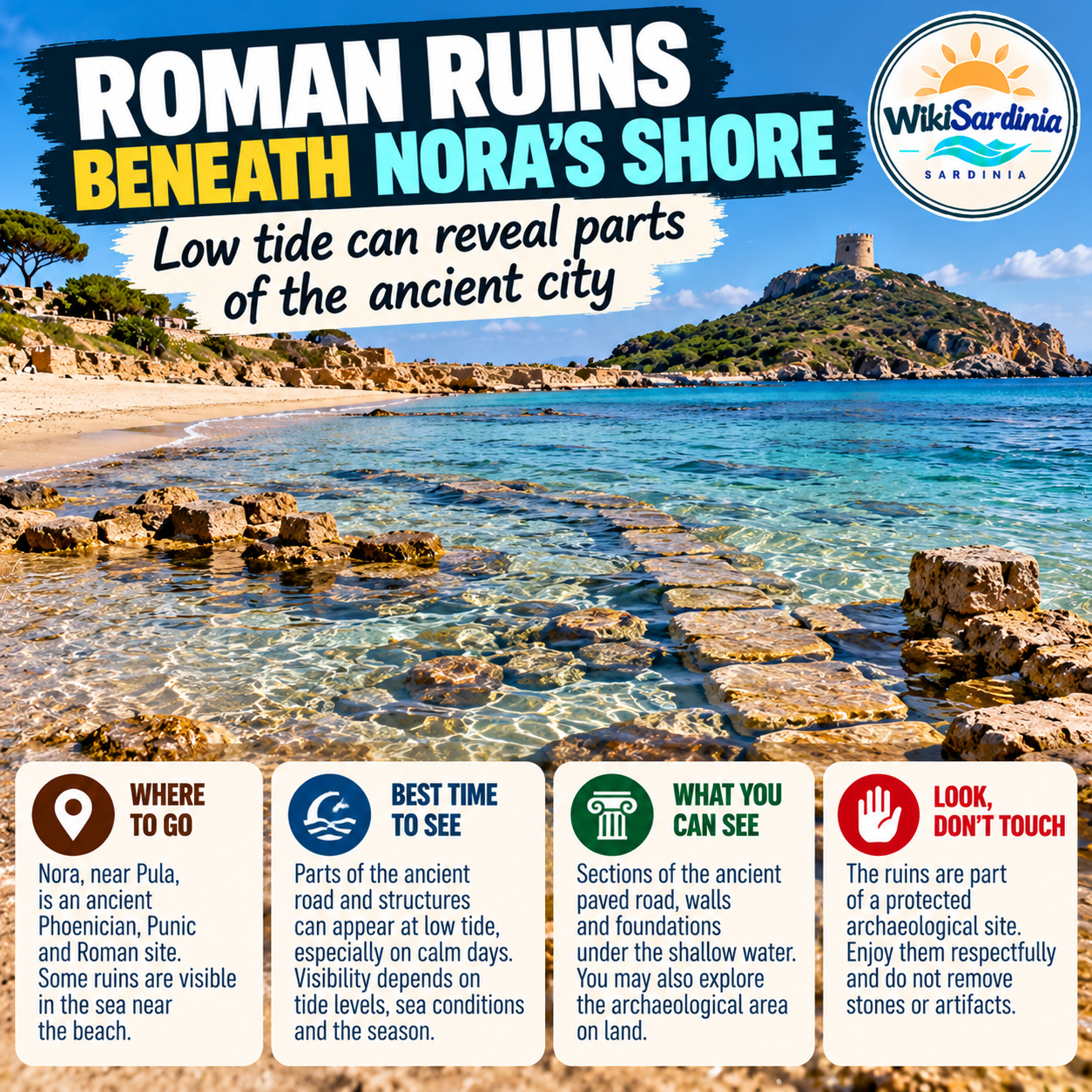
At Nora, near Pula on Sardinia’s southern coast, the remains of an ancient city meet the shoreline. Some archaeological structures lie close to the beach, and parts of the ruins are submerged in shallow water. When the tide is low and the sea is clear, you may be able to make out stone features beneath the surface—but do not expect a complete Roman road to appear on every visit.
Where to look for the ancient remains
Start at the Spiaggia di Nora, beside the archaeological area on the Capo di Pula promontory. Nora developed as a Phoenician settlement and later became an important Punic and Roman city. Today, visitors can see ruins on land and, in some places, remains partly covered by the sea. The local tourism guide notes that some submerged ruins can be observed with a mask and snorkel when conditions allow.
For context, visit the official Nora archaeological area page from Italy’s Ministry of Culture and check the visitor information before setting off.
Does low tide reveal a Roman road?
Low tide can make some remains of ancient streets and buildings easier to see. Local descriptions of Nora report that the sea can reveal traces of streets and structures on the seabed during low water. However, visibility changes with the height of the tide, waves, water clarity, sunlight and seasonal conditions. What looks like a paved line from above may be part of a larger archaeological structure, so avoid identifying every row of stones as a Roman road without expert confirmation.
Check local tide tables for Pula and choose a calm period with good visibility. Even then, treat the experience as a chance to observe fragments of the ancient city, not as a guaranteed exposed-road walk.
What else can you see at Nora?
The archaeological site preserves evidence of several phases of settlement, including Phoenician, Punic and Roman remains. On land, the wider site includes features such as the theatre, thermal buildings, streets and domestic structures. The beach also offers views towards the Torre del Coltellazzo, while the nearby church of Sant’Efisio adds another layer to the area’s history.
If you want a fuller understanding of the city, combine the beach with a visit to the official archaeological area rather than relying on what happens to be visible from the shoreline that day.
How to visit responsibly
- Do not walk on exposed ruins: follow signs and the instructions of site staff.
- Never move or collect stones: even a small fragment may be archaeological material.
- Be careful in the water: submerged masonry can be slippery or sharp, and sea conditions can change quickly.
- Do not snorkel alone: use appropriate equipment and avoid entering the water if visibility or conditions are poor.
- Respect protected areas: stay within authorised visitor zones and follow any temporary closures.
Plan your visit
Nora is in the municipality of Pula, south-west of Cagliari. The archaeological area has its own opening times and visitor arrangements, which may differ from access to the public beach. Check the latest official information, especially outside the main season, and allow time to explore the ruins on land as well as the shoreline.
Visit Pula’s guide to Nora Beach describes the nearby submerged remains, while SardegnaTurismo’s Nora guide provides broader information about the beach and its archaeological setting.
A glimpse of ancient Sardinia beneath the waves
Nora is a remarkable place to see how coastal change has shaped an ancient settlement. At low tide, some submerged remains may become easier to recognise, but the sea does not reveal a neat, complete Roman road on demand. Check conditions, explore the official site and enjoy the view without touching or disturbing the archaeological remains.