
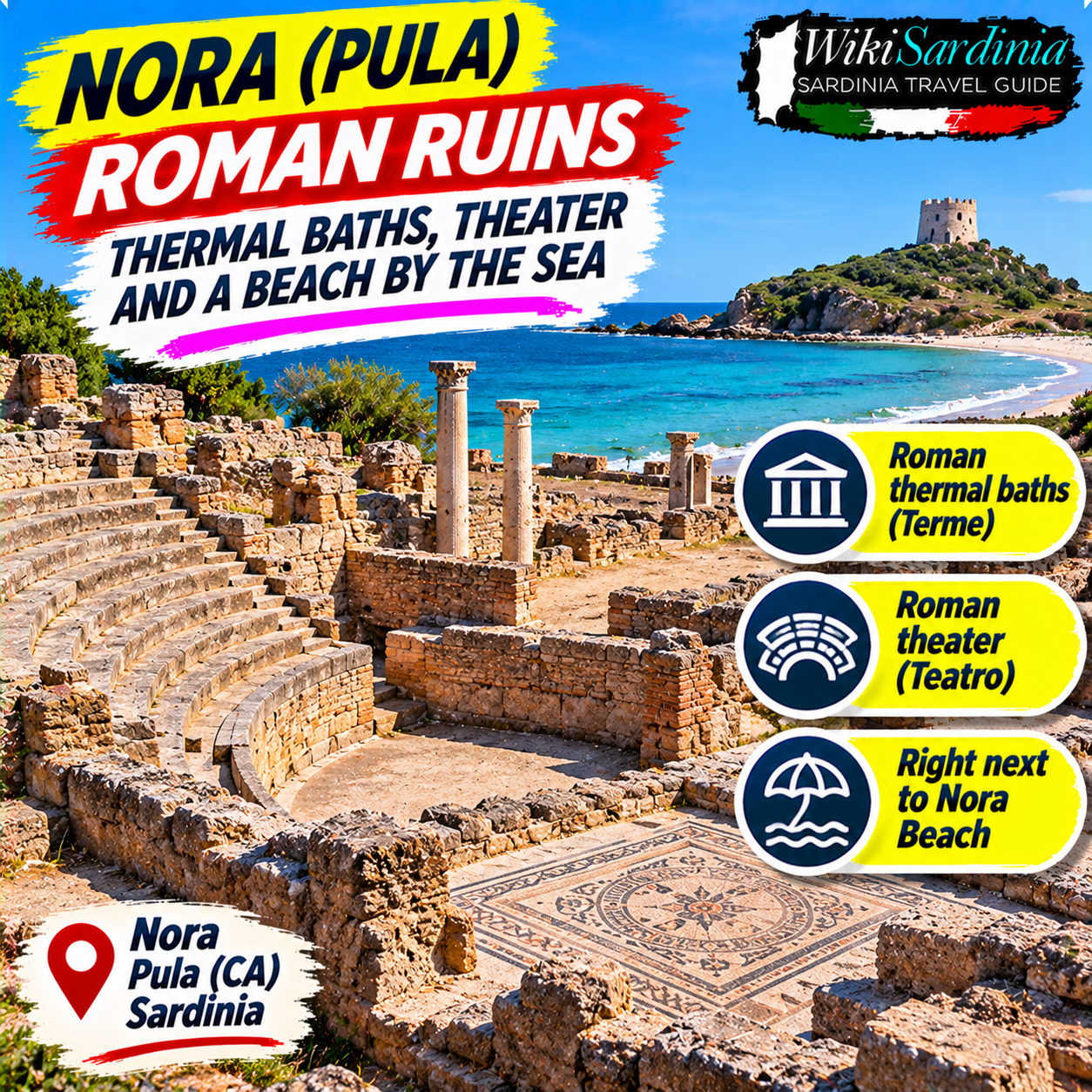
Yes. The archaeological site of Nora lies on a coastal peninsula near Pula in southern Sardinia, immediately beside the bay of Nora. Visitors can explore Roman thermal baths, mosaics and a Roman theater, then spend time at the nearby beach. The monument is a theater, not an amphitheater.
What can you see at Nora?
Nora preserves traces of Phoenician, Punic and Roman settlement. Its Roman remains include paved streets, domestic buildings, bath complexes, mosaic floors and a semicircular theater. The coastal setting makes it particularly atmospheric, with the sea visible from many parts of the site.
The Roman thermal baths
The remains of several bath complexes illustrate how Roman public bathing worked. Visitors can see surviving walls, floors and architectural features associated with heated rooms and bathing facilities, depending on the authorized visitor route. These are archaeological ruins, not functioning thermal spas. Do not enter restricted rooms or walk on protected mosaics.
The theater, not an amphitheater
Nora's Roman theater has semicircular seating designed for performances. An amphitheater, by contrast, surrounds an oval or circular arena. The distinction matters when searching for the monument or reading local signs: look for teatro romano. The theater also has a modern cultural role through performances organized at the site; these may require separate tickets.
Tickets and visiting arrangements
Consult the official Fondazione Pula Cultura reservations page. The previously reviewed tariff lists ordinary adult admission at €10 and reduced admission for eligible minors at €6, subject to exemptions and changes. The Norapp audio guide is available free of charge; a visit with a physical guide may require a separate reservation. Opening hours vary seasonally. Confirm the latest prices, final admission time and any temporary restrictions before departure.
Can you combine Nora with a beach visit?
Yes. Nora Beach lies near the archaeological entrance and the church of Sant'Efisio. Plan around 60–90 minutes for the ruins, then enjoy the beach separately. Archaeological admission does not include beach equipment or parking charges. Wear suitable clothing when entering the archaeological site rather than swimwear alone. Bring water, sun protection and shoes suitable for uneven stone surfaces.
Getting there from Pula
Follow signs for Nora from central Pula along Viale Nora. Look for designated parking near the beach and archaeological area, and check local tariffs and restrictions. The site is exposed to sunshine and wind, so an early visit can be more comfortable in summer. Ask the operator about accessible routes if anyone in your group has limited mobility.
Useful Italian phrases
- Dov'è l'ingresso dell'area archeologica? — Where is the archaeological entrance?
- Il biglietto include la visita guidata? — Does the ticket include a guided tour?
- Dove sono le terme romane? — Where are the Roman baths?
- La spiaggia è raggiungibile a piedi? — Can we reach the beach on foot?
FAQ
Can you swim inside the archaeological site?
No. Use the designated beach outside the protected ruins.
Is the Roman theater an amphitheater?
No. It is a semicircular Roman theater.
Can you see the mosaics?
Surviving mosaics are among Nora's attractions, although conservation work may affect which areas are accessible.
Do you need a whole day?
Not for the ruins alone, but combining the site with the beach makes a rewarding day trip.
Visitor arrangements and prices may change. Check the official booking page before traveling.