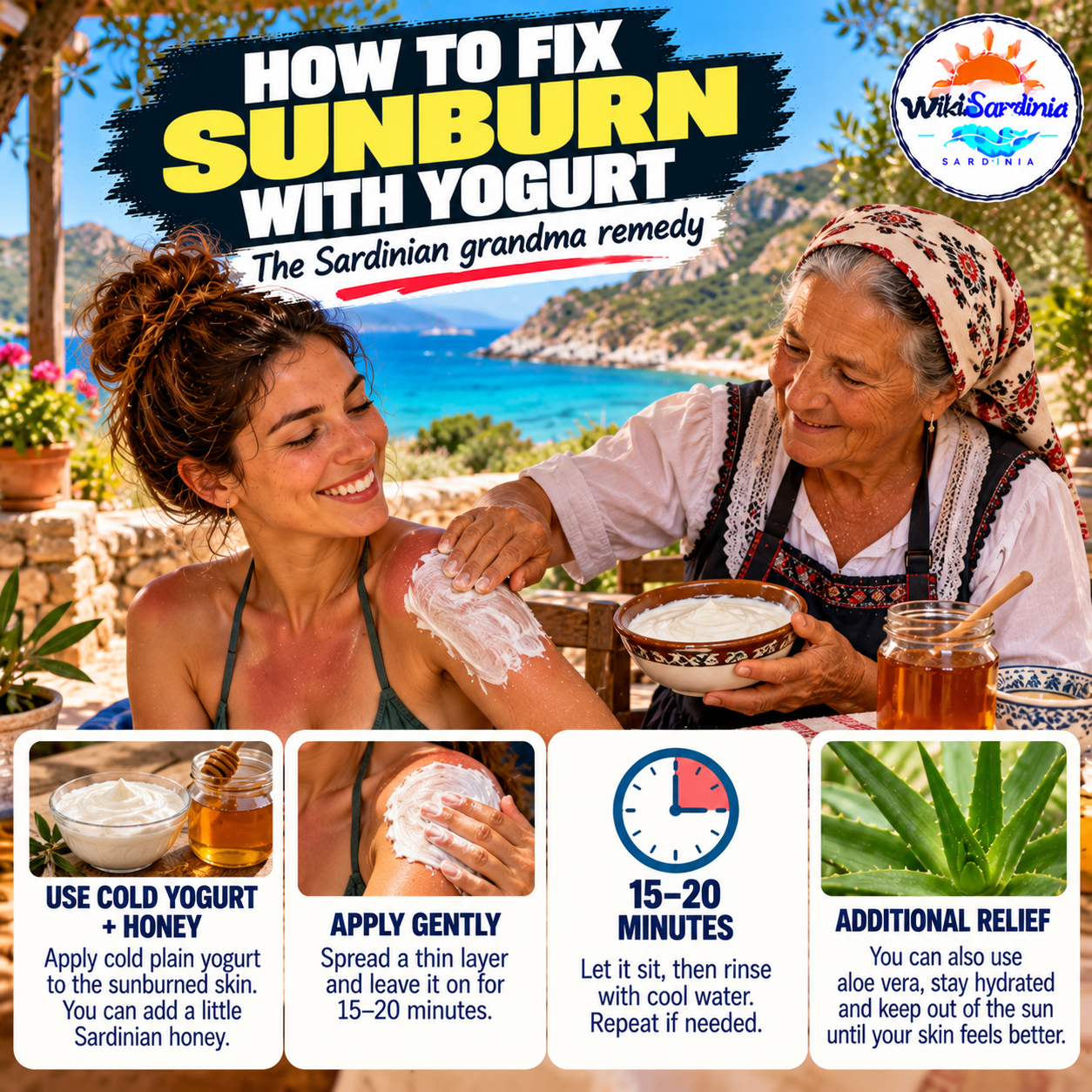
After a long day at the beach in Sardinia, sunburn can leave your skin hot, red and sore. You may hear an old-fashioned home tip involving cold yogurt and a little honey—the kind of remedy a grandmother might pass down. It sounds soothing, but yogurt and honey are not established treatments for sunburn, and putting food products on damaged or blistered skin is not the safest choice.
Does cold yogurt and honey fix sunburn?
The cool temperature may seem comforting for a moment, but that does not mean the mixture repairs sun-damaged skin. There is no good clinical evidence that applying yogurt and honey to ordinary sunburn is better than recommended cooling and skin care. Food products may also irritate sensitive skin or introduce unwanted microbes, especially if the skin is broken.
If you have already tried this folk remedy, gently rinse it off with cool water if it causes stinging or irritation. Do not scrub the skin, and do not apply it to blisters or open areas.
What actually helps soothe mild sunburn?
First, get out of direct sunlight and cool the affected area. Take a cool shower or bath, or hold a clean, cool, damp towel against the skin. Avoid putting ice or an ice pack directly on the burn, as extreme cold can cause further damage.
After cooling, gently pat the skin dry and apply an unperfumed moisturiser or a soothing aftersun product. A product containing aloe vera may help relieve discomfort. Choose something intended for skin rather than a kitchen ingredient, and stop using it if it stings or causes a rash.
Drink water and give your skin time to recover
Sunburn can contribute to dehydration, particularly after hours outdoors in Sardinia’s summer heat. Drink water regularly and avoid alcohol while you are recovering. Keep the affected skin out of the sun until it has healed, using loose clothing and shade rather than relying on sunscreen alone over an active burn.
Do not pop blisters or peel flaking skin. If you need pain relief, ask a pharmacist whether a suitable medicine is appropriate for you and follow the package instructions.
When should you get medical advice?
Seek medical advice promptly if the skin is badly blistered or swollen, the burn is extensive, or you develop a high temperature, chills, dizziness, nausea, marked weakness or a headache. These symptoms can indicate a more serious burn or heat-related illness. A baby or young child with sunburn should be assessed by a healthcare professional.
If someone becomes confused, collapses or appears seriously unwell after heat exposure, call Italy’s emergency number, 112.
How to avoid sunburn on your next Sardinian beach day
- Use broad-spectrum sunscreen with at least SPF 30 and reapply according to its instructions, especially after swimming or towelling off.
- Seek shade during the strongest sunshine and take regular indoor or shaded breaks.
- Wear a wide-brimmed hat, sunglasses and light clothing that covers exposed skin.
- Drink water regularly, even when the sea breeze makes the temperature feel comfortable.
- Remember that wind and swimming can make you feel cooler without preventing UV damage.
The takeaway: respect the tradition, choose proven care
The cold-yogurt-and-honey story may be a memorable piece of folk advice, but it should not replace reliable sunburn care. Cool water, a clean damp compress, an unperfumed moisturiser or aloe vera, hydration and staying out of the sun are safer ways to relieve mild symptoms. For more guidance, read the NHS sunburn advice and the American Academy of Dermatology’s sunburn guidance.