Eating out is part of the fun of visiting Sardinia, from seafood beside the harbour to a family-run trattoria in a small town. But nobody wants an unpleasant surprise when the bill arrives. The best protection is not judging a restaurant by its menu design; it is checking the prices and asking a few simple questions before you order.
1. Don’t assume a menu with photos is automatically a tourist trap
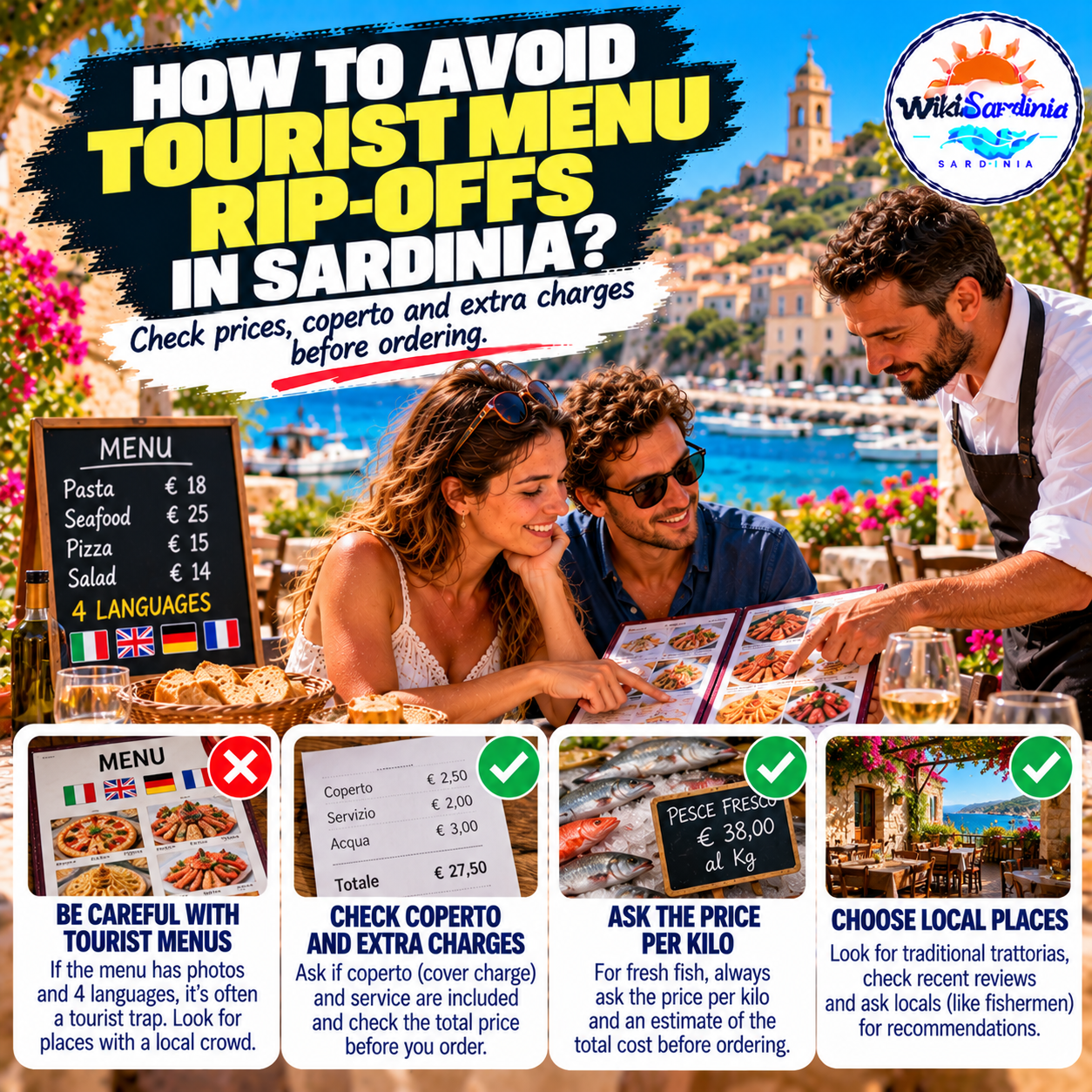
Menus with food photographs, several languages or a prominent “tourist menu” can be convenient for visitors, but none of these features proves that a restaurant is dishonest or overpriced. Treat them as a reason to read carefully, not as a verdict. Look for a menu with clear dish prices, portion details where relevant, and any additional charges stated plainly.
If the menu outside shows one price but the menu handed to you shows another, or prices are missing, ask staff to clarify before you sit down or place an order. You are entitled to understand what you are being charged for.
2. Check “coperto” and “servizio” before ordering
Coperto is a cover charge that may be added per person. Servizio is a service charge. These are not necessarily scams, but any applicable charge should be clearly disclosed in the menu or price list before you order. Check the bottom of the menu as well as the prices beside individual dishes.
You can ask: “Il coperto è incluso? C’è un costo per il servizio?” (“Is the cover charge included? Is there a service charge?”). If bread, water or another extra is offered, ask whether it costs anything before accepting it.
3. Be especially careful with fish sold by weight
Fresh fish and seafood may be priced by weight rather than as a fixed-price dish. If a menu says al kg, ask for the price per kilo and the estimated total for the portion before the fish is cooked. You can say: “Quanto costa al chilo e quanto verrà circa in totale?” (“How much is it per kilo, and approximately how much will it cost in total?”).
Also confirm whether the price refers to the raw fish, the prepared dish or a whole fish selected from a display. Getting this clear in advance is much easier than disputing an unexpected total later.
4. Compare the full meal, not just the pasta price
A low advertised price may apply only to one dish and may not include drinks, sides, dessert or cover charges. Before choosing a restaurant, compare a few actual menu items and think about what your meal will include. A fixed-price menù del giorno can be good value when the dishes, drinks and any extras are clearly listed.
Restaurants in busy waterfront or historic-centre locations may charge more than places a few streets away, but a higher price does not automatically mean poor quality. Choose based on the menu, what you want to eat and whether the final cost is clear.
5. Ask for the menu before sitting down
If prices are not visible outside, politely ask to see the menu before taking a table. Check the prices of drinks as well as food, especially bottled water, wine and coffee. If the staff cannot tell you the price of a dish or an extra, it is perfectly reasonable to choose something else or go to another restaurant.
Useful phrase: “Possiamo vedere il menù con i prezzi, per favore?” — “Could we see the menu with prices, please?”
6. Check the bill before paying
When the bill arrives, compare it with what you ordered and the prices you saw. Check the number of dishes, drinks, cover charges and any service fee. If something is unclear, ask for an itemised bill: “Il conto dettagliato, per favore.” (“The itemised bill, please.”)
Stay calm and explain the specific discrepancy. If you cannot resolve a significant problem, keep the menu and receipt and consider contacting the local consumer-protection service or municipal authorities for advice.
A quick checklist to avoid surprises
- Read the menu and prices before sitting down or ordering.
- Check whether coperto, service, bread or other extras are charged separately.
- Confirm the total estimate for fish or seafood priced by weight.
- Ask the price of drinks and any dishes described verbally as “specials.”
- Review the bill and request an itemised receipt if needed.
The simple rule
You do not need to avoid every restaurant with photos or a multilingual menu. Instead, look for clear prices, ask about extra charges and confirm the cost of anything sold by weight. Sardinia has plenty of wonderful places to eat; a minute checking the menu can help you enjoy your meal without a bill surprise.
For more context, consult SardegnaTurismo’s practical advice, Altroconsumo’s guide to restaurant cover charges and Euroconsumatori’s guide to restaurant and consumer rights.