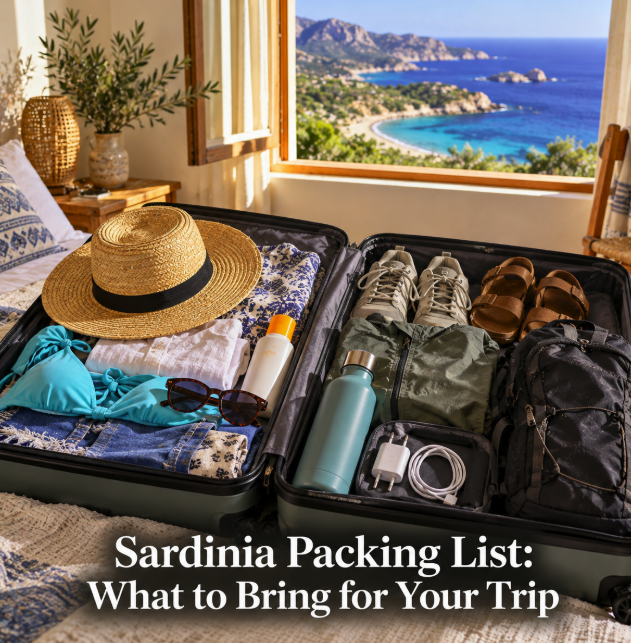
Packing for Sardinia is easier when you stop treating it as a beach-only destination. A typical trip can include swimming in turquoise coves, walking through historic towns, driving mountain roads, eating dinner in a breezy coastal village and hiking over rough limestone — sometimes within the same few days. The best Sardinia packing list is therefore light but versatile, with sun protection, comfortable footwear and a few layers doing more work than a suitcase full of outfits.
The Sardinia essentials
Start with the items that can disrupt a trip if forgotten: passport or required travel document, wallet, payment cards, travel insurance details, driving documents if renting a car, prescription medication, phone, charging cable and any necessary plug adapter. Keep critical medication and documents in your cabin baggage rather than checked luggage.
Sardinia uses the euro. The regional tourism authority notes that cards are accepted in many shops, hotels and restaurants but recommends carrying some cash because smaller places may not always accept cards. A modest amount of euros is useful for small purchases, parking, rural bars and other situations where electronic payment may be inconvenient.
Download important reservations, maps and addresses before leaving home. Mobile coverage is generally good in towns and tourist areas, but remote beaches, mountain roads and parts of the Supramonte are not places to depend completely on a live internet connection.
Clothes for summer
From June through September, lightweight breathable clothing should form the core of the suitcase. Pack T-shirts or tops, shorts, light trousers or skirts and enough underwear for your laundry plan rather than every day of the trip.
A loose long-sleeved shirt is surprisingly useful. It provides sun protection on boats and beaches, works for an evening meal and adds a layer when the wind picks up.
Bring at least two swimsuits if the sea is central to the trip. A wet swimsuit from the previous afternoon is less appealing than it sounds when you have an early boat departure.
A hat with real sun coverage, quality sunglasses and sunscreen are essentials rather than optional accessories. Sardinian beaches often have limited natural shade, and long sightseeing days can mean far more sun exposure than expected.
What to wear in spring and autumn
Shoulder season requires more flexibility. May, late September and October can still produce warm beach weather, but evenings and windy days may feel considerably cooler than midsummer.
Pack a light jacket or windbreaker, a thin sweater or fleece and long trousers alongside summer clothing. Layers are more useful than one heavy coat because conditions can change between a sheltered town, an exposed headland and an evening by the sea.
The mistral, Sardinia's well-known northwesterly wind, can make a sunny day feel cooler and can dramatically change sea conditions. A lightweight windproof layer earns its place even when the forecast temperatures look warm.
Shoes: do not bring only flip-flops
A pair of comfortable walking shoes or supportive sneakers is one of the most useful things in the suitcase. Historic centers such as Alghero and Cagliari involve plenty of walking, while many beautiful coves require paths, steps or uneven approaches.
Sandals or flip-flops are useful for the beach and accommodation, but they should not be your only footwear.
If the itinerary includes Gorropu, the Supramonte, serious coastal trekking or mountain routes, pack proper hiking footwear with reliable grip. Sardinia's limestone and rocky trails can be unforgiving, and smooth city shoes are not a substitute.
Water shoes are optional rather than universal. They can be useful for rocky entries, kayaking or boat trips, but many famous Sardinian beaches are sandy enough that they are unnecessary.
Beach bag checklist
A simple beach kit should include sunscreen, sunglasses, hat, water, swimsuit, towel and a reusable bag for rubbish and wet items. A compact microfiber towel is useful if your accommodation does not provide beach towels.
A refillable water bottle is especially valuable when driving between coves. Do not assume every remote beach has a bar, shop or drinking-water point.
A small dry bag or waterproof phone pouch can be useful on boat trips and kayaking excursions. If snorkeling is important to you, bringing a familiar mask may be more comfortable than relying on rental equipment, although it is easy to rent or buy basic gear in resort areas.
Remember that not every Sardinian beach has a lifeguard. The regional tourism authority advises visitors to assess sea conditions carefully and states that a red flag means entering the water is prohibited.
One thing not to pack: Sardinian sand
Leave shells, sand and beach material where you find them. SardegnaTurismo explicitly reminds visitors that sand and shells must not be removed from beaches.
This is particularly important on fragile shores where even small-scale removal by thousands of visitors creates environmental damage. Enjoy the quartz grains, shells and unusual beach colors in place rather than treating them as souvenirs.
For hiking and outdoor days
For a straightforward marked walk, carry a small backpack, water, food, sun protection, a charged phone, offline map and an extra layer. For longer or remote routes, add a basic first-aid kit, headlamp and enough reserve water for delays.
Trekking poles are optional but can be helpful on steep descents and rough limestone. If you already use them at home, Sardinia is a good place to bring them.
Do not let a packing checklist create false confidence. Equipment does not replace route knowledge. Remote areas such as the Supramonte can involve rough, confusing terrain, and difficult excursions are better undertaken with appropriate experience or a qualified local guide.
For a Sardinia road trip
A car opens up much more of the island, but keep the cabin organized. Useful road-trip items include a phone mount, charging cable, power bank, reusable water bottles, sunglasses and a small bag for rubbish.
Download offline maps before driving into remote areas. If traveling with children, snacks and extra water can turn an unexpected delay into a minor inconvenience rather than a family crisis.
A soft beach bag is often more useful than a bulky hard-sided day bag because it can be folded into luggage and used for groceries, towels or wet swimwear.
Electronics and work gear
Bring the chargers you actually need and one compact multi-device charging setup if possible. Travelers arriving from countries with different plug formats should bring a suitable adapter for Italy.
If you plan to work remotely, a power bank and mobile-data backup are more valuable than packing multiple gadgets. Hotels and coworking spaces may offer good internet, but a beach café or rural agriturismo is not a guaranteed office.
Photographers should bring spare memory cards and batteries rather than assuming specialist accessories will be available near every destination. A small lens cloth is also useful around beaches, where salt spray and sand quickly find cameras and phones.
Medication and personal care
Pack enough regular medication for the trip, preferably in original labeled packaging, along with supporting prescription information where appropriate. Do not transfer important tablets into anonymous bags simply to save space.
A compact personal-care kit can include insect repellent, blister treatment, pain relief you normally use, antihistamine if appropriate for you and after-sun or moisturizer. Pharmacies are widespread in Sardinian towns, so there is little reason to carry an oversized medicine cabinet for an ordinary vacation.
If you have specific medical needs, research them before travel rather than relying on a generic packing list.
What you probably do not need
A huge suitcase of formal clothes is rarely necessary for a typical Sardinian vacation. Smart-casual clothing works in many restaurants, and resort glamour on the Costa Smeralda does not represent the dress code of the entire island.
Do not overpack beach equipment if you are moving between hotels. Umbrellas, snorkeling gear and other basics are widely available in tourist areas, while some beaches have rental services.
Heavy hiking equipment is unnecessary if your outdoor plans consist only of scenic viewpoints and short beach paths. Match the gear to the itinerary rather than to every activity Sardinia theoretically offers.
A simple one-week Sardinia packing checklist
- Passport or travel document and required driving documents
- Wallet, cards and a small amount of euro cash
- Phone, charger, plug adapter and power bank
- Prescription medication and essential health items
- 5–7 lightweight tops
- 2–3 pairs of shorts, skirts or light trousers
- One pair of long trousers
- Two swimsuits
- Light sweater or fleece
- Windbreaker or light jacket
- Comfortable walking shoes
- Sandals or flip-flops
- Hiking shoes if the itinerary requires them
- Hat and sunglasses
- Sunscreen
- Reusable water bottle
- Beach towel if not supplied
- Small daypack or beach bag
- Dry bag or waterproof pouch for boat days
- Offline maps and downloaded reservations
The most common Sardinia packing mistake is preparing for only one version of the island. Pack for the beach, but also for a windy evening, a cobbled old town and an unexpectedly tempting trail. With good shoes, sun protection, a light layer and a small daypack, most travelers already have the essentials. The rest can stay out of the suitcase — leaving more room to travel comfortably around the island.