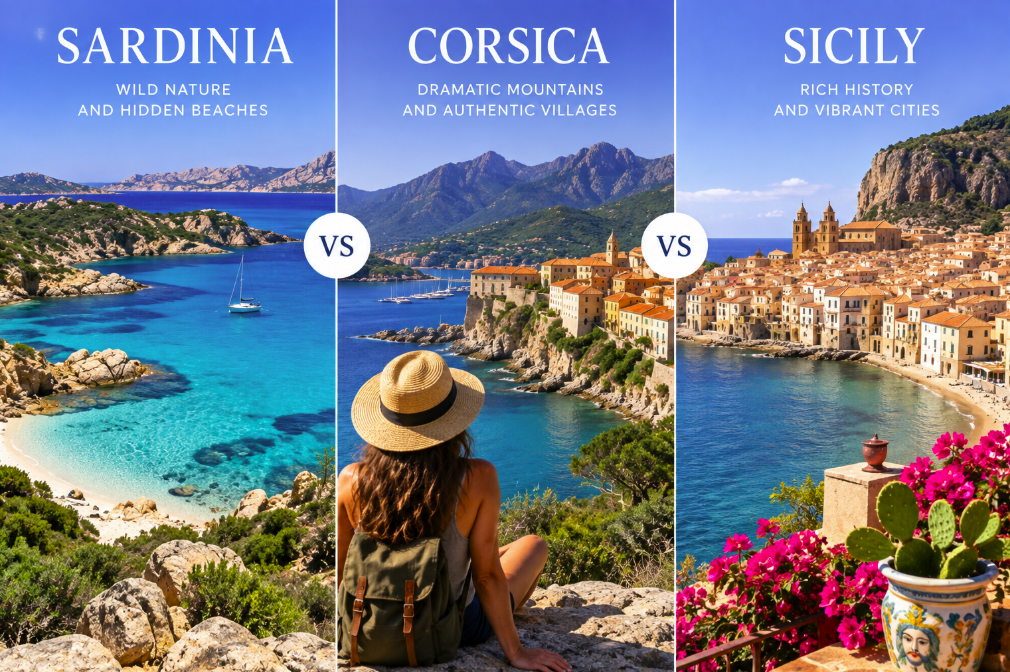
Sardinia, Corsica and Sicily can all deliver a memorable Mediterranean island trip, but they are not interchangeable. Sardinia is the strongest choice for travelers who put exceptional beaches, clear water, road trips and space near the top of the list. Corsica has the edge for dramatic mountain hiking combined with the sea. Sicily is the most compelling of the three for travelers who want major cities, monumental archaeology and an especially dense food-and-culture itinerary alongside beach time.
Interest in Sardinia is clearly rising. Expedia’s Unpack ’26 report placed Sardinia among its Destinations of the Year after searches increased 63% in the company’s data. The important qualification is that Expedia describes this as an increase in global traveler searches on its platform, not specifically a 63% increase among U.S. travelers and not a direct comparison proving that Sardinia grew 63% more than Corsica or Sicily. The report’s wider theme is travel “beyond the crowds,” which helps explain why Sardinia fits the current appetite for Mediterranean destinations that can still feel spacious away from famous resort centers.
Choose Sardinia for beaches, space and a road-trip rhythm
If the primary image in your head is transparent turquoise water, pale sand and a different beach every day, Sardinia is difficult to beat. The island’s official tourism portal emphasizes both its coastline and environmental protection, and in 2026 Sardinia again led Italy’s Touring Club and Legambiente coastal ranking, with six stretches of coast recognized for environmental quality.
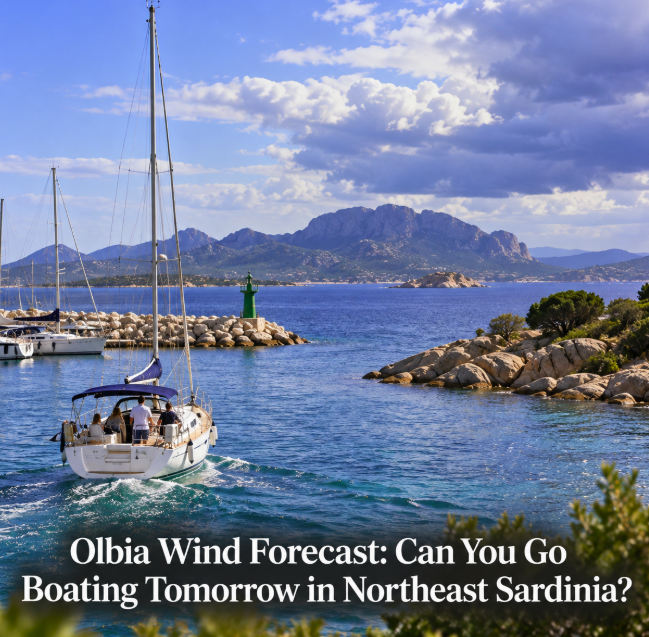
The range is part of the appeal. Northeastern Sardinia offers the granite coves and intensely colored water around Gallura, Costa Smeralda, San Teodoro and the Tavolara marine area. The Gulf of Orosei combines limestone cliffs with coves such as Cala Goloritzé. The west and southwest bring wilder-looking beaches, dunes and longer open stretches of coast, while areas such as Sinis add archaeology immediately behind the sea.
Calling Sardinia “uncommercialized,” however, needs nuance. Porto Cervo and Costa Smeralda are among the Mediterranean’s best-known luxury destinations, and beaches such as La Pelosa and Cala Brandinchi now require visitor management during busy periods. Yet large parts of the island remain rural, lightly developed and separated by considerable driving distances. A traveler can move from a polished marina to shepherding country, prehistoric sites and quiet villages within the same trip.
Sardinia also has a cultural identity that makes it more than a beach alternative. Nuraghi, sacred wells, Giants’ Tombs, traditional festivals, regional pasta, Cannonau and Vermentino provide a distinctly Sardinian layer that feels separate from mainland Italy. A rental car is highly useful for connecting those experiences efficiently.
Choose Corsica for mountains and serious hiking
Corsica is the obvious challenger for travelers who want wild scenery but would rather spend a significant part of the holiday in hiking boots. The French island has around 1,000 kilometers of coastline according to its official tourism organization, with white-sand bays, pebbled coves, sea kayaking, sailing and striking coastal landscapes such as the Calanques de Piana.
Its mountains are even more central to its travel identity. Corsica’s GR20 is one of Europe’s celebrated long-distance hiking routes, and the island’s terrain produces an unusually dramatic transition between beaches, forests, gorges and high mountains. For an active couple deciding between a resort-heavy beach trip and a trekking holiday, Corsica can split the difference better than almost anywhere in the Mediterranean.
Corsica also has a useful rail network by island standards. Official tourism information describes year-round services linking Ajaccio, Corte and Bastia, connections toward Calvi, and a seasonal coastal train in Balagne. That does not eliminate the usefulness of a car, particularly for remote beaches and mountain trailheads, but it gives non-drivers more options than Sardinia offers for some itineraries.
The trade-off is that Corsica’s rugged geography can make journeys slow. A place that looks close on a map may involve twisting mountain roads. Travelers trying to “do the whole island” in a few days can spend too much of the trip moving between bases.
Choose Sicily for cities, history and food
Sicily is the best fit when the island itself needs to function almost like a small country-sized cultural trip. Palermo, Catania and Syracuse offer urban life and historic neighborhoods that have no direct equivalent in scale on Corsica and are more central to a typical Sicily itinerary than Sardinia’s cities are to a beach-focused Sardinian trip.
The archaeological and architectural density is extraordinary. Sicily’s official tourism site highlights Palermo’s Arab-Norman monuments, Syracuse and its archaeological heritage, Baroque southeastern towns, and the island’s extensive UNESCO legacy. Add Greek temples, Norman architecture, volcanic landscapes around Etna and historic markets, and it becomes easy to fill a week without spending a single full day on a beach.
Food is another major advantage. Sicily’s street food, pastries, seafood, pasta, pistachios, citrus, wine and regional specialties create a particularly visible culinary culture for visitors. Sardinia has an equally distinctive food identity, but Sicily offers more opportunities to combine food exploration with major city sightseeing without driving into rural areas.
Sicily also has excellent beaches, including established seaside destinations and island groups such as the Aeolian and Egadi islands. In 2026, 16 Sicilian municipalities were confirmed for Blue Flag recognition. But if a traveler’s only criterion is a week of swimming from spectacular beaches, Sardinia is usually the cleaner comparison winner; Sicily’s greatest strength is the variety surrounding the beaches.
Which island feels least commercial?
This depends far more on the itinerary than the island name. Stay exclusively around Porto Cervo in August and Sardinia will not feel like an undiscovered escape. Base yourself in rural Ogliastra, Barbagia, Sinis or parts of the southwest and the experience changes dramatically. The same principle applies to Corsica and Sicily: famous resorts and city centers coexist with remote villages and quiet countryside.
Expedia’s “beyond the crowds” framing is therefore more useful than treating Sardinia as untouched. The island offers the possibility of spreading a trip across less densely visited places, but increasing demand also creates pressure. Some of Sardinia’s most famous beaches use reservations, quotas or other access controls precisely because popularity has consequences.
Sardinia vs Corsica vs Sicily: the quick decision
- Pick Sardinia if beaches and swimming come first, you enjoy driving, and you want to combine the coast with distinctive prehistoric culture, food and quiet inland landscapes.
- Pick Corsica if hiking and mountain scenery matter as much as the sea, and winding roads or a more active itinerary sound appealing rather than inconvenient.
- Pick Sicily if food, cities, archaeology and architecture are the core of the trip and beaches are one component of a broader cultural holiday.
For first-time U.S. visitors looking specifically for the “Mediterranean escape” now associated with Sardinia, the island’s advantage is balance. It has high-end hotels and restaurants when wanted, but it also has enough coastline and interior territory to escape them. A traveler can swim in clear water, eat culurgiones in Ogliastra, visit a nuraghe and drive through sparsely populated countryside without changing islands.
That does not make Sardinia universally better than Corsica or Sicily. A passionate hiker may be happier in Corsica, and a traveler dreaming about Palermo markets, Greek temples and Baroque towns should choose Sicily without hesitation. The better question is not which island wins, but which version of the Mediterranean you want: Sardinia for sea and space, Corsica for mountains and adventure, or Sicily for culture and intensity.