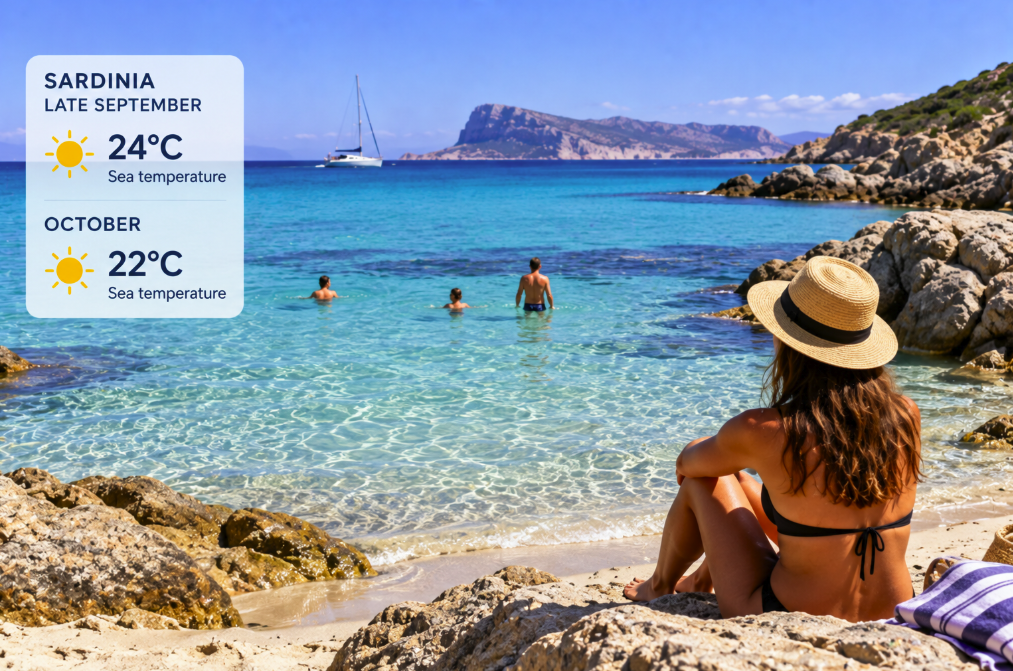
Yes, swimming in Sardinia in late September is entirely realistic, and in many years the sea is still pleasantly warm after storing heat through the summer. Around the island, September sea temperatures commonly sit in the mid-20s Celsius, although the exact figure depends on the coast, the year and the weather. October can still offer excellent swimming days too, but conditions become less predictable as autumn progresses.
The official SardegnaTurismo climate guide describes autumn as arriving late on the island: temperatures can remain above 20°C and the sea retains its summer warmth. That makes September particularly attractive for travelers who want beach time without the peak-season intensity of July and August.
Is the sea really around 24°C in late September?
A figure of roughly 24°C is a reasonable rule of thumb for parts of Sardinia in September, but it should not be presented as a guaranteed temperature for every beach on September 30. Historical sea-surface observations show meaningful differences around the island and from one year to another.
For example, ten-year data for San Teodoro gives an average September water temperature of about 24.5°C. Golfo Aranci averages around 24.2°C, while the Gulf of Marinella is around 24°C. On the northwest coast, Alghero's September values can be somewhat cooler in some years.
Daily figures also tend to decline through the month. Historical observations around San Teodoro show late-September readings commonly moving from the mid-24s toward roughly 23–24°C by the final days, depending on the year. Around Costa Smeralda and Palau, a similar gradual cooling pattern appears in the records.
That means the popular claim that Sardinia has “24-degree water at the end of September” is plausible, especially after a warm summer, but it is better treated as a useful expectation than a promise.
What does 24°C water feel like?
For many travelers, 24°C sea water is comfortable for recreational swimming without a wetsuit. It will not feel like a heated pool, and people who are sensitive to cold may notice the difference when first entering, but prolonged beach swimming is normal at these temperatures.
The air can matter just as much. A sunny afternoon with little wind can make a September swim feel very summery, while the same water temperature can feel much cooler on a windy or cloudy day. Sardinia is exposed to significant winds, so choosing a sheltered beach can transform the experience.
Late September evenings are also noticeably different from midsummer. Even after a warm beach day, a light jacket or extra layer becomes useful after sunset. The shortening days mean there is less time for the sun to warm the sand and air than in July.
Can you swim in Sardinia in October?
Often, yes. SardegnaTurismo explicitly notes that Sardinia's coastal autumn can remain warm enough for swimming because the sea retains summer heat. Historical sea-temperature records also show water above 20°C around Sardinia through October in many locations.
The difference is reliability. Early October can feel like an extension of September during settled weather, while late October is more clearly autumn. Sea temperatures gradually fall, daylight shortens and the probability of unsettled weather increases. Travelers booking an October trip should therefore think of swimming as a strong possibility rather than the guaranteed center of every day.
Northwest Sardinia can cool differently from the east and south, and local wind exposure matters. A sheltered cove near San Teodoro may feel inviting on a day when an exposed northern beach is rough. Rather than choosing a hotel solely from an island-wide monthly average, check conditions for the specific coast where you will stay.
September versus October for a beach trip
If swimming is a priority, the second half of September offers the stronger compromise. The sea is still carrying substantial summer warmth, most beach destinations remain active, and the largest August crowds have generally diminished. This is why Sardinia's official tourism material actively presents September as an extension of the sea season.
October works better for travelers who want a mixed trip. A warm, calm day can still be spent swimming, while cooler or cloudier days are ideal for archaeological sites, villages, hiking, food experiences and wine country. That flexibility prevents a change in weather from feeling like a lost holiday.
There is another practical seasonal difference: beach businesses do not all operate on the same calendar. By October, some seasonal beach clubs, kiosks, boat services and tourist facilities may reduce their hours or close. The beach itself may remain beautiful, but travelers should not assume that the full August service network will still be operating.
Which part of Sardinia is best in autumn?
There is no single coast that guarantees the warmest water every day. Northeastern destinations such as San Teodoro, Golfo Aranci and Costa Smeralda have strong historical September swimming temperatures and a large choice of beaches. Southern Sardinia around Cagliari and Villasimius is also well suited to an autumn trip because beach days can be combined easily with city, archaeological and food experiences.
Alghero and the northwest are excellent for a broader holiday combining beaches with the historic center, Capo Caccia and the surrounding countryside, although historical sea data can show slightly cooler averages than some eastern locations. Wind direction should influence the day's beach choice everywhere on the island.
For travelers renting a car, autumn flexibility is a major advantage. Instead of committing to the closest beach regardless of conditions, check the day's wind and weather and choose a more sheltered stretch of coast when necessary.
How to plan without overpromising the weather
Monthly climate averages are useful for deciding when to travel, but they are not forecasts. A trip booked months ahead cannot be guaranteed seven consecutive sunny beach days simply because historical September temperatures are favorable. Check the actual weather and sea conditions in the days immediately before and during the trip.
Pack for both versions of Sardinian autumn: swimwear, sun protection and beach clothes for warm afternoons, plus closed shoes and a light layer for evenings or unsettled days. By October, a light rain layer becomes increasingly sensible.
For U.S. travelers wondering whether late September is “too late” for Sardinia, the answer is generally no. It is one of the most appealing periods for combining the sea with sightseeing, and water around the 24°C mark is historically realistic in several popular coastal areas. October is more of a calculated bet for dedicated beach travelers, but it can still deliver genuine swimming weather — with the added advantage that Sardinia beyond the beach becomes much easier to explore.