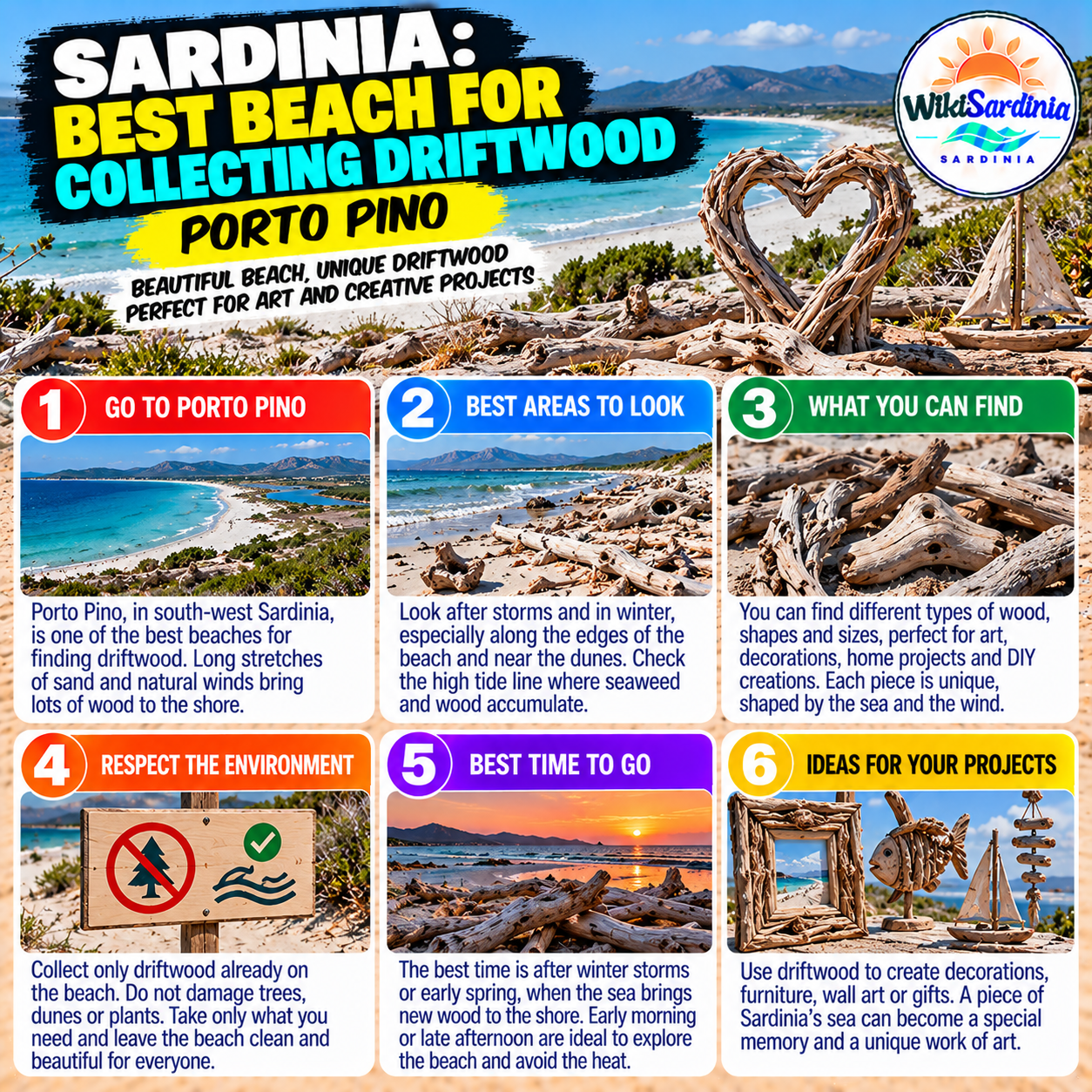
Weathered wood shaped by salt, wind and waves can make beautiful material for art: a sculptural branch, a rustic frame or a small decoration that carries memories of the coast. In south-west Sardinia, Porto Pino is a striking place for a beach walk and creative inspiration. However, the amount of driftwood on any beach changes with weather and sea conditions, and it is important to check local rules before taking natural material away.
Why explore Porto Pino?
Porto Pino is known for its long sandy coastline, clear water and coastal landscape. After rough seas, you may notice wood and other natural debris along parts of the shore, although there is no guarantee that driftwood will be present or that collection is permitted. Treat the visit as a chance to explore and photograph interesting shapes, textures and patterns.
When to look for driftwood
After windy weather or winter storms, the shoreline may look different from one visit to the next. Early morning can be a peaceful time for a walk, while cooler months can be more comfortable for exploring. Check the sea and weather forecast before going, and stay away from rough surf, unstable rocks and flooded access points.
Do not assume that a piece of wood is available to take just because it lies above the waterline. Natural material can be part of a beach ecosystem, and local restrictions may apply.
Check the rules before collecting anything
Before removing driftwood from Porto Pino or any other Sardinian beach, check current municipal rules and any regulations applying to protected coastal areas. Some locations restrict the removal of natural materials or have specific conservation requirements. If you cannot confirm that collection is allowed, leave the wood where it is and take photographs or sketches instead.
Never enter fenced dunes, trample vegetation or remove branches from living trees. Avoid taking wood that is serving as habitat, and do not disturb birds, nests or other wildlife.
How to choose a piece for an art project
If local rules permit collection, choose only a small piece that is already loose and clearly safe to handle. Look for interesting curves, grain and weathered surfaces. Avoid wood with sharp splinters, suspicious contamination, oil residue or a strong chemical smell. Wash your hands after handling beach debris, and do not collect material from polluted areas.
Creative ideas for driftwood art
- Wall decoration: arrange small, permitted pieces into a simple natural pattern.
- Photo frame: use clean, dry pieces as an outer border for a frame.
- Small sculpture: combine shapes without overworking the natural form.
- Mobile or hanging decoration: use lightweight pieces and secure them carefully.
- Sketchbook inspiration: draw the shapes and textures if collecting is not allowed.
Before bringing wood indoors, let it dry completely and inspect it for insects, mould and loose bark. Do not use driftwood in a fireplace or for cooking unless you know it is untreated and suitable; beach wood may contain salt, contaminants or unknown residues.
What to bring on your beachcombing walk
Wear sturdy footwear and bring water, sun protection and a bag for your personal rubbish. A phone or camera can capture details without disturbing the beach. Check access and parking information before leaving, particularly during busy periods or after bad weather.
Leave the coast as beautiful as you found it
Porto Pino is worth exploring for its scenery and coastal textures, whether or not you find driftwood to use. Check the rules before collecting, take only what is explicitly permitted, and leave dunes, plants and wildlife undisturbed. Sometimes the best souvenir is a photograph—and the beach remains just as beautiful for the next visitor.