A handmade wool blanket can be a lasting souvenir of Sardinia: practical, beautiful and connected to the island’s textile traditions. Two places worth exploring are Samugheo, known for its weaving heritage, and Nule, another Sardinian village with a strong tradition of woven textiles. If you want an authentic piece, look for local artisans and ask specific questions about the materials and how the blanket was made.
1. Start in Samugheo
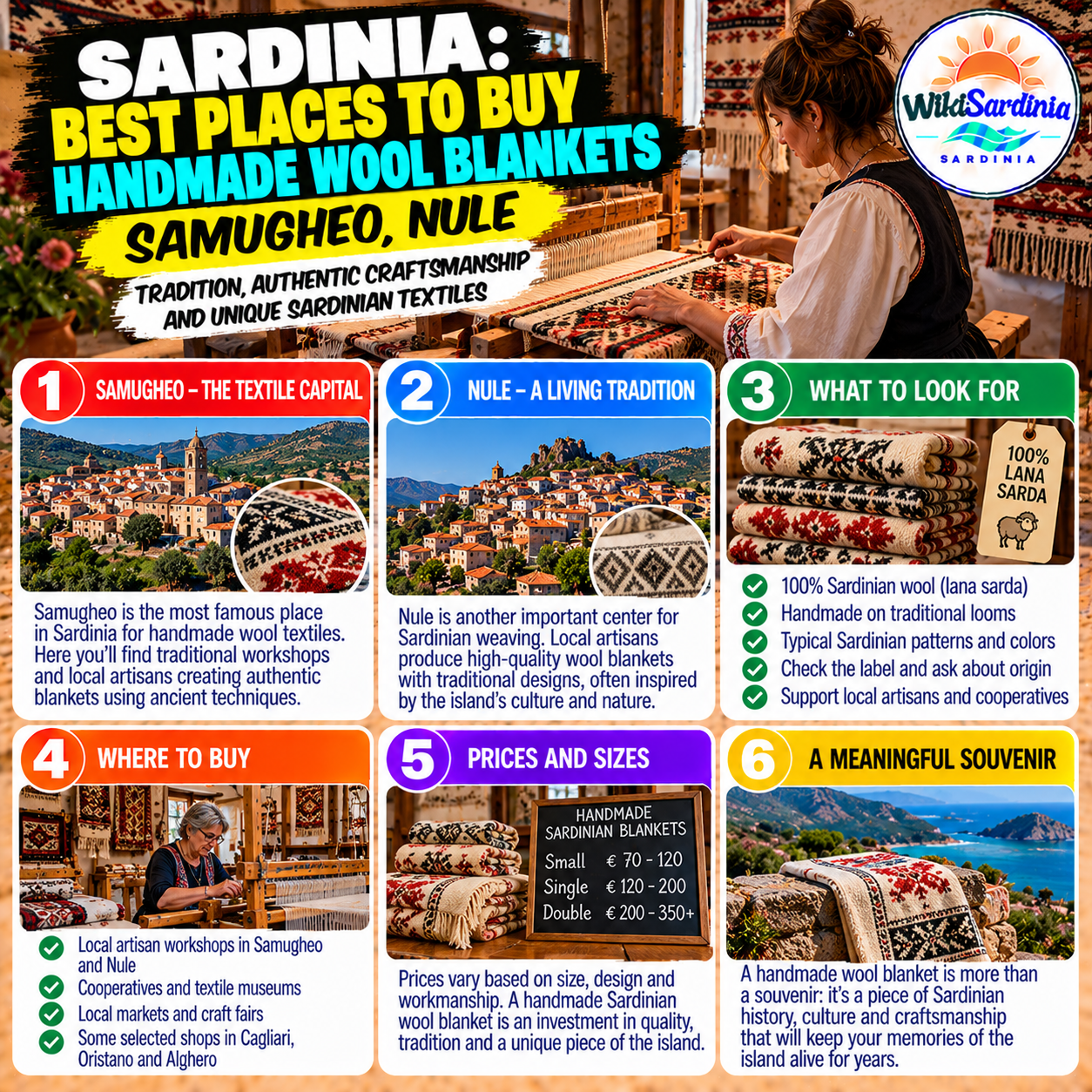
Samugheo, in central Sardinia, is closely associated with traditional weaving and textile craftsmanship. Look for artisan workshops, textile exhibitions and local craft events where you can learn about patterns, looms and the people who keep these techniques alive. Opening times and direct-sale opportunities vary, so contact a workshop or check local visitor information before making a special trip.
Some workshops may focus on different textile products rather than wool blankets alone. Ask what is currently available and whether visitors can see the weaving process.
2. Explore Nule’s weaving tradition
Nule, in the island’s interior, is also known for its textile heritage and distinctive woven designs. If you are travelling through the area, look for local makers and craft outlets, and ask whether they sell blankets directly or can recommend a producer. As with Samugheo, it is best to check availability and opening hours in advance.
3. How to tell what you are buying
A traditional-looking pattern does not automatically mean that a blanket was made locally or entirely from Sardinian wool. Read the label and ask the seller to explain the fibre content, where the wool comes from, and where the blanket was woven.
- Fibre composition: check whether it is 100% wool or a blend with other fibres.
- Origin: ask where the raw wool was sourced and where the item was woven.
- Production method: ask whether it was handwoven, made on a traditional loom or produced industrially.
- Care instructions: confirm how to wash and store the blanket.
- Maker information: look for the artisan or workshop’s name and contact details.
If the seller describes the item as made from lana sarda (Sardinian wool), ask what that means for that particular product and whether the claim is stated on its label or documentation.
4. Where else can you look?
Besides visiting workshops in Samugheo and Nule, check craft fairs, local markets, textile exhibitions and specialist shops that identify the makers of the goods they sell. Larger towns may have shops carrying Sardinian crafts, but stock and provenance differ, so do not assume that every blanket sold as a regional souvenir is handmade on the island.
For a meaningful purchase, buying directly from a maker can give you the chance to ask about the design and the time involved in producing it. Some workshops operate by appointment, so arrange your visit beforehand.
5. What should a handmade wool blanket cost?
There is no single reliable price for a handmade Sardinian blanket. Cost depends on dimensions, fibre quality, complexity of the pattern, weaving technique and the time required to make it. Rather than relying on a generic online price range, compare similar products and ask what is included in the price.
A very low price does not by itself prove that an item is inauthentic, just as a high price does not prove that it is handmade. Clear information about the maker, materials and process is more useful.
6. Ask the artisan a few questions
These Italian phrases can help:
- “È fatta a mano?” — Is it handmade?
- “È lana al cento per cento?” — Is it 100% wool?
- “La lana è sarda?” — Is the wool from Sardinia?
- “Dove viene tessuta?” — Where is it woven?
- “Come si lava?” — How should it be washed?
7. Choose a design you will enjoy using
Traditional Sardinian textiles feature a range of geometric motifs, colours and local interpretations. Take time to compare patterns, texture, weight and finish. A blanket intended for everyday use may need different care and durability from a decorative throw, so tell the artisan how you plan to use it.
A thoughtful souvenir from Sardinia
Samugheo and Nule are excellent starting points for discovering Sardinian weaving traditions and meeting local makers. Check opening hours before travelling, ask about the blanket’s fibre content and origin, and look for clear information about how it was produced. That way, you can choose a textile you love while supporting the craft and the people who preserve it.