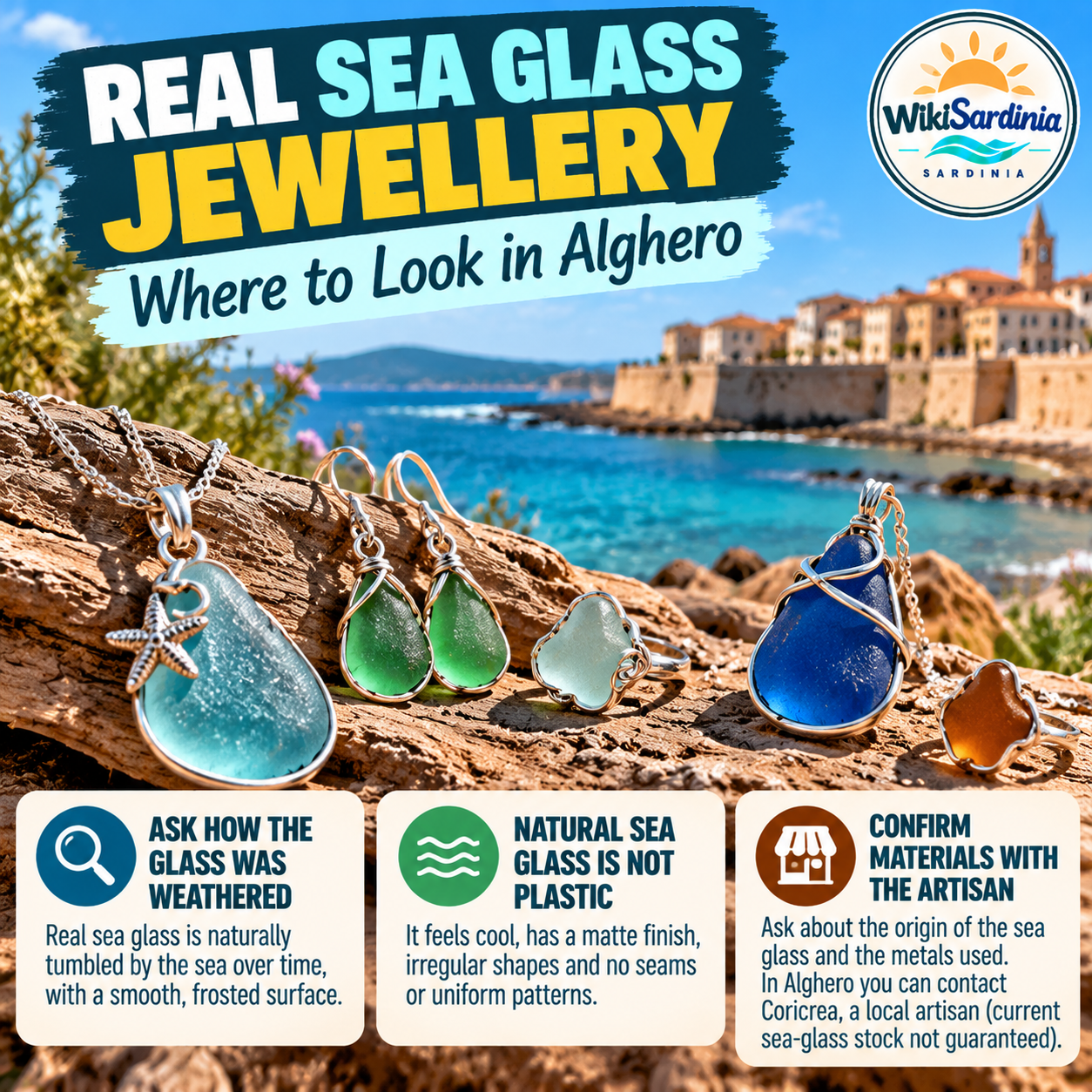
If you want a piece of jewellery inspired by the sea in Sardinia, start in Alghero, where independent makers create handmade bijoux influenced by the coastline. For genuine sea glass, however, ask the maker a specific question: is the glass naturally weathered by the sea, mechanically tumbled, or simply coloured glass made to look like beach glass? The distinction matters if you want a piece made from glass shaped by waves over time.
Where to start in Alghero
Coricrea is an independent artisan jewellery studio in Alghero whose work draws on the local sea. Its maker describes using materials such as shells gathered from the sea and stones found on the beach, and its catalogue includes some jewellery made with glass. That makes it a useful artisan to contact, but we could not verify that it currently sells pieces made specifically from authentic sea glass. Ask before visiting and explain exactly what material you are looking for.
Coricrea’s studio and shop are listed at Via Roma 59, Alghero. You can view its workshop information and unique jewellery collection online. Stock and opening arrangements may change, so contact the maker directly before making a special trip.
What is genuine sea glass?
Sea glass is glass that has been weathered by water, sand and time, usually developing softened edges and a frosted surface. It can come from old bottles, jars and other discarded glass. Natural sea glass varies in colour, shape and texture, and each piece is different.
Not all jewellery marketed as “sea glass” uses naturally weathered material. Some makers use new glass that has been tumbled in a machine, while others use resin or plastic. Those materials can still be used creatively, but they are not the same thing as glass naturally smoothed by the sea.
How to tell sea glass from plastic or newly tumbled glass
- Ask about its origin: the clearest way is to ask the maker whether the glass was collected after natural sea-weathering or processed artificially.
- Look for a frosted surface: authentic sea glass often has a soft, matte finish rather than a glossy plastic shine, although polishing and coatings can change the appearance.
- Check the edges: naturally weathered pieces usually have rounded edges, but machine-tumbled glass can look similar.
- Notice the weight and feel: glass generally feels harder and heavier than plastic of similar size, but this alone is not proof.
- Ask how it is set: a maker should be able to explain whether the piece is drilled, wire-wrapped or set in metal and how the glass is protected.
Appearance alone cannot reliably establish whether a piece is natural sea glass. A transparent explanation from the artisan is more useful than a claim on a price tag.
Questions to ask before buying
- “È vetro levigato naturalmente dal mare?” — Is it glass naturally smoothed by the sea?
- “È vetro di mare autentico o vetro burattato?” — Is it genuine sea glass or tumbled glass?
- “Il vetro è raccolto localmente?” — Was the glass collected locally?
- “Il gioiello è fatto a mano qui ad Alghero?” — Is the jewellery handmade here in Alghero?
Respect the Sardinian coast
If you are inspired by beach glass, remember that collecting natural material from the shore may be restricted in protected areas, and local rules can vary. Buy from a maker who can explain the source of the material rather than assuming it was collected legally from a nearby beach. Never disturb protected habitats or take glass, stones or other material from areas where removal is prohibited.
A thoughtful handmade souvenir
Alghero is a good place to explore independent jewellery studios and ask about pieces inspired by the sea. Coricrea is one lead worth contacting because its work uses beach-found materials and includes glass jewellery, but confirm whether authentic sea glass is available. To avoid buying plastic or newly tumbled glass by mistake, ask how the material was weathered and where it came from before you choose your piece.
Useful links: Coricrea — the workshop in Alghero; Coricrea — unique handmade jewellery.