If you want to take home a genuine taste of Sardinia, saffron is a special choice. The island has a long saffron-growing tradition, and San Gavino Monreale, in southern Sardinia, is one of the best-known places to start looking. To make a confident purchase, focus on traceable origin, reputable producers and the protected designation on the label—not simply on the colour of the product.
Start in San Gavino Monreale
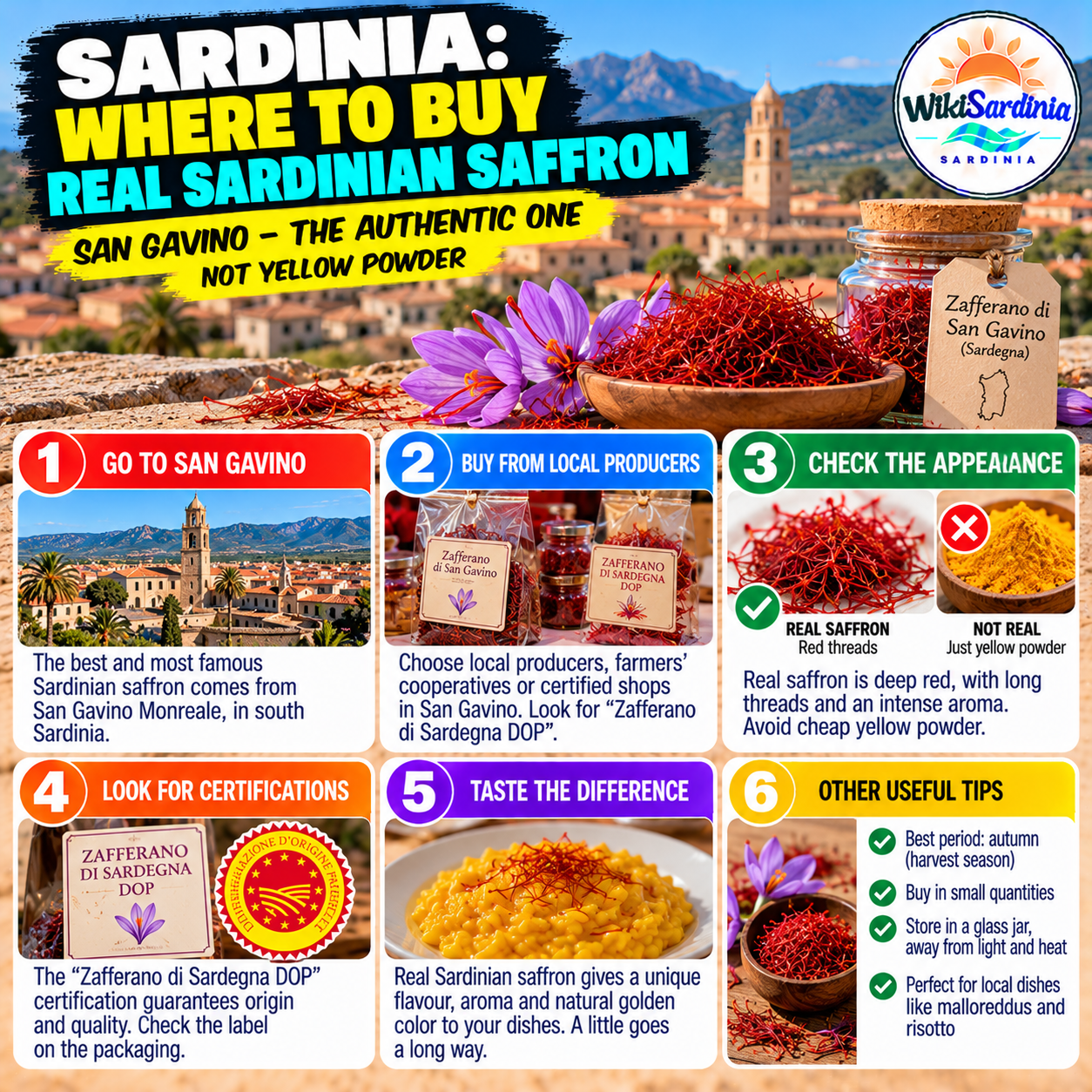
San Gavino Monreale is closely associated with Sardinian saffron production. Look for local agricultural producers, specialist food shops, farm outlets and cooperatives that can explain where their saffron was grown and packed. Availability can vary by season, so check opening hours and contact the seller before making a special trip.
The town’s saffron celebrations and local food events can also be useful opportunities to meet producers, especially around the autumn harvest period. Dates and participating sellers change from year to year, so confirm the current programme before travelling.
Look for “Zafferano di Sardegna DOP”
One of the clearest checks is the protected designation “Zafferano di Sardegna DOP” on the packaging. DOP (Protected Designation of Origin) identifies a product whose production and origin must meet the relevant specification. Read the complete label and look for the producer’s name, origin information, lot details and the applicable certification marks.
Do not assume that every jar sold in Sardinia was grown on the island. If the origin matters to you, ask the seller directly and check that the label supports the claim.
How to recognise saffron
Saffron is made from the dried red stigmas of the saffron crocus. It is commonly sold as red threads, but genuine saffron can also be ground into powder. Threads are often easier for a buyer to inspect visually, while powder requires particular care with sourcing and labelling. Yellow powder is not automatically fake, and colour alone cannot confirm authenticity.
- Check the label: look for a clear product name, origin, producer and traceability details.
- Choose a trusted seller: prefer a producer or established specialist shop that can answer questions.
- Be cautious of implausibly low prices: saffron is labour-intensive to harvest, so a very cheap product deserves closer scrutiny.
- Check the packaging: it should be sealed, clean and suitable for protecting the spice from light and moisture.
- Ask about certification: if it is sold as DOP, the packaging and product information should support that claim.
Where else can you buy it?
Besides producers in San Gavino Monreale, look at reputable Sardinian food shops, farm shops, local markets and specialist retailers. Markets can be excellent for discovering regional foods, but ask for a labelled, traceable product if you want to verify its origin. Online purchases can also work when the seller provides clear producer information and reliable product details.
For a visit to a farm or producer, arrange it in advance rather than arriving unannounced. Some farms sell directly but do not operate as walk-in shops.
When is the best time to visit?
Saffron crocuses typically flower in autumn, and harvesting is a seasonal activity. This can make the autumn period an interesting time to learn about local production, but it does not mean every producer will be open to visitors or selling freshly harvested saffron on a particular day. Contact the seller or check the current event programme first.
How to use Sardinian saffron
A small quantity can add aroma and a golden colour to rice dishes, pasta, seafood and other recipes. In Sardinia, saffron is associated with several traditional preparations, including some versions of malloreddus and regional desserts. Follow the recipe’s instructions for steeping or adding the spice, and store it in a tightly closed container away from light, heat and moisture.
Questions to ask before buying
You can ask in Italian: “È zafferano di Sardegna DOP?” (“Is it Sardinian DOP saffron?”), “Dove viene coltivato?” (“Where is it grown?”) and “È prodotto da voi?” (“Do you produce it yourselves?”). A reliable seller should be able to explain the origin and show you the product label.
The safest way to buy authentic Sardinian saffron
Begin with San Gavino Monreale, seek out reputable local producers and check for the “Zafferano di Sardegna DOP” designation if you want the protected-origin product. Red threads can be easier to inspect, but real saffron may also be sold ground. The best protection against a poor purchase is clear labelling, traceability and a seller who can explain where the saffron comes from.