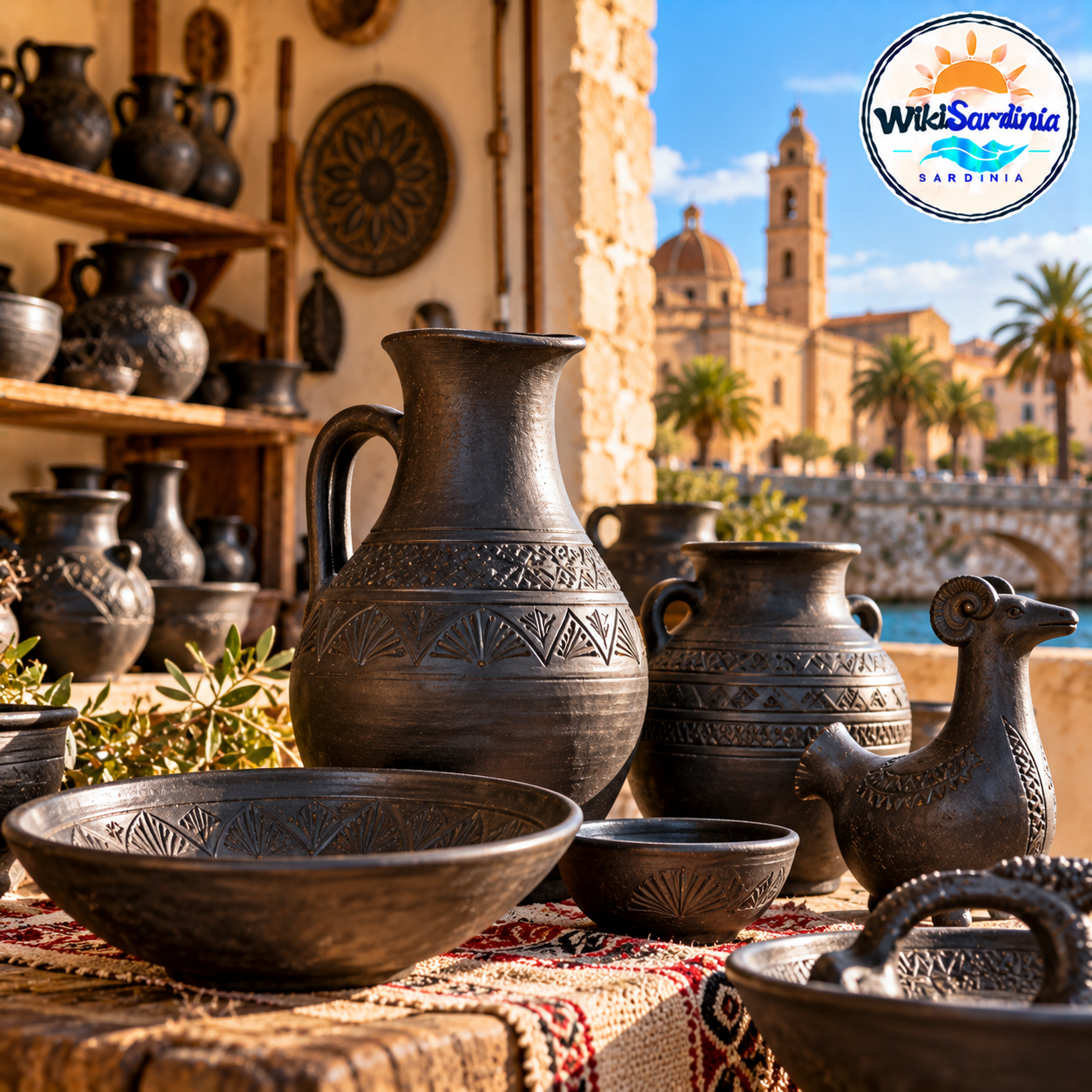
If you want to bring home a piece of Sardinian black pottery, start with the island’s artisan workshops rather than assuming every dark ceramic follows one ancient local technique. Oristano is one of Sardinia’s historic centres for pottery, while black ceramics are also made by contemporary artisans elsewhere on the island using techniques such as bucchero-inspired firing and other experimental processes.
Why start in Oristano?
Oristano has a long ceramic tradition stretching back thousands of years. Its historic potters, known as the figoli, produced everyday terracotta vessels as well as decorative pieces. The city’s traditional ceramics include forms such as jugs and containers, and its craft heritage is still visible in local workshops and cultural collections.
However, black pottery is not the only traditional style associated with Oristano. If you specifically want a black finish, ask the artisan which technique was used rather than assuming it is the historic local method.
Where can you look for black ceramics?
Oristano: Ceram’Art by Paola Argiolas is documented as a workshop using the bucchero technique for black ceramic pieces, including contemporary sculptural forms and decorative objects. Check the maker’s current details before visiting.
Serramanna: LS Linearte describes a collection of black ceramics made with an ancient bucchero technique, alongside contemporary interpretations and Raku pieces. It is another option if you are exploring artisan workshops beyond Oristano.
For a broader introduction to the island’s ceramic heritage, the SardegnaCultura guide to Sardinian ceramics explains the historic production centres, while the Comune di Oristano’s Terracotta Documentation Centre documents the city’s long tradition. Check its current opening status before planning a visit.
What is bucchero?
Bucchero is a term associated historically with dark, often black, pottery made through a controlled firing process. Modern artisans may use related or adapted techniques to achieve deep black, smoky or metallic finishes. Not every black ceramic is made in the same way, and contemporary makers may combine traditional inspiration with experimental methods.
How to choose an authentic handmade piece
- Ask who made it: find out whether the piece was produced in the workshop or sourced from elsewhere.
- Ask about the firing: the artisan should be able to explain how the black surface was achieved.
- Inspect the finish: look at the base, rim and decorative details, and ask whether the surface is glazed or unglazed.
- Check its intended use: decorative pottery may not be suitable for food, dishwashers or microwaves.
- Ask about shipping: if you are travelling, check whether the workshop can pack the item safely for a flight or post it to your home.
Can you visit a pottery workshop?
Some artisans welcome visitors, while others work by appointment or sell through selected shops and craft fairs. Contact the studio before travelling, especially outside the main tourist season. Ask whether you can see the workshop, watch part of the process or purchase directly from the maker.
A dark finish with a story behind it
Sardinia’s ceramic tradition is diverse: from everyday terracotta vessels to modern sculptural works, local makers continue to reinterpret the island’s materials and forms. If black pottery is what caught your eye, Oristano is a good starting point for its wider ceramic heritage, and specialist workshops such as those in Oristano and Serramanna can help you find a dark piece with a clearly explained technique and local maker.
Useful links: Ceram’Art di Paola Argiolas; LS Linearte Ceramiche; Oristano — City of Ceramics.