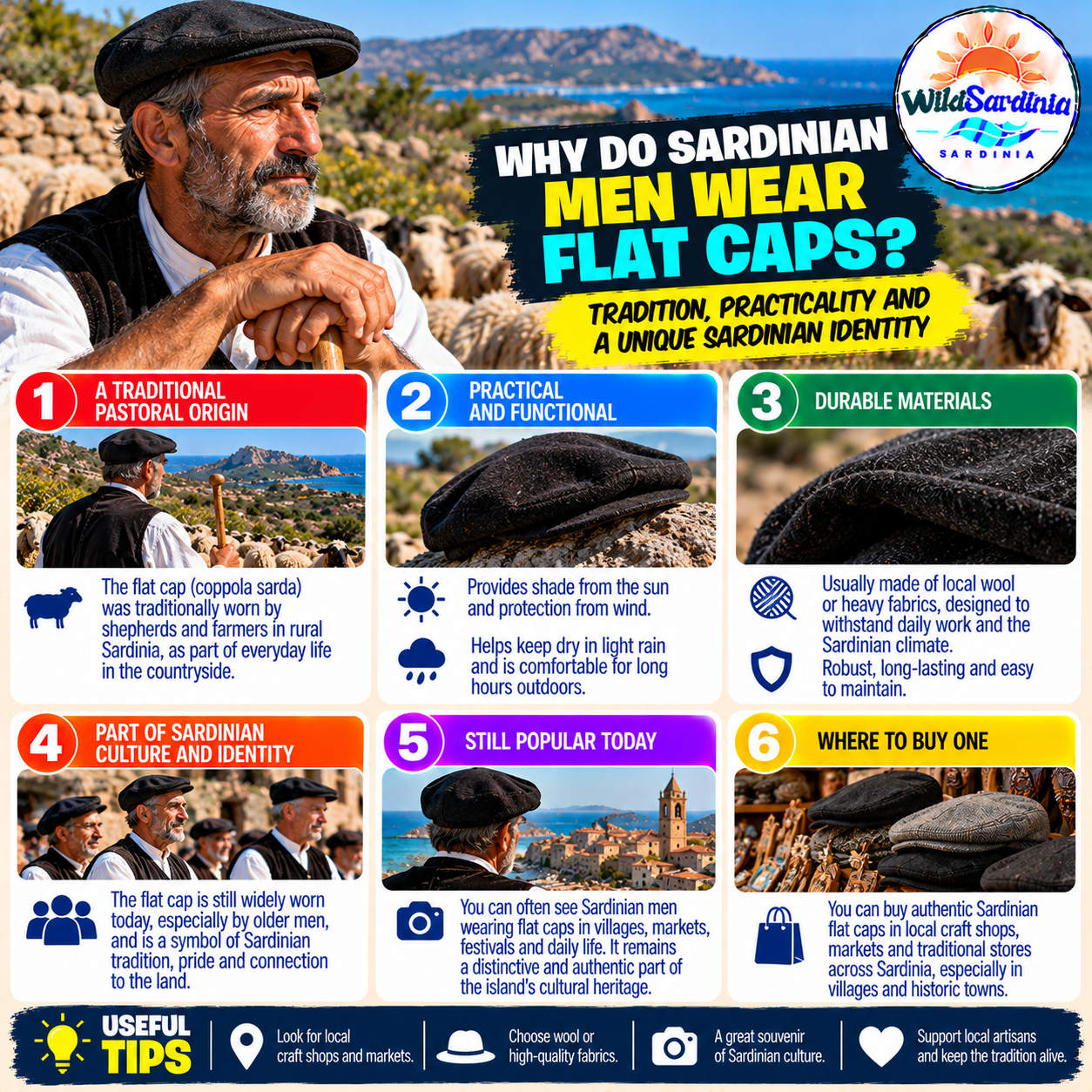
The flat cap often seen in photographs of Sardinian men is commonly described as a coppola. Dark, close-fitting caps are associated with rural and pastoral clothing in parts of Sardinia, especially in traditional images of shepherds and farmers. Their story is not tied to one single reason: they were practical headwear for outdoor life and, over time, became part of the visual language of local identity.
1. A link to rural and pastoral life
For generations, farming and shepherding shaped everyday life across Sardinia. Clothing had to suit work outdoors, travel between villages and fields, and long days in changing weather. The flat cap became associated with this rural setting and is still used in traditional representations of Sardinian country life.
2. Practical protection outdoors
A cap provides some shade for the head and can help keep hair in place in breezy conditions. Its usefulness depends on the material, fit and weather, and it is not a substitute for broader sun protection. Traditional caps came in different fabrics and finishes, so it is inaccurate to assume that every Sardinian coppola was made from the same material.
3. Why is it often dark?
Dark caps are prominent in many familiar depictions of Sardinian rural dress, but there is no single explanation that applies to every region or period. Fabric availability, local taste, garment type and changing fashions all influence traditional clothing. Claims that the colour was chosen only to hide dirt or to repel weather should be treated cautiously unless they refer to a documented local tradition.
4. A symbol of identity, not a uniform
The coppola can evoke Sardinian pastoral heritage and a connection to the land. Yet Sardinia has many regional clothing traditions, and the flat cap is not a uniform worn by all men or all shepherds. Everyday clothing has also changed over time, while traditional outfits may be worn at festivals, cultural events or for photographs.
5. Where can you see the traditional look?
You may encounter flat caps in rural villages, local markets, folk events and ethnographic collections. If you are interested in traditional dress, look for museum displays or cultural events that explain the clothing of a particular area. This gives a more accurate picture than assuming a single style represents the entire island.
6. Where to buy a Sardinian flat cap
If you want a coppola as a souvenir, try local clothing shops, craft markets or traditional-wear retailers. Ask where it was made, what material it contains and whether it is a locally produced item or a modern cap inspired by a traditional style. Stock and materials vary, so do not assume that every cap sold in Sardinia is made on the island.
Useful Italian phrases
- “Avete una coppola sarda?” — Do you have a Sardinian flat cap?
- “Di che materiale è?” — What material is it made from?
- “È prodotta in Sardegna?” — Is it made in Sardinia?
- “È un modello tradizionale o moderno?” — Is it a traditional or modern style?
A small garment with a bigger story
The Sardinian coppola is more than a simple cap in the island’s cultural imagery. It recalls rural work, traditional clothing and local identity, while its actual materials and use vary by place and period. If you buy one, ask about its maker and origin—and enjoy it as a connection to Sardinia’s diverse traditions rather than a symbol that every Sardinian man wears in the same way.