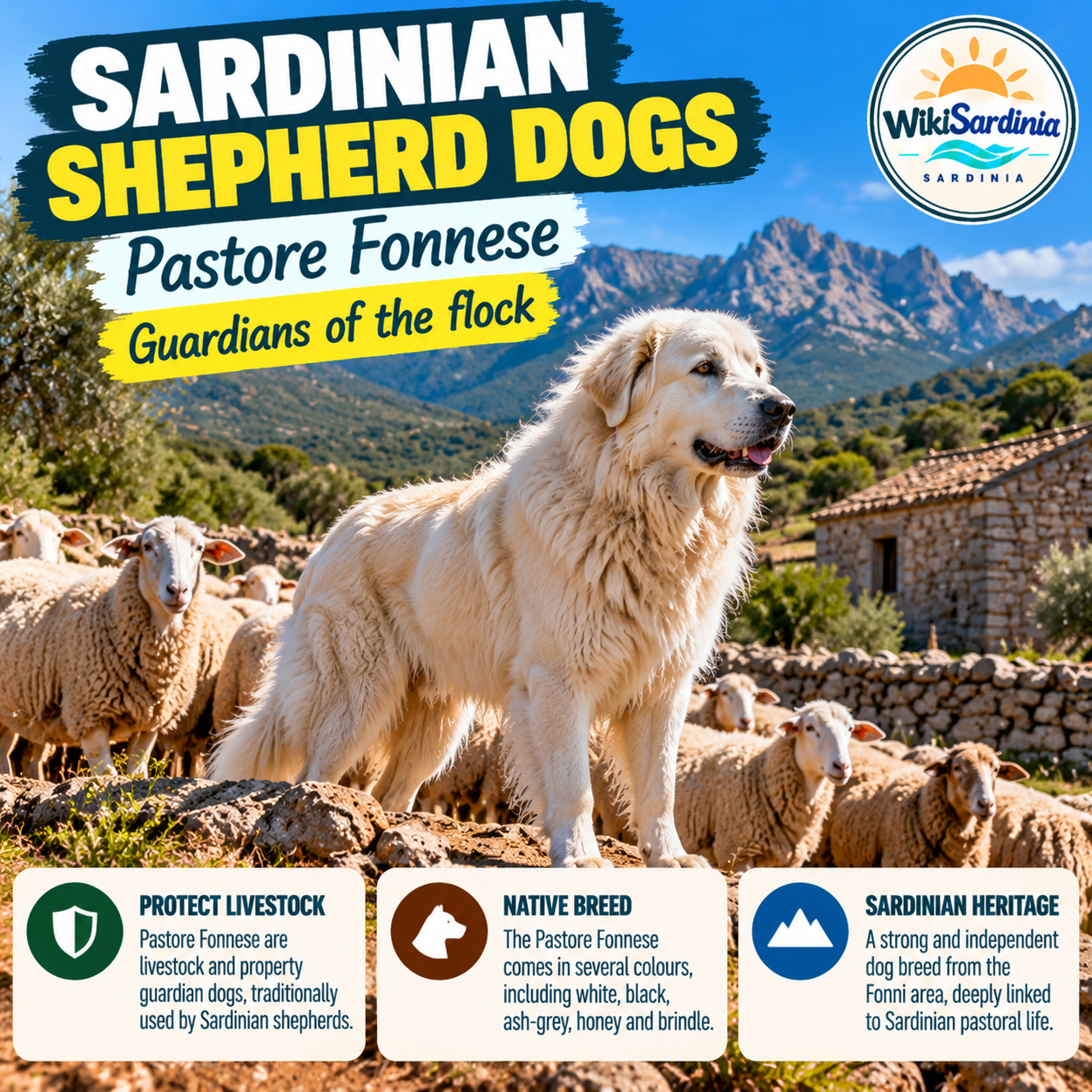
In Sardinia’s pastoral countryside, a strong dog beside a flock is more than a companion: it can be an important working guardian. One traditional local dog is the Pastore Fonnese, also called the Cane Fonnese, associated with the mountain town of Fonni and the island’s shepherding culture. But there is a small myth to clear up: the Pastore Fonnese is not always white, and its role is broader than simply fighting wolves.
What is the Pastore Fonnese?
The Pastore Fonnese is a native Sardinian dog traditionally used to guard livestock and property. Research on the population describes it as a robust, alert guardian with a strong protective instinct and a long history in Sardinian rural life. The dog is particularly associated with Fonni and the surrounding inland areas, although examples can be found elsewhere on the island.
Are Sardinian shepherd dogs always white?
No. The Pastore Fonnese appears in several coat colours, including black, ash-grey, honey-coloured and brindle, and lighter or whitish coats can also be seen. A white dog photographed beside sheep may stand out against the landscape, but colour alone does not identify the breed. Sardinian flocks may also be protected by dogs of other types, depending on the shepherd, location and working needs.
Why do shepherds keep guardian dogs?
A livestock guardian dog helps protect sheep and other animals from threats, alerts the shepherd to unusual activity and can discourage stray dogs or other intruders from approaching the flock. Good guardian dogs learn to remain close to the animals they protect and to respond to the shepherd’s handling. Their presence can reduce risk, but no dog can guarantee that livestock will never be attacked.
Is the Pastore Fonnese an anti-wolf dog?
It is more accurate to describe the Pastore Fonnese as a livestock and property guardian than as a dog bred only to fight wolves. Sardinia has no established wild wolf population today, and the island’s pastoral dogs have traditionally worked within a wider setting of guarding flocks, farms and rural property. Their protective role can include deterring stray dogs and other potential threats.
How the dogs fit into Sardinian pastoral life
For generations, shepherds have relied on dogs suited to local terrain, working routines and the animals in their care. The Pastore Fonnese is valued for its vigilance, robustness and strong attachment to its working environment. As with any guardian breed, responsible handling and socialisation matter: these are working dogs, not automatically relaxed pets for strangers to approach.
What to do if you meet a guardian dog on a walk
- Give the flock space: do not walk directly through sheep or approach lambs.
- Do not pet the dog: even if it looks calm, it may be working.
- Keep your own dog close: use a lead and avoid allowing it to approach livestock.
- Move calmly: avoid shouting, sudden movements or trying to feed the guardian.
- Follow the shepherd’s directions: give them room to manage the flock safely.
A living part of Sardinia’s heritage
The Pastore Fonnese reflects the island’s long relationship between people, animals and rugged countryside. Its importance lies in its working ability and cultural history—not in having one specific coat colour or a single enemy. If you see a guardian dog beside a Sardinian flock, admire it from a respectful distance and remember that it is on duty.
Further reading: Fonni Turismo — Pastore Fonnese; Genetics — research on the Fonni’s Dog population.