Wild boar are widespread in Sardinia, but seeing one should be treated as a wildlife encounter—not as an invitation to approach it. The Sardinian wild boar is associated with woodland and Mediterranean scrub across the island, and animals are most active when human activity is lower.
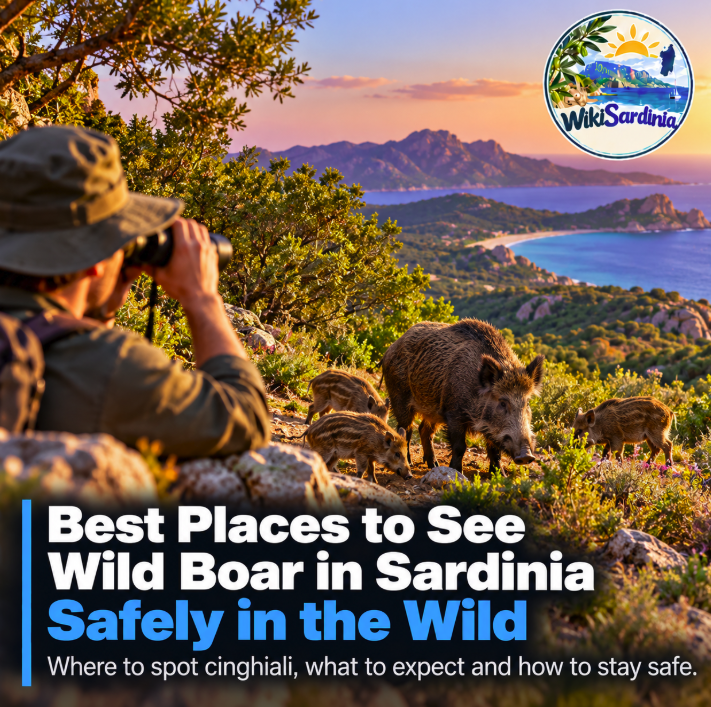
If your goal is to photograph or observe cinghiali safely, the best strategy is simple: choose wild habitat, go quietly around dawn or dusk, use binoculars or a telephoto lens and keep a generous distance.
Where are wild boar found in Sardinia?
Wild boar occur across many wooded and mountainous parts of Sardinia. Suitable habitat includes Mediterranean scrub, oak and cork woodland, forest edges and areas where dense vegetation provides cover.
Central Sardinia offers some of the strongest habitat, particularly around the Gennargentu and Supramonte landscapes. Large forested areas elsewhere on the island can also produce sightings, but there is never a guarantee: genuinely wild animals tend to avoid people.
1. Gennargentu: the best overall wild setting
For travellers who want wildlife rather than a roadside encounter, the Gennargentu area is our first choice. Its forests, scrub and mountain terrain support a wide range of Sardinian fauna and give boar space to behave naturally.
Walk established routes rather than pushing into dense vegetation. Early morning and the final hours before darkness generally give you a better chance of detecting wildlife while still allowing you to keep your distance.
2. Supramonte
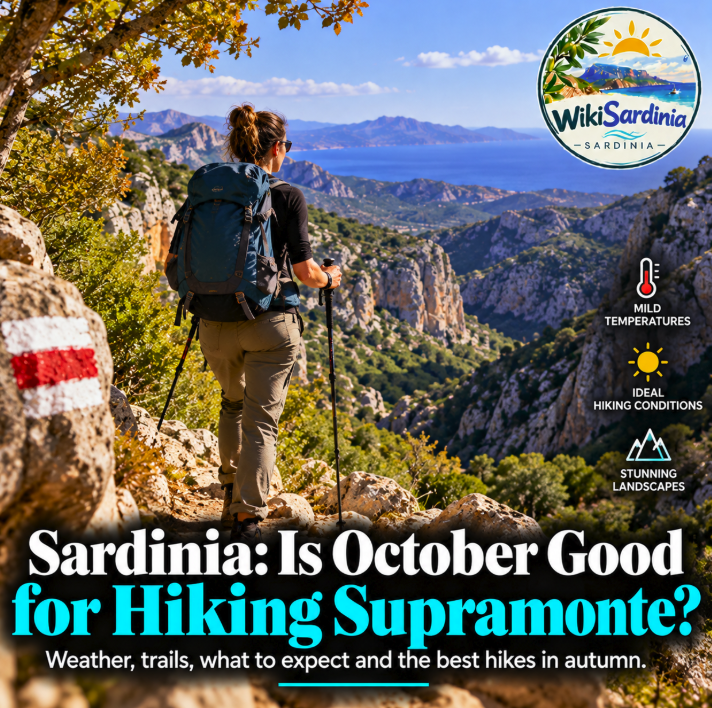
The Supramonte between the Nuoro and Ogliastra areas is another excellent landscape for wildlife watching. It combines limestone mountains, woodland, valleys and exceptionally rugged terrain.
This is not a place to leave marked routes just to follow an animal. The terrain itself can be more dangerous than the boar. A local hiking or nature guide can greatly improve both safety and your understanding of tracks and signs.
3. Forest areas of Montiferru and western Sardinia
The greener western interior around Montiferru also contains suitable boar habitat. Forest walks here can be combined with villages such as Santu Lussurgiu and other inland stops.
You are more likely to notice signs—turned soil, tracks or disturbed vegetation—than to encounter an animal standing conveniently beside the trail. That is normal wildlife watching.
What about Asinara?
Asinara is one of Sardinia's great wildlife destinations, but it should not be marketed as the island's primary wild-boar safari. The national park is much better known for its albino donkeys, horses, mouflon and rich birdlife.
If wild boar are your specific target, mainland forest and mountain habitats are a more sensible focus.
Are Sardinian wild boar dangerous?
Wild boar normally prefer to avoid humans, but they are powerful animals and can become dangerous when they feel trapped, threatened or when a female is protecting young.
The safest encounter is one in which the animal knows it has plenty of space to leave.
Never approach piglets
Young striped piglets can look harmless and extremely photogenic. They are also the strongest reason to increase your distance immediately. Their mother may be close even when you cannot see her.
Never move between piglets and an adult, never attempt to touch them and do not position yourself to block their escape route.
Do not feed wild boar
Feeding wildlife encourages animals to associate people with food and can make future encounters less predictable. Keep snacks packed away and never throw food toward an animal to attract it for a photograph.
Food waste should leave the countryside with you rather than being left beside trails or picnic areas.
If you meet a boar at close range
Stay calm and give it space. Do not deliberately corner the animal or move closer for a photograph. Back away slowly toward a position that leaves a clear route for the boar to escape.
If you are hiking with a dog, keep it under close control. Dogs can chase or provoke wild animals and then retreat toward their owner, turning an avoidable wildlife sighting into a dangerous situation.
Use binoculars instead of getting closer
The best wildlife encounters in Sardinia happen at a distance. Binoculars let you watch natural behaviour without forcing the animal to react to you, while a telephoto lens produces better photographs than approaching with a phone.
If the boar changes direction because of your presence, repeatedly looks toward you or appears agitated, you are already too close.
One more autumn consideration: hunting season
Visitors hiking in rural Sardinia during the autumn and winter should also be aware that regulated hunting activity may take place in permitted areas and periods. Follow local signs, stay on established routes and use extra caution if you hear hunting activity nearby.
Protected areas and organised nature excursions can be more comfortable choices for visitors unfamiliar with the local countryside.
Our recommendation
For the best combination of authentic habitat and responsible wildlife watching, choose a guided nature walk in the Gennargentu or Supramonte rather than searching for boar near bins, roads or inhabited areas.
You may see a cinghiale. You may only find tracks. Either result is better than forcing a close encounter. In Sardinia, the safest way to see wild boar is also the best way to see them: wild, undisturbed and from far away.