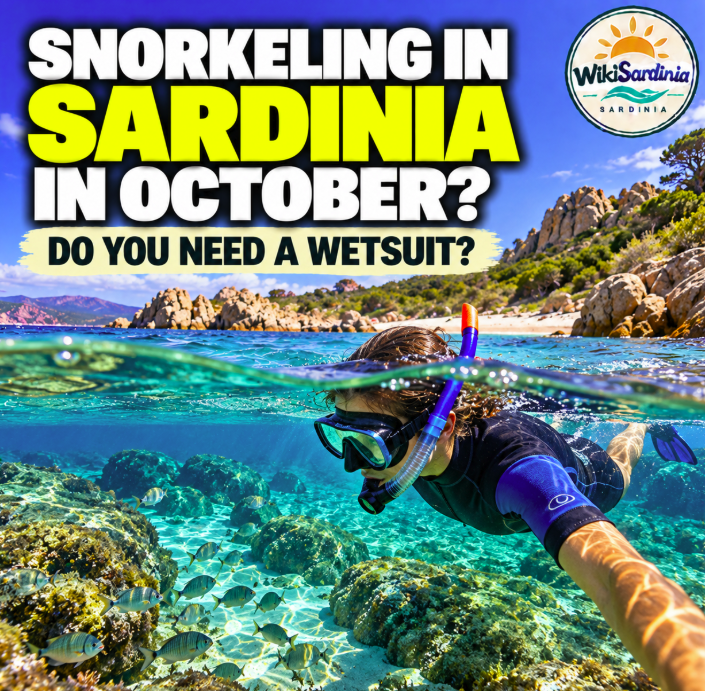
Yes, you can still snorkel in Sardinia in October—and a wetsuit is not always necessary. On a sunny, calm day, a short snorkeling session can feel comfortable in ordinary swimwear, particularly early in the month. But if you plan to stay in the water for longer, feel cold easily or visit later in October, a light 2–3 mm wetsuit can make a real difference.
The crucial distinction is between water temperature, personal comfort and sea safety. A pleasant temperature does not mean the water is safe: autumn wind, swell, currents and reduced beach supervision all need to be considered.
How warm is Sardinia's sea in October?
Historical October sea temperatures around Sardinia are typically around 21–23°C (70–73°F), varying by coast, year and date. A recent marine forecast snapshot for October 8, 2026, estimated approximately 24.5°C at one Sardinian sea grid point, warmer than its historical October average of about 21.9°C. That is a model estimate for a particular location and time, not a verified reading for every beach on October 10.
Early October often retains more of summer's warmth. As the month advances, cooler weather and shorter days can make a long snorkeling session less comfortable. A windy beach can feel chilly even when the sea is relatively mild.
Do you need a wetsuit to snorkel in October?
For a brief session, not necessarily. A confident swimmer who is comfortable in water around 22–24°C may enjoy a short snorkel in a swimsuit and rash guard. Someone who gets cold quickly—or wants to float and observe fish for an extended period—may prefer neoprene insulation.
There is no universal temperature threshold at which every person must wear a wetsuit. Body size, exposure, activity level, wind, sun and time spent in the water all influence how cold you feel.
What thickness of wetsuit is best?
| Option | When it may help | Considerations |
|---|---|---|
| Swimsuit + rash guard | Very short snorkels in comfortable, calm conditions | Little thermal insulation |
| 1–2 mm neoprene top or shorty | Light extra warmth for a moderate session | Less coverage for legs and arms |
| 3 mm shorty or full wetsuit | Longer snorkeling, cooler days or cold-sensitive swimmers | Fit and comfort matter; avoid overheating on land |
| 5 mm wetsuit | People needing greater warmth in cooler conditions | May be unnecessarily bulky or warm for a brief October snorkel |
These are practical examples, not medical or technical guarantees. PADI explains that wetsuit thickness is a major factor in warmth and describes 3 mm suits as common for warm water. Choose according to your comfort and the conditions rather than a rigid chart.
Is a 3 mm wetsuit enough for October snorkeling?
For many people snorkeling in typical October Sardinian water, a properly fitted 3 mm wetsuit is a reasonable starting point. It provides insulation while allowing freedom of movement. Some swimmers will prefer less; others may need more.
A wetsuit should fit snugly without restricting breathing or movement. A loose suit allows more water circulation and can feel colder. If renting, ask for help with sizing and try the suit on before entering the sea.
Is a shorty or full wetsuit better?
A shorty covers the torso and upper limbs, offering convenience and flexibility. A full suit covers more skin and can provide greater warmth and protection from minor abrasions. In October, a full 3 mm suit can be attractive for longer sessions, while a shorty may suit someone making a quick dip.
Neither style makes rough water safe. Thermal protection and swimming safety are separate issues.
Where can you snorkel in Sardinia in October?
Cala Cipolla and Chia
Chia's coves and rocky margins can offer interesting underwater scenery when the sea is calm. Cala Cipolla is a good candidate to consider, but wind direction and swell determine whether entering is sensible. Avoid rocks when waves are breaking.
Villasimius and the southeastern coast
Several beaches around Villasimius have clear-water reputations and a mixture of sand and rocky habitat. Choose the exact location based on that day's conditions and respect protected marine areas and any restrictions.
Cala Liberotto and the Gulf of Orosei
The Cala Liberotto coastline offers rocky sections and small coves that can be rewarding for surface exploration. Some coves are more exposed than they look, so check the sea before entering and do not snorkel alone.
San Teodoro and northeastern Sardinia
Beaches around San Teodoro can have shallow sandy entries, useful for getting comfortable with a mask. However, a wide sandy seabed may offer fewer underwater features than rocky margins, and autumn wind can quickly change visibility.
Alghero and the northwest
The Alghero coastline has rocky areas and clear-water coves, but the northwest is especially sensitive to some wind and swell directions. Choose a suitable sheltered spot rather than assuming a famous beach is safe on any given day.
Which coast is warmest in October?
Historical datasets often show relatively mild October sea temperatures along Sardinia's southern and southeastern coasts, including the Cagliari and Villasimius areas. Differences between locations can be modest and change from year to year.
For a snorkeling day, the calmest suitable beach is usually a better choice than chasing a one-degree temperature difference. Clear visibility, manageable entry and a safe exit matter more than a regional average.
How long can you stay snorkeling without a wetsuit?
There is no safe universal duration. Start with a short session near shore, assess your comfort and exit before you become cold or tired. You can lose heat in water even while the air feels warm.
Warning signs include persistent shivering, unusual fatigue, reduced coordination or difficulty concentrating. Leave the water, dry off and warm up if these occur. Do not attempt to push through cold discomfort to complete a planned route.
Is snorkeling visibility good in October?
It can be excellent on calm days, especially after a settled spell of weather. But autumn storms, waves and runoff can reduce visibility by stirring up sediment. Sandy beaches may become cloudy when waves break repeatedly; rocky areas can be hazardous in swell.
Do not assume that sunshine means clear underwater conditions. Look at the water from shore and avoid entering when visibility is poor.
What about jellyfish and marine life?
Fish and other Mediterranean marine organisms can be observed in October, though sightings vary by habitat and conditions. Jellyfish can also occur at different times of year. Do not touch unfamiliar marine life, and keep a respectful distance from wildlife.
Wearing a full wetsuit provides some skin coverage, but it is not a guarantee against stings or injuries.
Do you need fins?
Fins can make swimming more efficient for experienced users, but they are not mandatory for a short shallow-water snorkel. Choose comfortable fins, avoid kicking up sediment and never stand on fragile marine vegetation. Beginners should practice in calm, shallow conditions first.
October snorkeling safety checklist
- Check a beach-specific marine forecast: wind, waves, currents and official warnings.
- Never snorkel alone: go with a companion and agree on a simple route.
- Stay close to shore: do not swim toward offshore islands or rocks just because they appear nearby.
- Watch boat traffic: observe local swimming zones and any required surface-marker rules.
- Use a properly fitted mask and snorkel: test equipment before going deeper.
- Protect yourself from cooling: use suitable clothing, keep sessions short and have dry layers ready.
- Respect protected areas: check local rules and do not collect animals, shells or plants.
- Do not rely on lifeguards: services may be reduced or absent after summer.
- Leave early if conditions change: rising wind and waves can make the exit more difficult.
Can children snorkel in October?
Only in suitable conditions with close, active adult supervision and appropriately sized equipment. Children may become cold faster than adults and may struggle to recognize fatigue. Keep any session brief, in shallow water and within easy reach of shore.
Do not treat a wetsuit as a flotation device or a substitute for supervision.
What should you pack for October snorkeling?
- Mask and snorkel that fit well.
- Optional fins suitable for your experience.
- Rash guard or a light wetsuit, depending on comfort.
- Towel, warm dry clothes and footwear.
- Drinking water and sun protection.
- A companion and a plan for entering and exiting safely.
- Any legally required signaling equipment for your activity and location.
FAQ
Can you snorkel in Sardinia in October?
Yes, on calm days with suitable sea conditions. October water often remains mild enough for a short session.
Do you need a wetsuit in October?
Not always. A wetsuit is optional for some short swims but useful for longer sessions or anyone sensitive to cold.
Is a 3 mm wetsuit enough?
A 3 mm suit is a common choice for relatively warm water and may suit many October snorkelers. Individual comfort varies.
Is a shorty wetsuit better than a full suit?
A shorty is lighter and easier for brief sessions, while a full suit offers more coverage and often more warmth.
Is the sea 23°C in October?
It can be, but temperatures vary by beach, year and date. Historical averages around the island are generally in the low 20s Celsius.
Is early October better than late October?
Early October often has warmer water, but wind and wave conditions can make any particular day unsuitable.
Can beginners snorkel in October?
Yes, in calm, shallow conditions with a companion, proper equipment and conservative plans.
Are snorkeling tours running in October?
Some operators may offer autumn activities, but schedules are seasonal. Confirm directly rather than assuming summer services continue.
Is snorkeling safe after a storm?
Only once the sea has settled and conditions are suitable. Check visibility, waves and currents before entering.
The bottom line
October snorkeling in Sardinia is absolutely possible, but a wetsuit is a comfort decision—not a blanket requirement. For a brief swim on a warm, calm day, swimwear and a rash guard may be enough. For longer sessions, later dates or cold-sensitive visitors, a well-fitting 2–3 mm wetsuit is often a smart choice. Whatever you wear, let the wind, waves and local safety conditions decide whether you enter the sea.
Sources and further reading
PADI — Wetsuits and thermal protection; SeaTemperature.info — Sardinia October historical temperatures; Snorkel Forecast — Sardinia temperature model and historical baseline. The forecast snapshot cited above is dated October 8, 2026 and should not be described as today's exact beach temperature.