Sardinia is famous for fresh seafood, rustic bread, handmade pasta, sheep's cheese and memorable family-run restaurants. But if you have coeliac disease, a gluten intolerance, lactose intolerance or a milk allergy, you may wonder whether a holiday here will be straightforward.
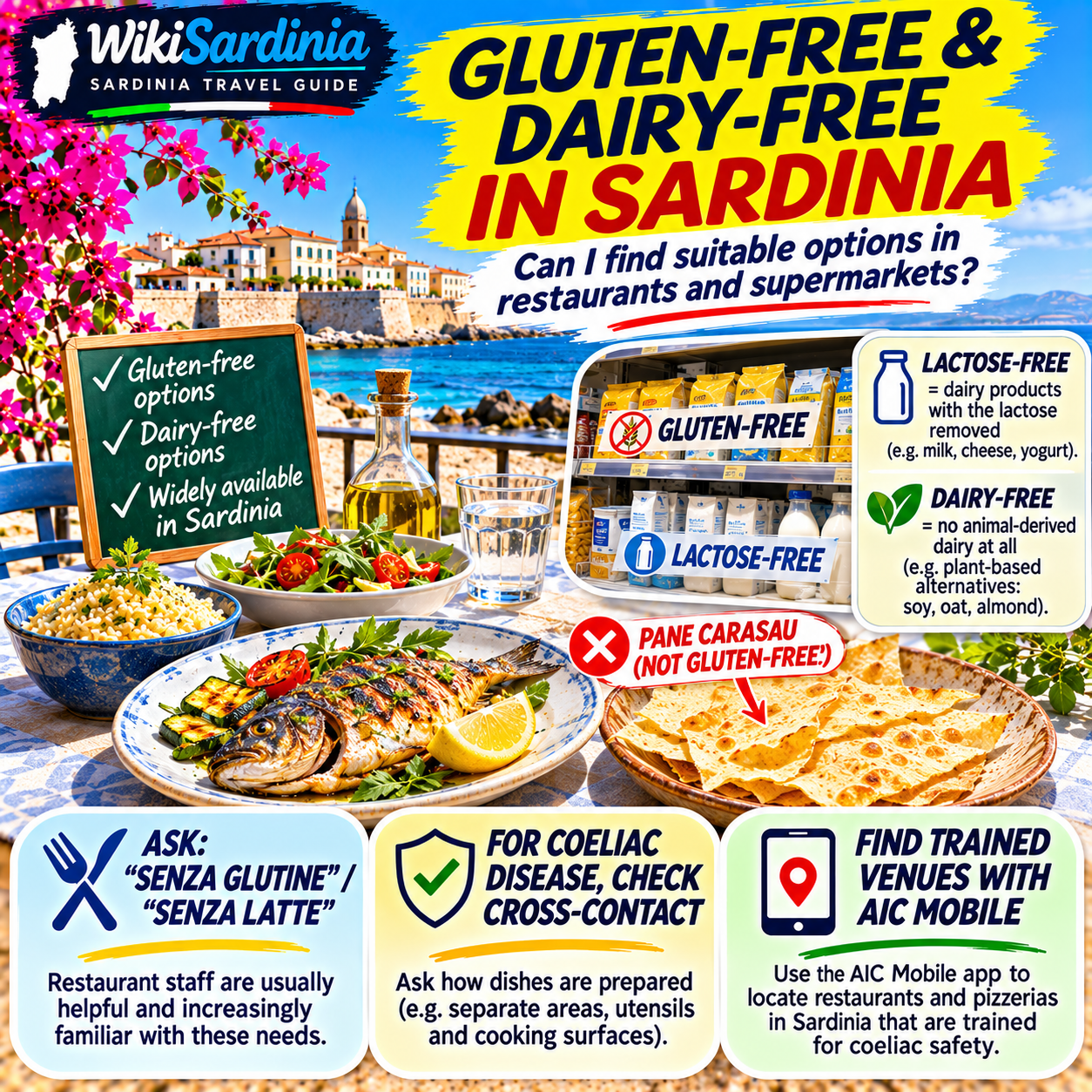
Yes, gluten-free and lactose-free options are available in Sardinia, especially in larger towns, tourist destinations and well-stocked supermarkets. Many restaurants can also prepare dishes without certain ingredients. However, finding a suitable meal is not the same as finding a meal safely prepared for someone with coeliac disease or a serious milk allergy. Clear communication and advance planning matter.
How easy is it to eat gluten-free in Sardinia?
Italy has an established culture of coeliac awareness, and the Associazione Italiana Celiachia (AIC) operates a nationwide programme called Alimentazione Fuori Casa (AFC), or Eating Away from Home. AIC Sardegna participates in this network, which includes restaurants, pizzerias, hotels, cafés, gelaterias and other food businesses trained to handle gluten-free meals.
That does not mean every Sardinian restaurant has a dedicated gluten-free kitchen. Options are generally easier to locate in cities and popular coastal destinations, while smaller villages or remote areas may have a more limited selection. If you need strict gluten avoidance, contact the restaurant before visiting and explain that you have coeliac disease, not simply a preference for eating less bread.
How do I find restaurants suitable for coeliac disease?
The most useful specialist resource is AIC Mobile, the official app from the Italian Coeliac Association. It includes information about participating AFC restaurants and other establishments, plus product guidance and specialised shops. AIC Sardegna also provides information about its regional AFC programme.
Participating establishments receive training, follow AIC procedures designed to reduce gluten cross-contact and undergo monitoring. This is a valuable indicator of preparation, although diners should still tell staff about their medical requirements each time. The app has free basic features and fuller access options for members or temporary visitors; check current availability and pricing directly rather than relying on old travel posts.
When booking, ask: “Avete opzioni senza glutine adatte a una persona celiaca?”—“Do you have gluten-free options suitable for someone with coeliac disease?”
Is a naturally gluten-free dish always safe?
No. Fish, meat, vegetables, potatoes and rice may be naturally free of gluten, but a restaurant dish can contain flour, breadcrumbs, wheat-based sauces or contamination from shared utensils, cooking surfaces, pasta water or fryers.
A grilled fish dish may be a practical option, but ask whether it is cooked on a clean surface, seasoned without gluten-containing ingredients and served without shared-breadcrumb garnishes. For coeliac disease, the kitchen's procedures matter just as much as the ingredients listed on the menu.
Which traditional Sardinian foods contain gluten?
Several iconic Sardinian specialities are made from wheat or semolina. Traditional pane carasau is a thin, crisp wheat bread; fregula is toasted semolina pasta; malloreddus are typically made with semolina; and culurgiones are stuffed pasta parcels made with wheat dough. Seadas, the fried pastry filled with cheese and served with honey, normally contains wheat flour.
These traditional versions are not gluten-free. Some businesses make specialised gluten-free adaptations, but ask whether they are suitable for coeliac disease and how they are prepared. Never assume that a dish is gluten-free because it is traditional, handmade or served in a small rural restaurant.
What Sardinian dishes might be easier to adapt?
Depending on preparation, simple grilled fish, shellfish, meat, vegetables, salads, plain rice and fruit can be useful starting points. Some traditional dishes may be made without gluten-containing ingredients, but recipes vary and cross-contact is always possible.
For example, roast suckling pig (porceddu) may be served without wheat ingredients, but sauces, marinades, side dishes and shared preparation equipment must still be checked. Ask for ingredients and preparation methods rather than relying on a dish's name.
Can I find gluten-free food in Sardinian supermarkets?
Yes. Larger supermarkets commonly stock packaged gluten-free pasta, bread, biscuits, crackers and other alternatives, often in a dedicated senza glutine section or alongside standard products. Stock and brand selection vary by shop, and small village minimarkets may offer only a few suitable products.
Look for the Italian phrase “senza glutine” and, where present, the Crossed Grain symbol. Under EU rules, a product labelled “gluten-free” must meet the applicable threshold of no more than 20 mg of gluten per kilogram. Always check the specific product label, especially for snacks, sauces, ready meals and processed meats.
For coeliac travellers staying in a remote village or holiday apartment, buying a few reliable staples in a larger town can reduce last-minute stress.
What about lactose-free options?
Lactose-free products are also commonly sold in Italian supermarkets. Look for “senza lattosio” on milk, yoghurt, cheese and desserts. Many cafés may offer plant-based drinks such as soy, oat or almond alternatives, but availability varies, especially in smaller places.
Restaurants can often prepare a simple dish without butter, cream or cheese if you ask in advance. However, Sardinian cuisine uses sheep's and other cheeses in many traditional recipes, so dairy ingredients may appear in pasta fillings, sauces, pastries and desserts.
Important: lactose-free is not the same as dairy-free
This distinction is essential. Lactose intolerance concerns difficulty digesting lactose, a milk sugar. A product marked senza lattosio may still contain milk proteins and is therefore not suitable for someone with a milk-protein allergy.
If you must avoid all dairy, say “senza latte e derivati” (without milk and milk derivatives), and explain whether it is an allergy. Check butter, cream, cheese, whey, casein and other milk-derived ingredients. Plant-based alternatives can be useful, but their labels and any other allergens must still be checked.
Does pecorino contain lactose?
Sardinia's famous sheep's-milk cheeses vary in ageing and composition. Some long-aged cheeses may contain very little residual lactose, but this does not mean every pecorino is automatically lactose-free or appropriate for every person with lactose intolerance.
Check the producer's specific labelling and your individual tolerance. For milk allergy, even a low-lactose aged cheese is still a dairy product and can be unsafe because it contains milk proteins.
What about gelato, pizza and desserts?
Gelaterias sometimes offer fruit sorbets or plant-based flavours that do not use milk, but ingredients and shared scoops or display equipment can cause allergen cross-contact. Ask whether the sorbet contains milk, whether cones contain wheat and whether staff can serve it safely.
Gluten-free pizza is available in some Sardinian pizzerias, but a gluten-free base cooked in a kitchen full of wheat flour requires careful procedures. For coeliac disease, ask about separate preparation, utensils and oven handling rather than relying solely on a “GF” symbol on the menu.
Traditional desserts such as seadas and pardulas commonly contain wheat and dairy. Some almond-based sweets may have simpler ingredient lists, but they still need checking for gluten-containing additions and cross-contact.
Are restaurants required to provide allergen information?
Yes. European food-information rules require businesses to provide information about specified allergens, including cereals containing gluten and milk, for both packaged and non-prepacked foods served in restaurants and cafés. The European Commission explains these obligations under Regulation (EU) No 1169/2011.
However, allergen disclosure does not mean a restaurant must offer a gluten-free or dairy-free menu, and a listed dish is not automatically safe from cross-contact. If staff cannot confidently explain preparation, choose another establishment.
Useful Italian phrases for ordering safely
- Sono celiaco / celiaca. — I have coeliac disease.
- Devo evitare il glutine, anche le contaminazioni. — I must avoid gluten, including cross-contact.
- Avete piatti senza glutine? — Do you have gluten-free dishes?
- La friggitrice è condivisa con cibi impanati? — Is the fryer shared with breaded foods?
- Sono intollerante al lattosio. — I am lactose intolerant.
- Sono allergico / allergica alle proteine del latte. — I am allergic to milk proteins.
- Questo piatto contiene latte, burro, panna o formaggio? — Does this dish contain milk, butter, cream or cheese?
- Potete evitare contaminazioni con latte e derivati? — Can you prevent cross-contact with milk and dairy ingredients?
Is it easier in Cagliari, Alghero or Olbia than in small villages?
As a practical matter, larger cities and major tourist centres usually offer a wider choice of supermarkets, restaurants and specialist products than isolated villages. This is a general planning observation, not a guarantee about any particular venue. Check the AIC network, contact restaurants and verify shop opening hours before relying on a specific stop.
If you're touring the interior of Sardinia or staying in a remote agriturismo, tell the host about dietary needs when booking. A small kitchen may be happy to help with advance notice but unable to improvise a medically safe meal at short notice.
What if you have both gluten and dairy restrictions?
Explain both restrictions separately. A gluten-free pizza may contain mozzarella; a lactose-free biscuit may still contain wheat; and a vegan dish may contain gluten. Read all relevant ingredients and discuss preparation methods with the kitchen.
For coeliac disease combined with milk allergy, choose restaurants that can explain both cross-contact risks. Bringing a written Italian allergy card can help avoid confusion, particularly if the restaurant is busy.
Frequently asked questions
Is Sardinia good for travellers with coeliac disease?
There are useful options, including venues in the AIC Alimentazione Fuori Casa network, but careful selection and clear communication remain important.
Can I buy gluten-free bread and pasta in supermarkets?
Usually yes in larger supermarkets. Selection may be limited in small shops, so stock up before travelling to remote areas.
Is pane carasau gluten-free?
No. Traditional pane carasau is made from wheat. Only a specifically produced gluten-free version should be considered, with appropriate checks for coeliac safety.
Is Sardinian pecorino dairy-free?
No. Pecorino is a sheep's-milk cheese. Some aged varieties may be low in lactose, but they still contain milk proteins.
Can I find dairy-free gelato?
Some gelaterias offer dairy-free fruit sorbets or other options. Always ask about ingredients and cross-contact, particularly if you have a milk allergy.
Are gluten-free and lactose-free the same thing?
No. Gluten is a protein found in certain cereals; lactose is a sugar found in milk. Products may be free from one but contain the other.
Does a restaurant's allergen list guarantee safety?
No. It helps identify ingredients, but people with coeliac disease or serious allergies should also ask about preparation and cross-contact.
Where can I find reliable gluten-free restaurants in Sardinia?
Use the official AIC Mobile app and the AIC Sardegna network, and contact the establishment directly before your visit.
The bottom line
A gluten-free or dairy-free holiday in Sardinia is entirely possible with some planning. Supermarkets in larger towns are useful for supplies, and many restaurants can discuss dietary requirements. The key is to be specific: coeliac disease requires attention to gluten cross-contact, while milk allergy is different from lactose intolerance. Check labels, use the AIC resources and speak with staff before ordering—then enjoy Sardinia's food culture with greater confidence.