Sardinia looks deceptively manageable on a map. It is one island, after all. Surely you can land in Olbia, see the famous beaches, visit Alghero, explore Cagliari and squeeze in a few mountain villages during a single week?
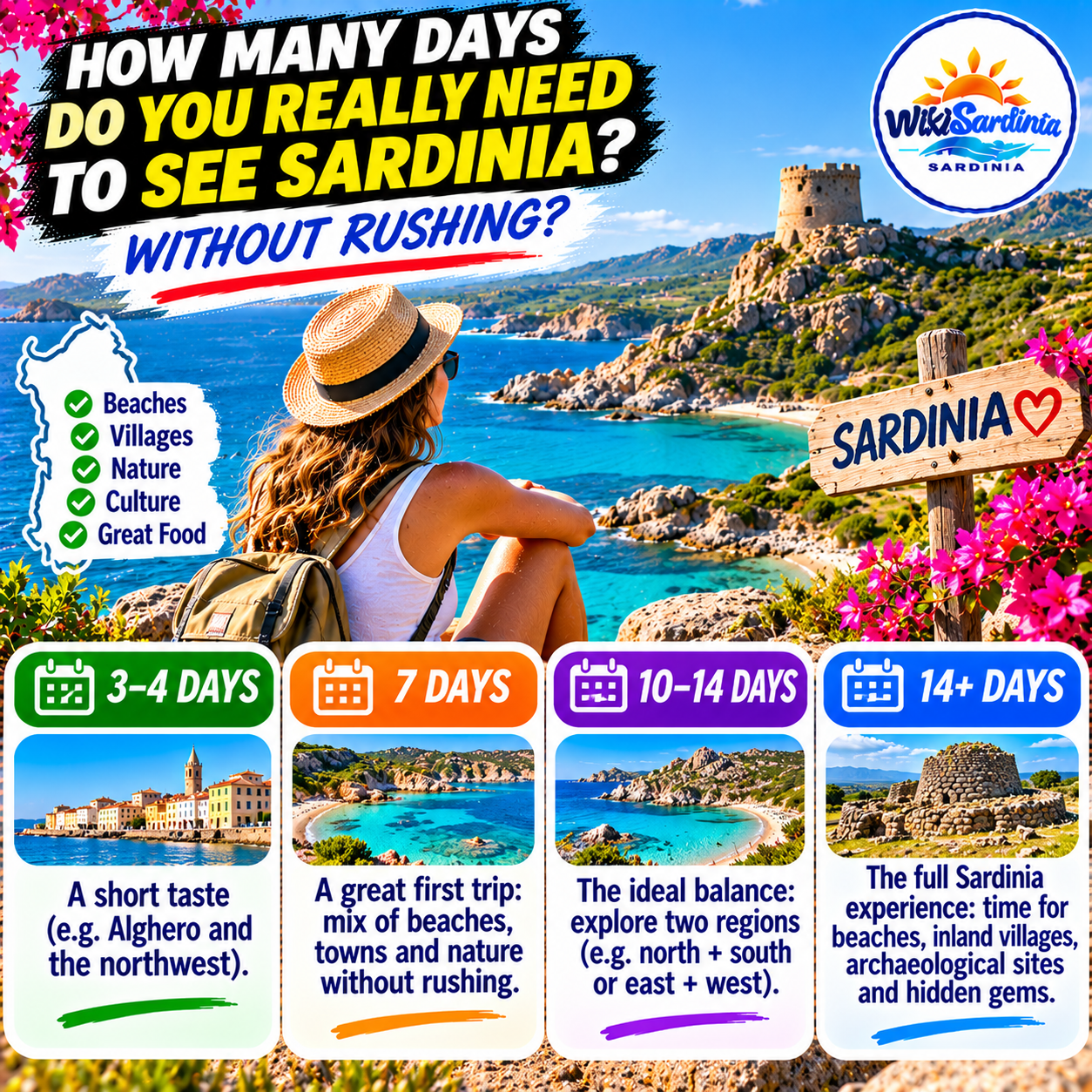
Technically, you can cover considerable distances. But spending your holiday in a car is not the same as experiencing Sardinia. For a first visit, seven to ten days is an excellent starting point if you focus on one or two areas rather than trying to see the entire island. With three or four days, choose one base. With two weeks or more, you can explore several regions at a gentler pace.
Why Sardinia takes longer to explore than you might expect
Sardinia is Italy's second-largest island, with an area of roughly 24,000 square kilometres. Its coastline, mountain landscapes, archaeological sites and towns are spread over considerable distances. Motorways are not the whole story: reaching smaller villages, remote beaches and inland attractions may involve winding roads and slower journeys.
That is why a route that appears short on a map can consume much of a day once you include parking, walking, meals and unplanned stops. Summer traffic and busy beach access points can add further delays.
The key is to distinguish between visiting several places and enjoying those places. If you want long lunches, time in the sea, local markets and spontaneous discoveries, build in breathing room.
Is three or four days enough for Sardinia?
Yes, for a rewarding short break—not for a complete island tour. Pick a convenient base near your arrival airport and explore its surroundings. Alghero is a particularly attractive option for a northwest Sardinia city-and-coast trip, with a historic centre, waterfront walks, nearby beaches and excursions into the surrounding area.
Another possibility is Cagliari, combining city culture, food, archaeological sites and accessible beaches. If you land in Olbia, consider a focused trip around the northeast rather than attempting a cross-island circuit.
For a three- or four-day stay, avoid changing accommodation every night. A single base makes a short trip much more enjoyable.
Seven days in Sardinia: a great first holiday
One week offers enough time to combine beaches, a town or two, a little nature and some excellent meals. But seven days do not realistically allow a relaxed exploration of the whole island.
A simple seven-day approach is to spend the entire week in one region, or divide it between two nearby bases. In northwest Sardinia, for example, you could spend several days exploring Alghero, its old town and surrounding beaches, then add excursions toward Bosa, Capo Caccia or selected inland communities, depending on your interests and conditions.
Alternatively, a week based around Cagliari and the southern coast could balance urban culture with day trips and beach time. The best itinerary is not the one with the most map pins; it is the one that leaves time to enjoy each stop.
Ten days in Sardinia: more freedom, less rushing
Ten days is an especially comfortable duration for first-time visitors who want variety. You can choose two distinct bases and spend several nights in each, with time for the journey between them.
One option is to combine northwest Sardinia with another part of the island, such as the northeast or a central-western area. Another is to focus on southern Sardinia with selected inland excursions. There is no need to force an ambitious north-to-south loop unless travelling itself is part of the pleasure.
Allow at least one flexible day for weather, a favourite beach or a spontaneous recommendation from a local host.
Fourteen days: a deeper Sardinian experience
With two weeks, you can explore multiple regions while still having genuine rest days. A practical approach is to select three or perhaps four bases, depending on distances and your tolerance for moving accommodation.
You might combine a historic coastal city, an area known for beaches and an inland or less-visited region. Two weeks also give you time for archaeological sites, food experiences, village festivals where available, hiking and longer lunches that are not squeezed between driving commitments.
Even then, you will not have seen everything. Sardinia rewards repeat visits, and that is part of its appeal.
What about more than two weeks?
If you have 15–21 days or longer, a broader road trip becomes more realistic. You can move through several parts of the island with fewer compromises and build in rest days. This is particularly appealing for travellers interested in Nuragic archaeology, mountain scenery, traditional villages, walking routes and the less publicised coastline.
For an extended trip, plan around geography rather than zigzagging repeatedly across the island. Consecutive stops should ideally be near each other, and longer transfers should be treated as travel days rather than opportunities to cram in numerous attractions.
How many bases should you choose?
A useful rule of thumb is one base for three or four days, one or two bases for a week, two bases for around ten days and roughly three for a fortnight. These are suggestions, not strict rules. Families with young children, travellers without a car and anyone seeking a restful beach holiday may prefer even fewer accommodation changes.
Every move involves packing, checking out, driving, parking and checking in. Reducing hotel changes can be one of the simplest ways to make a trip feel longer.
Do you need a rental car?
For many itineraries, a car offers the greatest flexibility, especially when visiting remote beaches, inland villages and archaeological sites. But you do not necessarily need one for every day. If you stay in Alghero or Cagliari, you can enjoy the town on foot and use public transport or organised excursions for some activities.
Check transport connections and opening times before assuming a destination is easy to reach without driving. Rural buses may be less frequent than visitors expect, and services can vary by season and day of the week.
How much time should you allow for beaches?
Many travellers underestimate the time needed for a beach day. Reaching a cove, parking, walking to the sand, swimming and enjoying lunch can easily fill much of a day. Some popular beaches have seasonal access rules or reservation systems, and strong winds may make your first choice unsuitable.
Instead of planning three or four distant beaches in a single day, choose one main beach and keep a nearby alternative in mind. This is especially important if you want to experience Sardinia's coast rather than just photograph it.
Is it better to visit the north or south?
Neither is universally better. Northern Sardinia includes famous coastal scenery, islands and resort areas, while the south offers Cagliari, archaeological heritage and a varied coastline. Western Sardinia has dramatic landscapes and distinctive towns; the east has mountain-to-sea scenery and beaches that can require more involved access.
Choose according to your arrival point, interests, budget and available time. For a first week, picking one side of the island often produces a more relaxed holiday than attempting both extremes.
Sample relaxed itineraries
Three to four days: Alghero and northwest Sardinia
Spend time in Alghero's historic centre, enjoy a nearby beach, and choose one excursion such as Bosa or the Capo Caccia area. Keep the schedule light enough to enjoy meals and evenings in town.
Seven days: one region, explored properly
Choose Alghero and the northwest, Cagliari and the south, or Olbia and the northeast. Mix beach days with local history, nature and a village visit. Reserve one day with no fixed plan.
Ten days: two complementary bases
Spend four or five nights in each of two areas. For example, combine a city-and-culture base with a coastal base, leaving time for the transfer and at least one full rest day.
Fourteen days: a broader discovery
Plan three bases in a logical geographic sequence. Alternate beach days with inland exploration, food experiences and cultural stops. Do not make every day a long drive.
What changes in July and August?
Peak summer brings higher demand for accommodation, rental cars, restaurants and some beach access arrangements. Traffic and parking can also slow down travel near famous coastal areas. During these weeks, it is even more valuable to avoid overloading your itinerary and to reserve key services early.
May, June, September and early October can be attractive for travellers who prioritise quieter roads and sightseeing, although weather and seasonal opening hours vary.
Frequently asked questions
Is five days enough in Sardinia?
Yes, for one well-chosen area. You can enjoy a balanced short holiday, but you should not attempt a full-island tour.
Can I see all of Sardinia in seven days?
You can visit several highlights, but seeing the whole island without rushing is unrealistic. Focus on one region or two nearby bases.
Is ten days better than seven?
For travellers who want to combine two areas and still relax, ten days often provide a more comfortable balance.
How many days do I need without a car?
It depends on your base and transport connections. A week in a well-connected town can work well without a car, but remote excursions may require tours or extra planning.
Is two weeks enough for a Sardinia road trip?
Yes, for a rewarding multi-region route with rest days, though not for every beach and attraction on the island.
Should I stay in one hotel or move around?
For a short stay, one base is usually simpler. With ten days or more, two or three bases can help you explore farther without repeated long day trips.
The real answer: slow down and see more
Sardinia is not a destination that needs to be conquered on a checklist. Seven to ten days can make an excellent first visit, provided you resist the temptation to cross the island every morning. If you only have a long weekend, enjoy one corner properly. If you have two weeks, explore more deeply. The best Sardinian holiday is the one that leaves time for an unexpected beach, a village conversation and a dinner you do not have to rush.