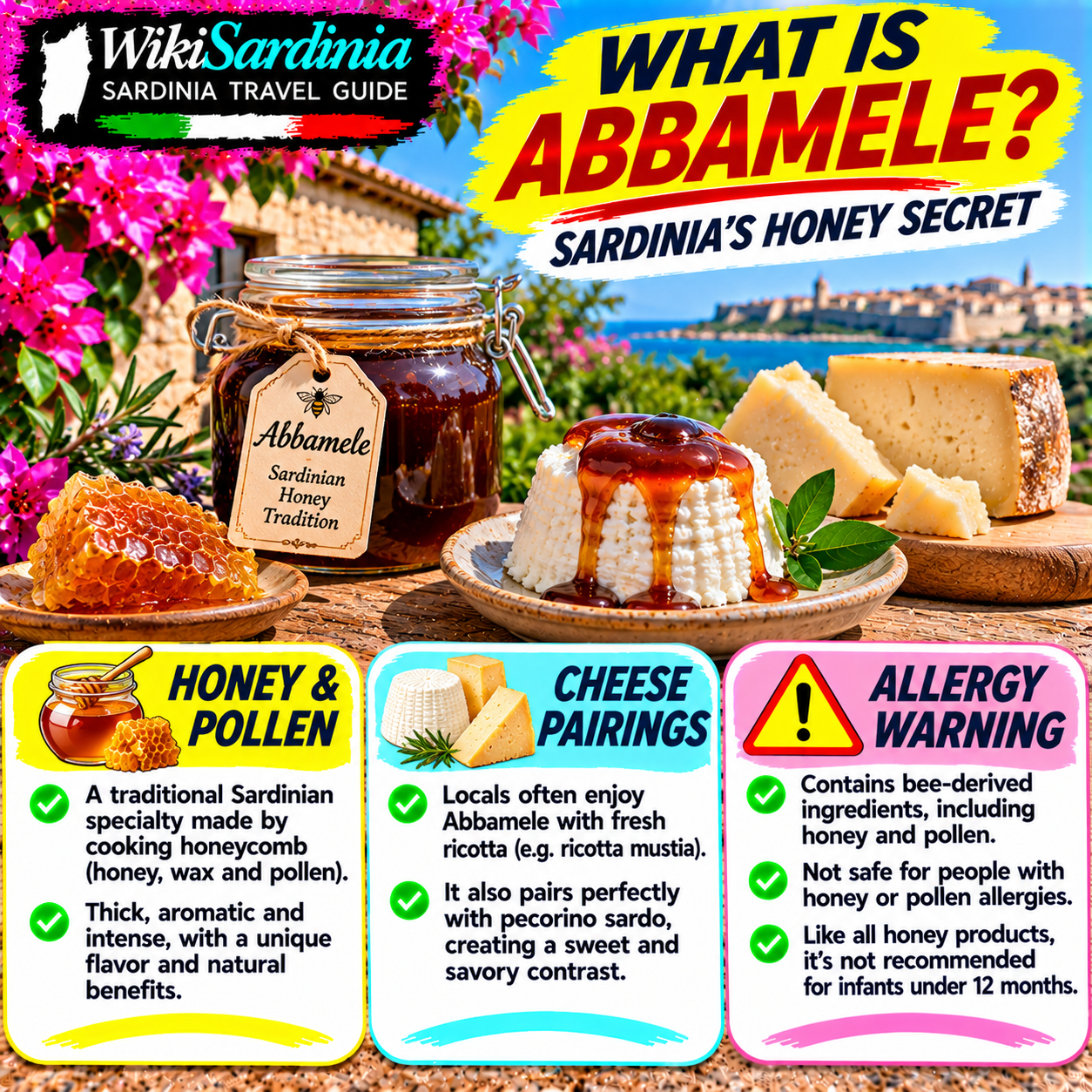
Abbamele (also spelled abamele) is a traditional Sardinian honey-derived syrup, dark, aromatic and intensely flavored. It is often enjoyed with fresh ricotta, mature sheep's cheese or traditional desserts. But it is not automatically safe for people with allergies: ingredients and processing vary, and anyone with a known allergy to honey or bee-derived food products should avoid tasting it unless their allergy specialist has confirmed it is appropriate.
What is abbamele?
Abbamele is a traditional Sardinian preparation made by extracting remaining honey and other soluble material from honeycombs with warm water and concentrating the liquid through cooking. Depending on the producer and recipe, it can contain components derived from honeycomb, wax traces, pollen and other naturally occurring substances; citrus peel may be added for aroma. The final product is a thick, dark, sweet syrup with caramelized and sometimes slightly bitter notes. It is not simply ordinary honey colored brown, and not every jar has an identical ingredient list.
How is abbamele made?
Traditional preparation uses honeycombs after honey extraction. The combs are washed or worked with warm water to recover remaining honey, then the liquid is filtered and slowly simmered until concentrated. Some traditional recipes add citrus peel. The result is a syrup rather than the original honey, with flavor influenced by cooking, botanical origin and recipe. Production details differ, so read the label if you need to know exactly what is inside.
Is abbamele safe if you have allergies?
Not necessarily. Abbamele is derived from bee products and may contain naturally occurring pollen or other bee-associated proteins. True allergy to honey is uncommon but can be serious, and some people react to pollen proteins or bee-derived components present in honey products. The fact that abbamele is heated does not guarantee that every potential allergen has been destroyed. If you have experienced hives, swelling, breathing problems or anaphylaxis after honey or other bee products, do not use abbamele as an at-home test of tolerance. Discuss it with an allergist first.
Does hay fever mean you cannot eat abbamele?
Not automatically. Seasonal pollen allergy does not mean every person will react to honey or abbamele, but cross-reactivity and individual sensitivities are possible. The relevant question is your specific allergy history and the actual product composition. People with severe pollen-related food reactions or unexplained reactions to honey should seek individual medical advice before trying it. A jar described as 'natural' or 'traditional' is not evidence that it is hypoallergenic.
What about bee-sting allergies?
Bee-venom allergy and allergy to honey or bee-derived food products involve different exposures and allergens. Being allergic to bee stings does not automatically establish an allergy to abbamele, nor does it prove safety. If you have a history of severe allergic reactions, discuss your circumstances with a qualified clinician rather than relying on a general rule.
Can people with milk allergies eat abbamele with cheese?
Abbamele itself is not necessarily a dairy product, but the popular serving combinations with ricotta and pecorino contain milk proteins. Ricotta and sheep's-milk cheese are not suitable for someone with a confirmed milk-protein allergy unless their treating clinician has specifically advised otherwise. Lactose intolerance is different from milk allergy: fresh ricotta generally contains lactose, while aged cheeses may contain less, but individual tolerance varies.
Is abbamele safe for babies?
Do not give abbamele to infants under 12 months. It is derived from honey, and honey products can present an infant botulism risk. Heating or cooking is not a reliable guarantee that bacterial spores have been eliminated. For older children, consider sugar intake and any known allergies.
How do Sardinians eat abbamele with cheese?
One classic way to serve abbamele is to drizzle a small amount over fresh ricotta, creating a contrast between the creamy, mild cheese and the dark, aromatic syrup. It can also accompany aged pecorino, where its sweetness balances salty, savory flavors. These pairings may appear in homes, agriturismi and restaurants serving regional specialties, but availability is not universal. Ask whether the establishment has abbamele rather than assuming it is included on every cheese board.
How much should you use?
Start with about one teaspoon over a small portion of ricotta or alongside two or three slices of pecorino, then adjust to taste. Abbamele is concentrated and often intensely flavored, so a little can go a long way. This is a serving suggestion, not a traditional fixed portion or a medical recommendation.
Which cheese pairs best?
Fresh ricotta: delicate and creamy, ideal for highlighting abbamele's dark sweetness. Ricotta mustia: smoked and more assertive, creating a richer contrast. Young pecorino: milder and softer, suitable for those who prefer a gentler sweet-and-savory pairing. Aged pecorino: firmer, saltier and more intense, especially good with just a few drops of syrup. These are tasting suggestions rather than mandatory local rules.
Can you use abbamele in other dishes?
Yes. It can be used as a topping for desserts, yogurt, fruit, pastries or ice cream, and as a sweet accent in savory cooking. Its cooked flavor is stronger than that of many mild honeys, so substitute cautiously in recipes. Some cooks enjoy it with traditional Sardinian sweets, but a specific dessert may use ordinary honey instead; do not assume the two ingredients are interchangeable in every recipe.
Is abbamele healthier than honey or sugar?
There is no reliable basis to claim that abbamele is a health treatment or automatically healthier than honey or table sugar. It is a concentrated sweetener and should be enjoyed in moderate amounts. Composition varies by production method. Descriptions such as 'natural benefits' should not be interpreted as proof of medical effects, especially for people with diabetes or other dietary concerns.
How can you identify authentic abbamele?
Look for a Sardinian producer, a clear ingredients label and a description of the traditional honeycomb-based process. Some products include citrus peel or other flavorings. Abbamele is recognized in Sardinia's traditional food heritage, but the word itself should not be confused with a blanket protected-origin certification. Ask the seller where it was made and how it was prepared.
Where can visitors buy or taste abbamele?
Specialty-food shops, honey producers, farmers' markets and some agriturismi in Sardinia may carry abbamele. It is a niche product, so call ahead if you are traveling specifically to taste it. Ask for abbamele or abamele and whether it is served with ricotta or pecorino. If purchasing for someone with allergies, ask for the complete ingredient and allergen information, including possible cross-contact.
Useful Italian phrases
“Avete l'abbamele?” — Do you have abbamele? “È fatto con miele e favi?” — Is it made with honey and honeycombs? “Contiene polline o altri prodotti delle api?” — Does it contain pollen or other bee products? “Posso avere la lista degli ingredienti e degli allergeni?” — May I see the ingredients and allergen information? “Lo servite con la ricotta?” — Do you serve it with ricotta?
Frequently asked questions
Is abbamele the same as honey?
No. It is a cooked, concentrated honey-derived preparation traditionally made using material recovered from honeycombs.
Does abbamele always contain pollen?
Not necessarily as an intentionally added ingredient. Natural traces and composition can vary, so confirm with the producer if relevant to your allergy.
Can someone with a honey allergy try abbamele?
Do not assume it is safe. Avoid self-testing and consult an allergy specialist.
Does cooking remove the allergens?
Not reliably. Heating does not guarantee complete elimination of allergenic proteins.
Can a person allergic to bee stings eat abbamele?
Bee-venom and food allergies are different; individual medical advice is important if reactions have been severe.
Can babies eat abbamele?
No. Avoid honey-derived products in infants under 12 months because of infant botulism risk.
What cheese tastes best with abbamele?
Fresh ricotta and aged pecorino are excellent starting points.
Is abbamele vegan?
No. It is derived from honey, an animal-produced ingredient.
The takeaway
Abbamele is a distinctive Sardinian sweetener worth discovering with ricotta or pecorino, but it is not allergy-free. Read the label, ask about ingredients, and avoid it if you have a known honey or bee-product food allergy unless cleared by your clinician. Never give it to babies under one year. For everyone else who can safely eat it, a small drizzle is a memorable introduction to Sardinia's traditional flavors.
References: Regione Autonoma della Sardegna — traditional agri-food products and abbamele; Laore Sardegna — Sardinian food traditions; CDC — Infant botulism prevention and honey; Food Allergy Research & Education — food allergy safety; American Academy of Allergy, Asthma & Immunology — allergy information.