After Sardinia’s nuraghi, two of the island’s most rewarding archaeological sites tell a very different chapter of its history — and both stand almost directly on the Mediterranean. Nora, near Pula in southern Sardinia, and Tharros, on the Sinis Peninsula in the west, preserve layers of Phoenician, Punic and Roman civilization in landscapes where ancient streets and ruins meet blue water. For travelers who like archaeology but also want the scenery that brought them to Sardinia, these are two of the strongest places to put on an itinerary.
Nora: an ancient city at the edge of the sea
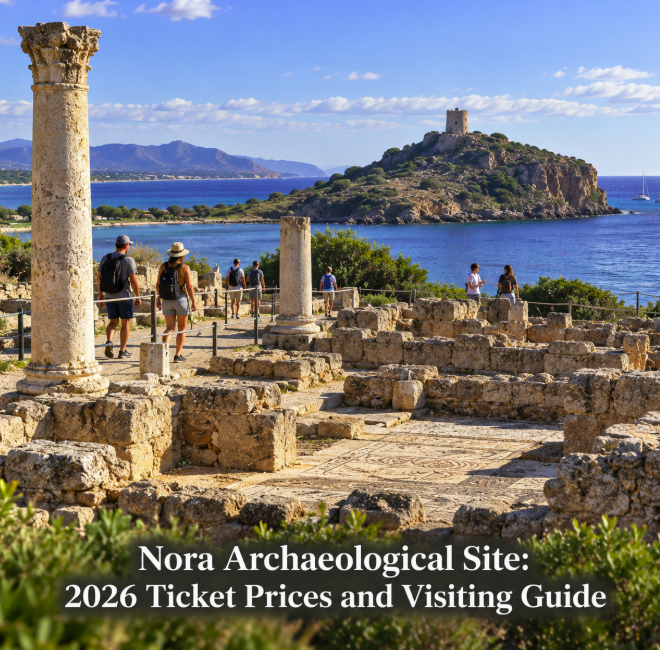
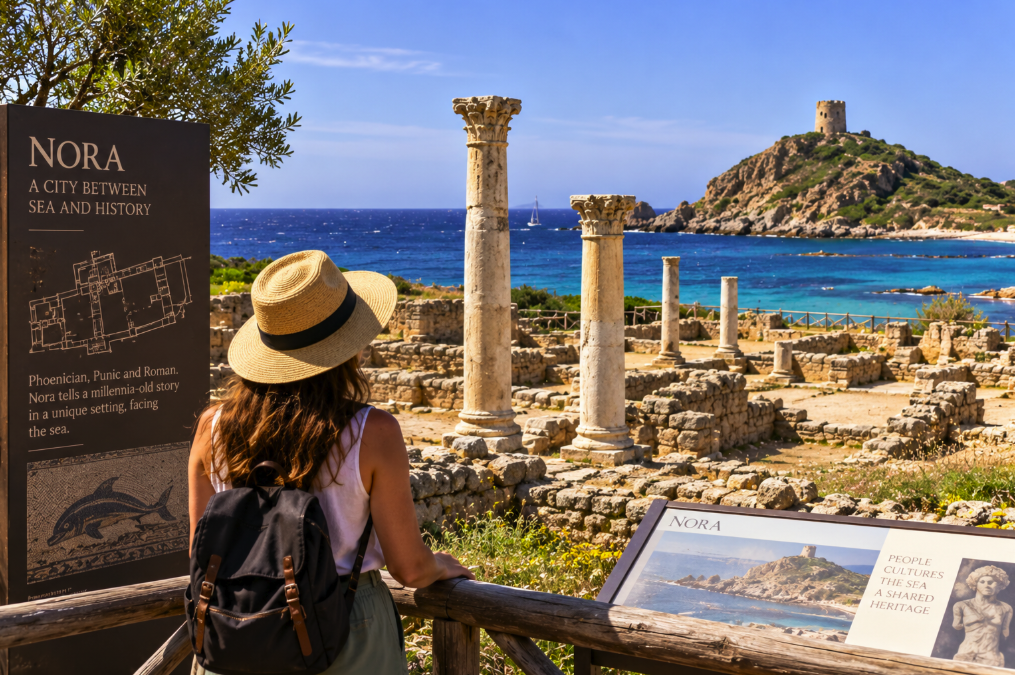
Nora occupies the Capo di Pula promontory, south-west of Cagliari. The Italian Ministry of Culture describes it as a Phoenician foundation dating to the late eighth or seventh century BC, which later developed through Punic and Roman periods. Visitors today encounter evidence from those different phases rather than a site belonging to a single civilization.
The setting makes the history unusually easy to visualize. The settlement developed between the sea and coastal wetlands, and the archaeological route includes remains connected with the Phoenician necropolis, Punic structures and the later Roman city. Among Nora’s best-known Roman remains are its theatre, baths, paved streets, houses and mosaics.
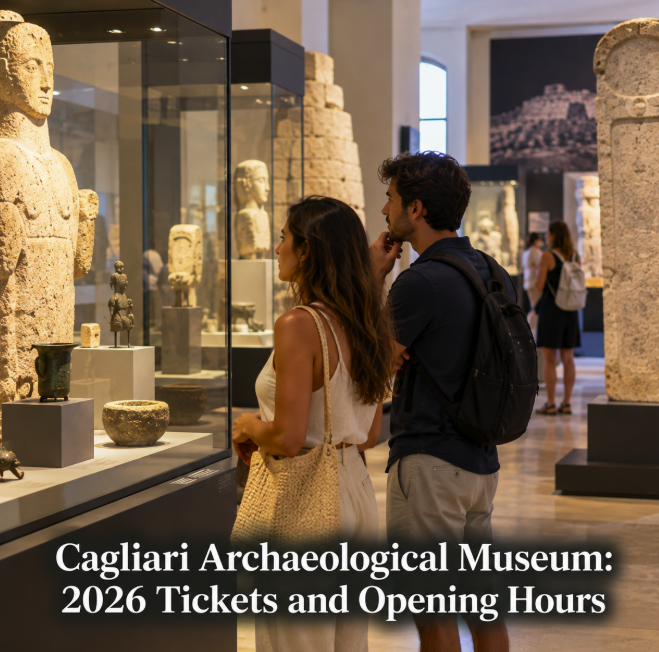
Nora is also associated with one of the most important documents in the study of early Phoenician presence on the island: the Nora Stone, an inscribed stone discovered in the area and now kept at the National Archaeological Museum in Cagliari. Its precise interpretation and dating have been debated by scholars, so it is better understood as a major piece of evidence in Sardinia’s early Mediterranean history than as a simple tourist “first.”
For a practical visit, Fondazione Pula Cultura currently lists the archaeological area as open every day. In September, the published schedule is 9:00 a.m. to 8:30 p.m.; hours become shorter outside the summer season. The foundation recommends buying admission in advance to speed up entry, while online admission does not automatically include a guided tour. A free Norapp audio guide is also available.
Visitors planning ahead should check the live ticket page before travelling. The Ministry of Culture currently lists standard admission at €10 and reduced admission at €6, while Fondazione Pula Cultura also sells several combined tickets pairing Nora with the Giovanni Patroni Museum or the Conti Vecchi saltworks. Prices and combinations can change, so the official booking page is the best reference for the chosen date.
Tharros: ruins on the Sinis Peninsula
Tharros offers an equally dramatic meeting of archaeology and coast, but in a different landscape. The ruins lie near San Giovanni di Sinis at the southern end of the Sinis Peninsula, in the municipality of Cabras. The ancient settlement looks towards the sea with the Capo San Marco promontory extending beyond it.
According to the Municipality of Cabras, the city was probably founded by Phoenicians at the end of the eighth century BC in an area that had already been used during the Nuragic period. Archaeological evidence includes Phoenician and Punic funerary and religious remains, while later urban development produced the Roman streets, baths, temples and other structures that shape much of what visitors see today.
The sequence is one of the reasons Tharros is so useful for understanding Sardinia. It connects the island’s Nuragic background with the arrival of Phoenician communities, the Punic world of Carthage and subsequent Roman rule. Rather than presenting these civilizations in separate museum rooms, the site places their traces within one coastal landscape.
The official Sinis visitor portal estimates around one to one and a half hours for a visit. The route can be explored independently using information panels, while Italian-language guided visits are offered daily at scheduled times and included with admission. Foreign-language guided visits can be requested in advance, subject to availability.
There is very little shade at Tharros, an important detail in summer. The official site also warns that parts of the route can be uncomfortable for wheelchair users and visitors with reduced mobility. Water, a hat and sun protection are particularly important during the warmer months.
Opening hours vary by season, so they should be checked before setting out. The current official visitor information lists the archaeological area as open from 9:00 a.m. to 8:00 p.m. from June through August. Tickets can be purchased on site or online through the Fondazione Mont’e Prama system, and combined tickets are available for visitors who want to add other cultural sites in the Sinis area.
Nora or Tharros: which should you visit?
If you are staying in Cagliari or along the southern coast, Nora is the easier choice. Pula is close enough to make the archaeological area part of a half-day or full-day excursion without crossing the island. The site is also attractive for travelers who want a clearly visible Roman urban landscape, including the theatre and mosaics, in a compact coastal setting.
Tharros makes more sense for itineraries through Oristano, Cabras and the Sinis Peninsula. It can be combined with the Giovanni Marongiu Civic Museum in Cabras, where the archaeological story of the region continues, including material connected with Tharros and the famous Giants of Mont’e Prama. The beaches and natural landscapes of Sinis make it easy to turn the archaeological visit into a full day in the area.
For travelers with enough time, however, the best answer is not to choose. Nora and Tharros complement each other. Both were connected to the maritime networks that linked Sardinia with the wider Mediterranean, but their landscapes, surviving structures and regional context are different enough to justify visiting both.
They also change the way many first-time visitors think about Sardinian archaeology. Nuraghi remain one of the island’s defining cultural symbols, but Sardinia’s ancient story did not stop in the Bronze Age. At Nora and Tharros, the Mediterranean itself becomes part of the archaeological site — the same sea that brought Phoenician merchants, connected Punic communities and later carried people and goods through the Roman world.