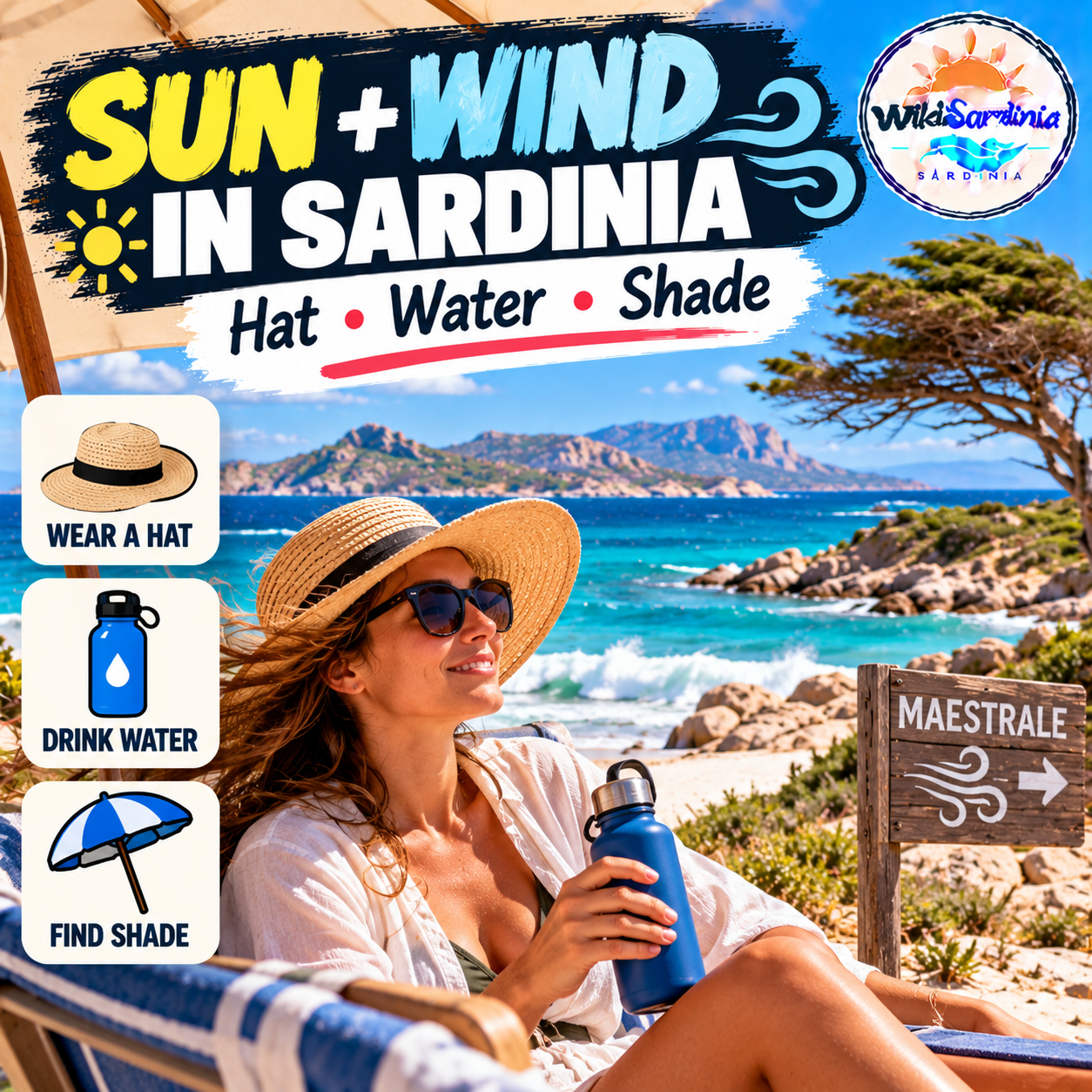
A beach day in Sardinia can bring intense sunshine and a strong Maestrale wind. The breeze may make the temperature feel more comfortable, so it is easy to stay outside longer than planned. But wind does not protect you from ultraviolet radiation or guarantee that you are staying hydrated. The main risks are sunburn, dehydration and heat-related illness, especially during long periods outdoors.
Why sun and wind can be a tricky combination
The Maestrale is a north-westerly wind that can make coastal conditions feel cooler and can create choppy seas. That cooler sensation may hide how much sun you are getting. Wind can also dry sweat quickly, so you may not notice how much fluid you are losing. It does not cause heatstroke on its own, but it can make it easier to underestimate exposure and dehydration.
Wear a hat, sunscreen and light clothing
Choose a light, breathable shirt, preferably in a light colour, and a wide-brimmed hat that protects your face, ears and neck. Wear sunglasses with UV protection and apply broad-spectrum sunscreen to exposed skin. Reapply it as directed on the product label, especially after swimming, sweating or towelling off. Sunscreen is an extra layer of protection, not a reason to stay in direct sun all day.
Drink water before you feel unwell
Bring enough drinking water for the time you expect to be outside, and take regular drinks throughout the day. Drink more when you are sweating heavily, walking or spending long periods in the sun. Water-rich foods can help, too. Avoid relying on alcohol to quench your thirst, and do not wait for intense thirst before taking a break.
Plan around the hottest hours
Whenever possible, limit direct sun and strenuous activity during the hottest part of the day—often roughly 11 a.m. to 6 p.m. during heat alerts. Choose an umbrella, a shaded terrace or an indoor break, and check the local heat forecast. If you are hiking, cycling or exploring archaeological sites, start early and make your route shorter if conditions are very hot.
Remember that the wind does not make every beach day safe
A strong Maestrale can produce rough seas and currents even when the air feels pleasant. Check beach flags and local warnings, avoid swimming in unsafe conditions and keep away from exposed rocks during heavy waves. If sand is blowing hard, protect your eyes and avoid staying directly in the wind for long periods.
Know the warning signs
Heat exhaustion or dehydration can cause headache, unusual tiredness, dizziness, nausea, muscle cramps, intense thirst, a fast heartbeat or reduced urination. Stop your activity, move to a cool shaded place, loosen unnecessary clothing and cool your body. Sip water if you are fully alert and able to drink.
Confusion, fainting, seizures or very hot skin can signal a medical emergency. Call Italy’s emergency number 112 or seek urgent medical help. Move the person to a cooler place and begin cooling them while waiting for assistance. Do not give drinks to someone who is confused or unconscious.
A simple Sardinia beach checklist
- Pack drinking water, a wide-brimmed hat and UV-protective sunglasses.
- Apply sunscreen and reapply according to its instructions.
- Take regular breaks in shade, even when the breeze feels refreshing.
- Avoid the strongest midday sun and check heat alerts.
- Check wind, wave and swimming conditions before entering the sea.
Enjoy the coast without underestimating the conditions
The combination of bright sun and the Maestrale is part of Sardinia’s coastal character, but the breeze is not a substitute for sun protection, water or rest. Prepare before you leave, listen to your body and take symptoms seriously. For official advice, consult the Italian Ministry of Health’s heatwave FAQs and ISSalute’s guide to heatstroke and sunstroke.