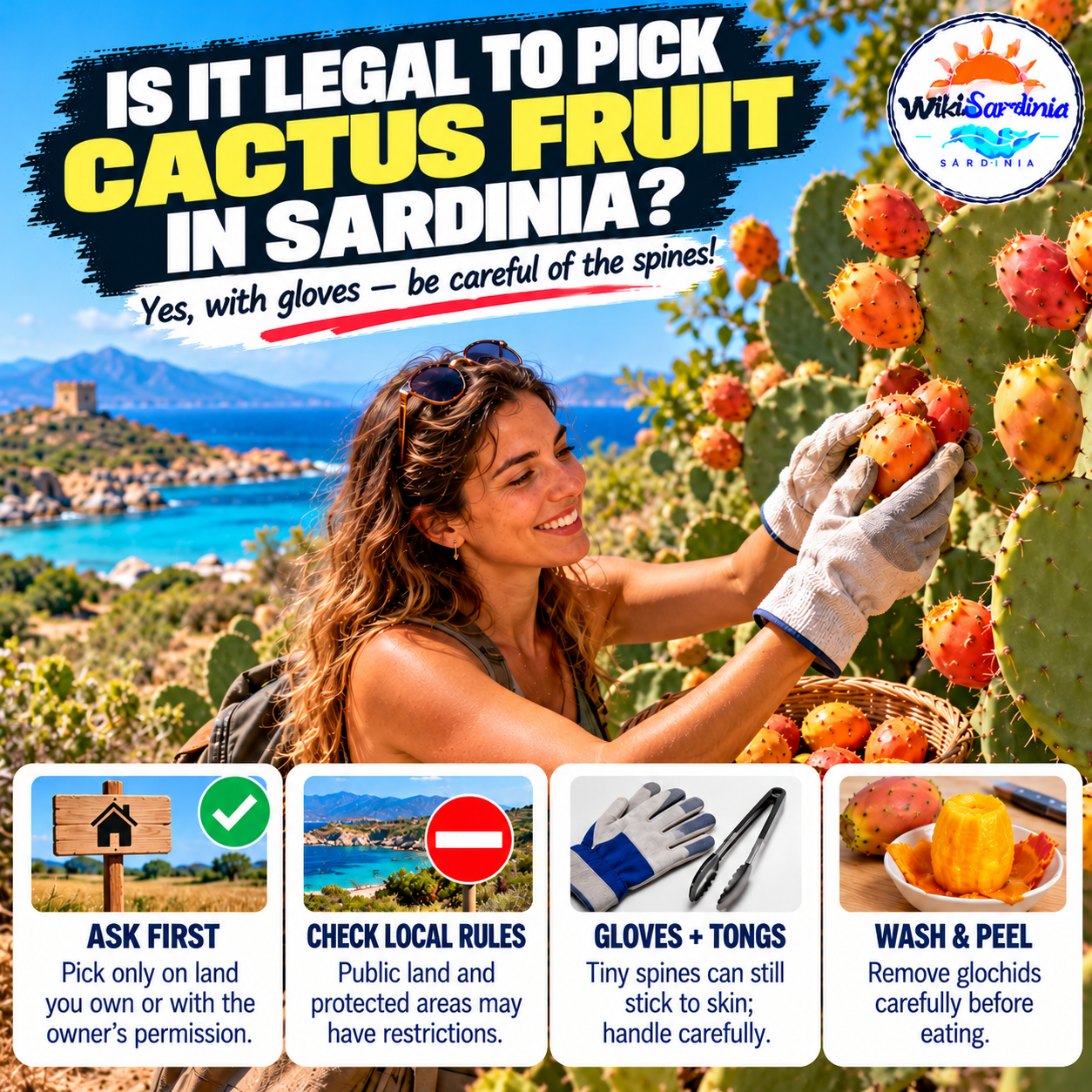
Prickly pear cactus fruit, known in Italian as fichi d’India, is a familiar sight in parts of Sardinia. The ripe fruit can be delicious, but seeing it beside a road or on an open hillside does not automatically mean you are allowed to take it. Gloves protect your hands; they do not give you permission to harvest fruit.
Is it legal to pick prickly pears in Sardinia?
The first question is who owns or manages the land. Picking fruit from a cactus on your own property is different from taking it from a private field, a roadside verge, municipal land or a protected natural area. For private land, ask the owner before harvesting. Do not assume that fruit growing beside a public road is free for anyone to collect.
Rules may also vary by location. Protected areas can have specific conservation requirements, and municipalities may introduce local restrictions on gathering wild plants or fruit. Check signs and current municipal notices, and ask the local authority or park manager if the rules are unclear. Sardinia’s Regional Law No. 4 of 24 February 2025 concerns protection of native flora; it should not be read as blanket permission to collect anything growing in the wild. Local restrictions may still matter.
Why are gloves not enough?
Prickly pears have obvious spines and also tiny, hair-like spines called glochids. These can detach easily and lodge in skin, causing irritation that is difficult to remove. Ordinary thin gardening gloves may not provide enough protection, and the tiny spines can cling to clothing or baskets as well.
How to handle the fruit more safely
If you have permission to harvest, use sturdy protective gloves and long-handled tongs rather than gripping the fruit directly. Keep children and pets away while picking, avoid rubbing your eyes, and do not touch your face or phone with contaminated gloves. Handle the fruit carefully and clean tools and surfaces afterwards.
Before eating, the fruit must be cleaned and peeled in a way that removes the tiny spines from the skin. If you are unfamiliar with preparing prickly pears, ask someone experienced to demonstrate the process. Do not eat fruit if you cannot identify it confidently or if it may have been treated with chemicals.
What about cactus fruit in public places?
A cactus growing on a roadside, in a public garden or near a walking trail may be on land managed by a municipality or another public body. Access to the area does not necessarily mean harvesting is permitted. In a protected area, follow the posted rules and ask the managing authority before removing fruit or plant material.
Local notices are worth checking: for example, a municipality in Sardinia issued a 2026 ordinance regulating the collection of wild herbs, mushrooms and fruits in its territory. That does not mean the same rule applies everywhere or specifically to every prickly pear plant, but it illustrates why local conditions matter.
A quick checklist before picking
- Check ownership: pick only on your own land or after getting the owner’s permission.
- Check local rules: look for municipal notices and protected-area restrictions.
- Use proper protection: sturdy gloves and long-handled tongs are safer than bare hands.
- Avoid touching your face: tiny glochids can transfer from gloves, clothes and tools.
- Prepare the fruit properly: remove the spines from the skin before peeling and eating.
The short answer
You may be able to pick prickly pears in Sardinia when you have the right to harvest from that land and no local rule prohibits it. But gloves alone do not make picking legal or completely safe. Ask permission, check municipal and protected-area rules, and use suitable tools because even tiny cactus spines can irritate skin. When in doubt, buy the fruit from a local market instead.
For context, consult the Sardinia Regional Law No. 4/2025 on native flora and check the relevant municipality’s current notices, such as this 2026 notice on local collection rules.