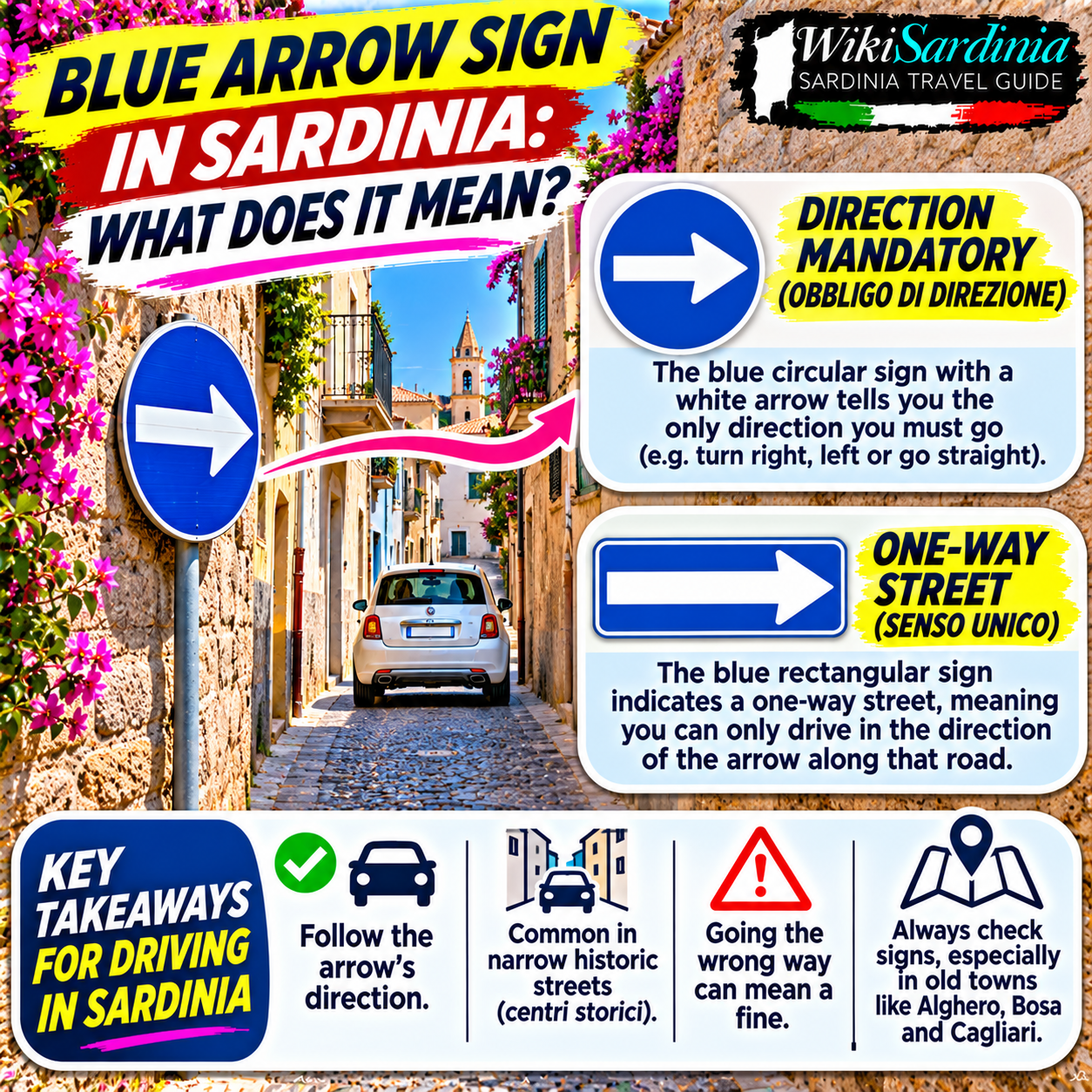
A blue circular road sign with a white horizontal arrow in Sardinia means you must travel in the indicated direction. A right-pointing arrow requires a right turn at the relevant junction, while a left-pointing arrow requires a left turn. A straight arrow requires you to continue ahead. A rectangular blue arrow sign, by contrast, identifies a one-way road. These signs follow Italian national traffic rules, not a special Sardinian system.
Mandatory direction versus one-way traffic
Article 122 of Italy's road traffic implementing regulation (DPR 495/1992) defines mandatory direction signs. Their circular blue shape identifies an obligation rather than a suggestion. One-way signs are covered by Article 135 of the same regulation.
| Sign | Meaning | What to do |
|---|---|---|
| Blue circle, white right arrow | Mandatory right turn | Turn right at the indicated junction |
| Blue circle, white left arrow | Mandatory left turn | Turn left at the indicated junction |
| Blue circle, upward arrow | Mandatory straight ahead | Continue straight |
| Blue rectangle with white arrow | One-way traffic | Travel only in the indicated direction along that road |
| Red circle with horizontal white bar | No entry | Do not enter from this direction |
What if the arrow points diagonally downward?
A circular blue sign with a downward diagonal arrow commonly indicates that you must pass an obstacle on the indicated side. For example, a downward-right arrow on a traffic island means keep right of the island. Do not confuse this with a mandatory right turn. Signs with two arrows may indicate permitted alternative directions or permitted passage on either side of an obstacle, depending on their design.
Why these signs matter in historic Sardinian towns
Historic centres in places such as Alghero, Bosa and Cagliari contain narrow streets, limited visibility and complex access arrangements. A mandatory turn can direct vehicles away from a narrow passage or into the permitted traffic flow. A one-way sign describes the direction of traffic on a street rather than necessarily imposing a turn at the junction where you first see it. Read the sign in its actual road context.
Does a blue arrow allow you to enter a ZTL?
No. A mandatory direction or one-way sign does not grant permission to enter a restricted traffic zone (Zona a Traffico Limitato). Check separate ZTL signs, operating hours and any supplementary panels. If your accommodation is inside a restricted zone, ask your host whether vehicle access is permitted and whether your licence plate must be registered. Do not assume a hotel booking automatically authorizes entry.
What if Google Maps tells you to go the other way?
Follow current road signs and lawful instructions rather than navigation software. Temporary traffic arrangements, roadworks and local restrictions may not be reflected in an app. Continue along a permitted route and allow your navigation system to recalculate. Never reverse down a narrow street simply to recover a missed turn.
Practical tips for rental-car drivers
- Slow down before entering unfamiliar historic streets and read signs before committing to a turn.
- Look for supplementary panels that indicate exceptions or time restrictions.
- Watch for pedestrians, bicycles, scooters and delivery vehicles.
- Choose a small rental car if you expect to drive through narrow streets.
- Consider parking outside the historic centre and walking to your accommodation.
- Never assume that following another car proves you have permission to enter.
Can you receive a fine for ignoring the arrow?
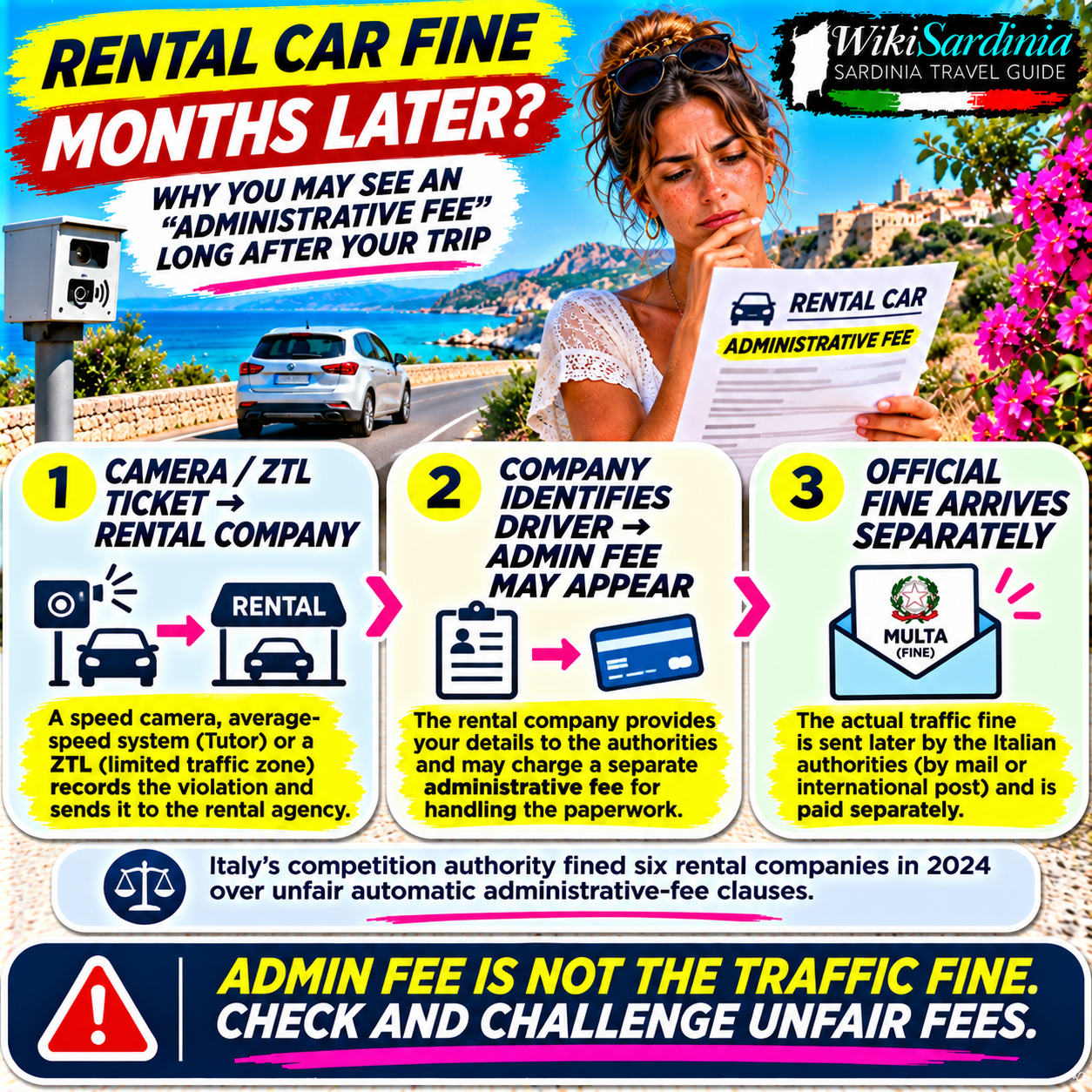
Yes. Disobeying mandatory traffic signs or driving against the permitted traffic direction can result in penalties under Italian traffic law. The applicable offence and penalty depend on the circumstances. Rental-car drivers may receive notices after returning home. Keep your rental documents and distinguish any rental-company administrative charge from the official traffic fine.
Useful Italian road vocabulary
- Direzione obbligatoria — Mandatory direction
- Senso unico — One-way street
- Senso vietato — No entry
- Passaggio obbligatorio — Mandatory passage on the indicated side
- Zona a traffico limitato — Restricted traffic zone
- Eccetto autorizzati — Except authorized vehicles
Frequently asked questions
Does a blue circular arrow always mean one-way street?
No. It indicates a mandatory movement or passage, depending on the arrow design. A rectangular blue arrow identifies one-way traffic.
Can I turn left when the circular sign points right?
No, unless an applicable exception or lawful traffic instruction permits it.
Does a blue arrow mean I have priority?
No. Direction signs do not establish right of way. Observe separate priority signs and junction rules.
Are Sardinian road signs different from mainland Italy?
No. The same national road sign system applies.
Can I follow a blue arrow into a pedestrian zone?
Only if access is otherwise permitted. A directional sign does not override separate access restrictions.
What should I do if I miss a mandatory turn?
Continue safely along a lawful route and find a permitted alternative. Avoid sudden reversing or illegal U-turns.
The bottom line
Remember the shape: a blue circle imposes a direction or passage obligation, while a blue rectangle with an arrow identifies one-way traffic. Follow the arrow in its road context, check separate access and priority signs, and never let GPS override actual traffic instructions.
Legal references
Italian Highway Code, Legislative Decree 285/1992, and its implementing regulation, DPR 495/1992, particularly Articles 122 and 135. Consult the current legislation through the official Normattiva portal.