You sit down at a restaurant in Sardinia, order seafood or a plate of pasta, and a basket of impossibly thin, crunchy bread arrives. You try a piece. It shatters delicately, tastes of toasted wheat, and somehow disappears before your starter. The next day, at another restaurant, there it is again. Meet pane carasau, one of the island’s most recognisable foods.
It is not literally served with every meal in every household or restaurant. But it appears so frequently because it is practical, versatile, deeply connected to Sardinian pastoral culture and delicious with almost anything.
What exactly is pane carasau?
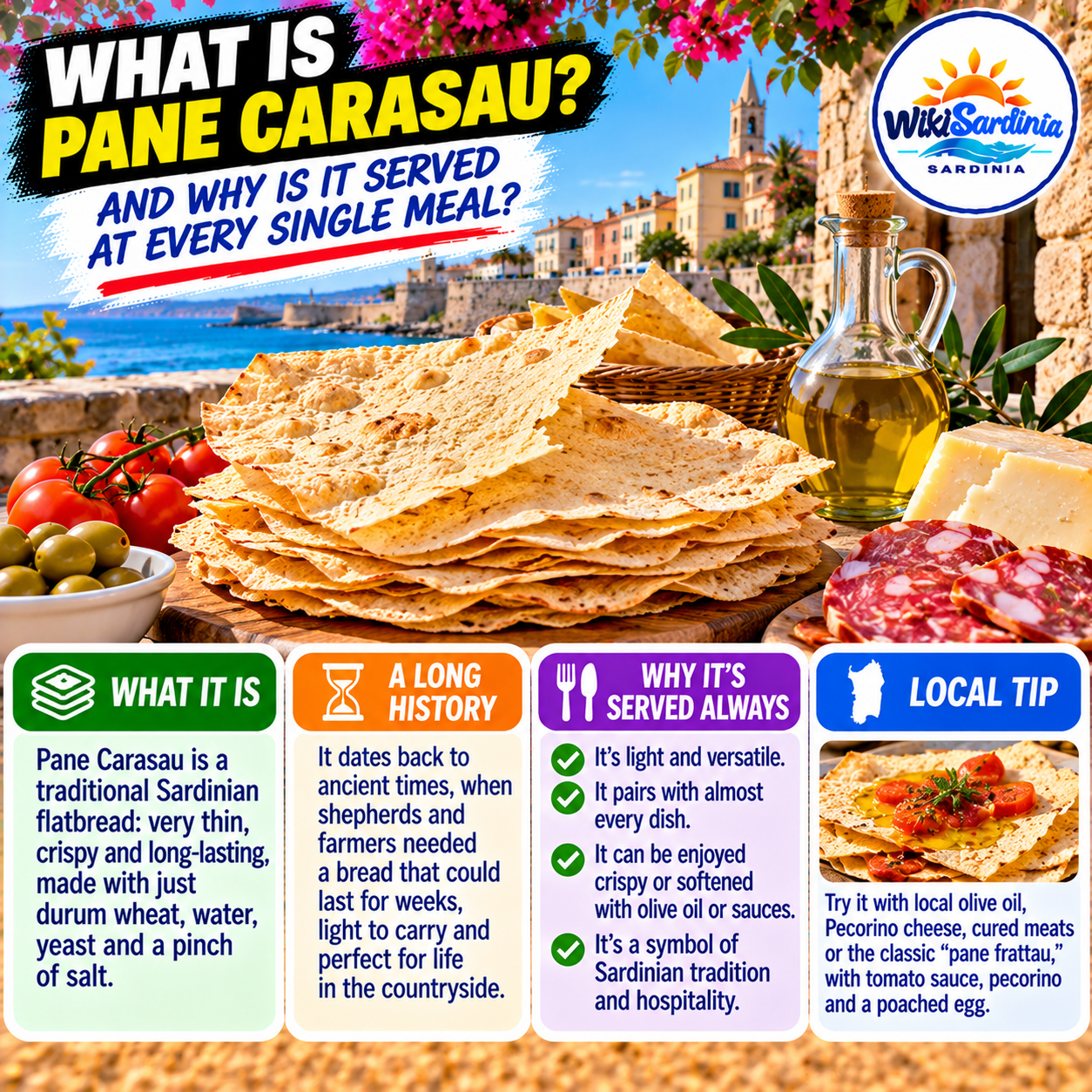
Pane carasau is a traditional Sardinian flatbread made into very thin, dry, crisp sheets. Its basic ingredients are durum wheat flour or semolina, water, salt and, in many traditional recipes, a leavening agent. It is often round, though the pieces you receive at the table may be broken into irregular sections.
Its texture is unlike a soft tortilla, pita or focaccia. Properly baked pane carasau is light, brittle and pleasantly toasted. Visitors sometimes compare it to a giant cracker, but that description misses its remarkable method of preparation.
Why is it called “music paper”?
Pane carasau is sometimes nicknamed carta da musica, or “music paper”, because its sheets are so thin. The name is a popular comparison rather than a claim that the bread was literally made from paper. A single piece may be almost translucent at the edges and makes a distinctive crack when broken.
How is pane carasau made?
The traditional process is surprisingly elaborate. A dough is prepared, kneaded and left to rise. Bakers divide it into small portions, roll them into extremely thin rounds and place them in a very hot oven. The heat causes each round to puff into a balloon-like pocket. It is then removed and carefully separated into two thinner discs.
Those discs are baked again to dry and toast them. This second cooking stage, called carasatura, gives the bread its characteristic crispness and helps it keep for a long time when stored dry. The work has historically involved considerable skill and, in many communities, cooperation among family members.
The shepherds’ bread: why lasting freshness mattered
Pane carasau is strongly associated with Sardinia’s shepherding traditions, especially in the island’s interior. Shepherds spending long periods away from home needed food that was light to carry and resistant to spoiling. A dry, twice-baked bread was far more practical for this purpose than a soft loaf that quickly became stale.
It could be eaten dry, combined with cheese or other provisions, or softened with liquid. This practical heritage explains much of its enduring popularity. The bread was not invented merely as a restaurant accompaniment: it belonged to a food culture shaped by work, landscape and the need to preserve provisions.
Why do Sardinian restaurants serve it so often?
There are several reasons. Pane carasau stores well, is easy to share and pairs naturally with cured meats, pecorino, vegetables, olive oil and many other dishes. Its mild wheat flavour rarely competes with the food on the table. For restaurants, it also offers a recognisably Sardinian welcome without requiring an elaborate preparation immediately before service.
For visitors, that basket can be a first introduction to local identity. In Sardinia, bread is more than a neutral side dish: traditional breads reflect different towns, celebrations and ways of life. Pane carasau is one particularly famous example, not the only Sardinian bread.
How should you eat pane carasau?
There is no complicated etiquette. Break off a piece and eat it plain, or enjoy it alongside cheese, antipasti and other savoury dishes. Some people add a little extra-virgin olive oil and salt. You can also use a piece to pick up a small bite of food, although its fragility makes it less suitable for heavy scooping.
Do not be surprised if it is served dry. That is how it is supposed to be. Its crispness is the point, not a sign that the kitchen has forgotten to bring fresh bread.
Pane guttiau: the irresistible olive-oil version
One of the easiest variations to fall in love with is pane guttiau. The crisp bread is dressed with olive oil and salt, sometimes warmed briefly. It makes a wonderfully simple snack or accompaniment to an aperitivo. Some packaged versions contain additional seasonings, so check the label if you are looking for a traditional preparation.
Pane frattau: when crispy bread becomes a complete meal
Pane carasau can also become the foundation of a substantial dish. In pane frattau, sheets of bread are softened, layered with tomato sauce and grated pecorino, and commonly finished with a poached egg. The result is rich, comforting and quite different from the dry bread in a restaurant basket.
Recipes vary from household to household, including the liquid used to soften the bread and the number of layers. If you see pane frattau on a traditional menu, it is worth trying: it shows how one humble ingredient can move from accompaniment to centrepiece.
Is pane carasau gluten-free?
No. Traditional pane carasau is made from wheat and contains gluten. People with coeliac disease or wheat allergies should not assume that its thinness makes it suitable for them. Gluten-free alternatives may exist, but they must be explicitly labelled and prepared appropriately.
Where can you buy it in Sardinia?
Look in bakeries, food shops and supermarkets across the island. You will find both artisan and packaged versions. If you want a souvenir that travels well, pane carasau is an appealing choice because its dry texture helps it keep, although the fragile sheets can break in a suitcase. Check packaging, ingredients and best-before dates before purchasing.
Frequently asked questions
Is pane carasau the same as ordinary Italian bread?
No. Its double-baked, paper-thin texture distinguishes it from most soft loaves and rolls.
Why is pane carasau so crunchy?
After the dough puffs in a hot oven and is separated into thin layers, it is baked again until dry and crisp.
Can you eat pane carasau without cooking it?
Yes. It is already baked and ready to eat straight from the packet or bread basket.
What is the difference between pane carasau and pane guttiau?
Pane carasau is the basic crisp flatbread; pane guttiau is typically dressed with olive oil and salt.
What is pane frattau?
A traditional dish made with softened pane carasau, tomato sauce, pecorino and often a poached egg.
More than a bread basket
The next time pane carasau arrives at your table, you will know that you are not simply being given an unusually thin cracker. You are tasting a practical invention of Sardinian food culture, shaped by generations of baking knowledge and the rhythms of pastoral life. Whether you eat it plain, drizzled with oil or layered into pane frattau, its simple ingredients tell a much larger story about the island.