Sa Pompia is one of Sardinia’s most unusual traditional citrus fruits, closely associated with Siniscola in the Baronia area of northeastern Sardinia. Its large, irregular yellow rind looks almost sculpted, and its intensely sour pulp is rarely eaten fresh. Local cooks instead transform the thick rind into prized candied sweets, preserves and aromatic liqueurs. For food-loving travelers, tasting pompia is a way to discover a tradition that is much less familiar internationally than Sardinian pecorino or pane carasau.
What exactly is Sa Pompia?
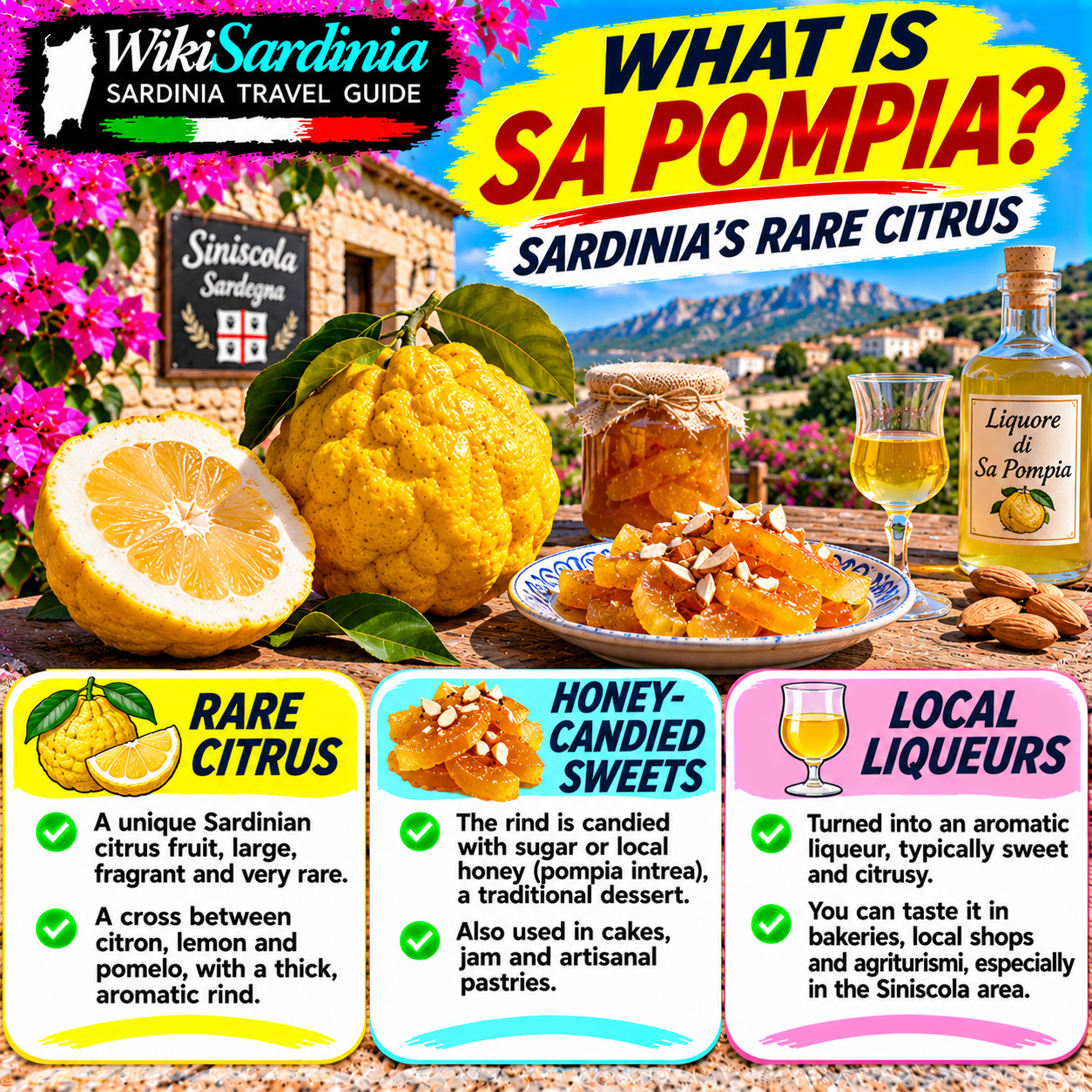
Known locally as sa pompìa, this distinctive citrus has a very thick, bumpy peel and a fragrant aroma. Its precise botanical ancestry and classification have been discussed by researchers; popular descriptions often compare it with citron, lemon and other citrus relatives, but visitors should not treat a single proposed hybrid formula as conclusively established. Its culinary identity is clearer: the rind, rather than the sharply acidic pulp, is the prized ingredient.
Why is it associated with Siniscola?
Siniscola and the surrounding Baronia area have preserved the cultivation and culinary use of pompia. The fruit is recognized through a Slow Food Presidium intended to support traditional production and safeguard this unusual local heritage. Because production is limited compared with mainstream citrus, pompia products are a distinctive regional specialty rather than something to expect in every Sardinian supermarket.
What does Sa Pompia taste like?
Raw pompia is not typically eaten like an orange. The pulp is extremely sour, while the rind is thick and aromatic. Once carefully prepared, the peel absorbs sweetness and develops a pleasant citrus fragrance. Finished products vary: candied sweets are intensely sweet with a gently bitter citrus note, while liqueurs tend to be fragrant and sweet, with a distinctive zest character. Flavor depends on the maker and recipe.
What is pompia intrea?
Sa pompìa intrea is one of the best-known traditional preparations. The fruit is carefully worked and cooked in a sweet syrup, traditionally associated with honey, until the rind becomes tender and richly flavored. Recipes and methods vary between households and artisans. The result is a special-occasion confection that showcases the unusual citrus peel rather than its acidic juice.
What other sweets are made with pompia?
Artisans also use pompia in s’aranzata-style sweets with citrus peel, honey and almonds, as well as jams, preserves, cakes, chocolates and other pastries. Not every product follows the same recipe. If you are looking for the most traditional experience, ask specifically for pompia intrea and inquire whether the product was made in Siniscola or elsewhere in the Baronia area.
What is pompia liqueur?
Artisan pompia liqueurs use the fruit’s aromatic components to produce a sweet citrus digestif. As with limoncello, the exact technique and ingredients depend on the producer. Some products may use peel infusions; others may be blended with different aromatic ingredients. Check the bottle label for alcohol content, producer and ingredients. A pompia liqueur is an alcoholic drink, not a juice made from the fruit’s very acidic pulp.
Where can visitors taste Sa Pompia?
Start in Siniscola. Traditional pastry shops, artisan producers and specialty food retailers in the town are the most logical places to ask for pompia intrea, preserves or packaged sweets. Some restaurants, agriturismi and shops in the surrounding Baronia area may feature seasonal pompia desserts or liqueurs. Availability varies, so contact the venue before traveling specifically for a tasting. A shop that sells pompia products does not necessarily offer an organized tasting session.
Can you find it in La Caletta or other coastal towns?
La Caletta, the seaside locality associated with Siniscola, is a practical place to ask local food shops and hospitality venues about Baronia specialties, especially during the visitor season. However, do not assume every restaurant or gelateria stocks pompia year-round. Ask whether the product is made with genuine pompia and whether it is available that day. In other Sardinian towns, selected specialty retailers may stock packaged products, but supply is not guaranteed.
How do you find a producer or tasting?
Use the Slow Food Presidium listing as a starting point for recognized producers and consult local Siniscola tourism or municipal information. Search for pompia Siniscola produttori, pompia intrea and liquore di pompia. Then contact the producer directly to confirm opening hours, sales, tasting arrangements, prices and whether advance booking is needed. This is more reliable than following an undated online list of shops.
Is there a Sa Pompia festival?
Siniscola has hosted events celebrating the fruit and its culinary traditions. Festival dates, formats and participating producers can change from year to year. Check the municipality’s current event calendar or the organizers’ official announcements before planning a trip around a festival. Do not assume an annual event will occur on the same weekend every year.
Can you buy pompia as a souvenir?
Yes, when available. Packaged candied sweets, jams and bottled liqueur are easier to transport than fresh fruit. Check packaging, ingredients, expiration date and storage guidance. International travelers must follow their destination’s customs rules: fresh citrus can face strict agricultural restrictions, and alcoholic beverages are subject to separate import and airline rules. A sealed souvenir product is not automatically exempt from customs declaration requirements.
How is Sa Pompia different from a lemon or citron?
Its appearance is strikingly different from an ordinary supermarket lemon, with a much rougher and thicker rind. It is often discussed alongside citron-like citrus, but botanical classification is more nuanced than a simple commercial label. Culinary use is also distinctive: pompia is prized for labor-intensive sweet preparations, not for squeezing over fish or adding to drinking water.
Can you eat the peel raw?
Traditional pompia confections use processed rind, typically through careful preparation and cooking. Raw peel can be bitter and tough. If you buy fresh fruit, obtain a reliable recipe from a local producer rather than assuming it can be handled exactly like an orange. Wash fruit appropriately and use only fruit suitable for food preparation.
What should you ask in a shop?
“Avete la pompìa intrea?” — Do you have pompia intrea? “È fatta con pompìa di Siniscola?” — Is it made with pompia from Siniscola? “Posso assaggiarla?” — May I taste it? “Avete il liquore di pompìa?” — Do you have pompia liqueur? “È disponibile tutto l’anno?” — Is it available year-round?
Frequently asked questions
Is Sa Pompia a lemon?
It is a distinctive local citrus, not simply an ordinary lemon; its precise botanical relationships have been debated.
Can you eat Sa Pompia fresh?
The very sour pulp is rarely eaten directly. The rind is the main culinary ingredient.
What is pompia intrea?
A traditional sweet preparation using the fruit’s thick rind, cooked with sweet ingredients including honey in many recipes.
Is Sa Pompia protected by Slow Food?
Yes, it is associated with a Slow Food Presidium supporting local production and heritage.
Where should I go to taste it?
Siniscola and the surrounding Baronia area are the best starting points. Confirm availability with producers and shops first.
Is pompia liqueur alcoholic?
Yes. Check the label for alcohol content and ingredients.
Can I buy it in summer?
Processed products may be sold outside the fresh-fruit season, but stocks vary. Ask in advance.
Can I take fresh pompia to the United States?
Do not assume so: fresh citrus imports are subject to US agricultural restrictions. Check official customs guidance before traveling.
The takeaway
Sa Pompia is a small but remarkable piece of Sardinian food heritage. If your travels take you to Siniscola, seek out pompia intrea, artisan citrus sweets or a local liqueur. Ask the maker about the fruit and its preparation: the story is as memorable as the taste.
Useful sources and contacts: Slow Food Foundation — search the Sa Pompia Presidium; SardegnaTurismo — regional food traditions and Siniscola; Comune di Siniscola — local tourism and events; US Customs and Border Protection — restricted agricultural products.