If you want to buy a traditional handmade Sardinian knife, Pattada is one of the island's most meaningful places to explore. This inland town in northern Sardinia is closely associated with the pattadesa, a distinctive folding knife that has become a symbol of Sardinian craftsmanship.
For travelers looking for a personalized keepsake, the appeal is not simply the object itself. It is the chance to learn about local makers, understand the craft and commission a piece that reflects the traditions of the place where it was made.
Important: a handcrafted knife is still a bladed object. Buying one does not automatically authorize carrying it in public or taking it into an aircraft cabin. Check Italian law and your transport operator's rules before traveling.
Why Pattada is famous for knives
Pattada has a long-standing reputation for skilled knife making. Its name is so closely linked with the pattadesa that the knife is frequently treated as one of Sardinia's recognizable craft objects.
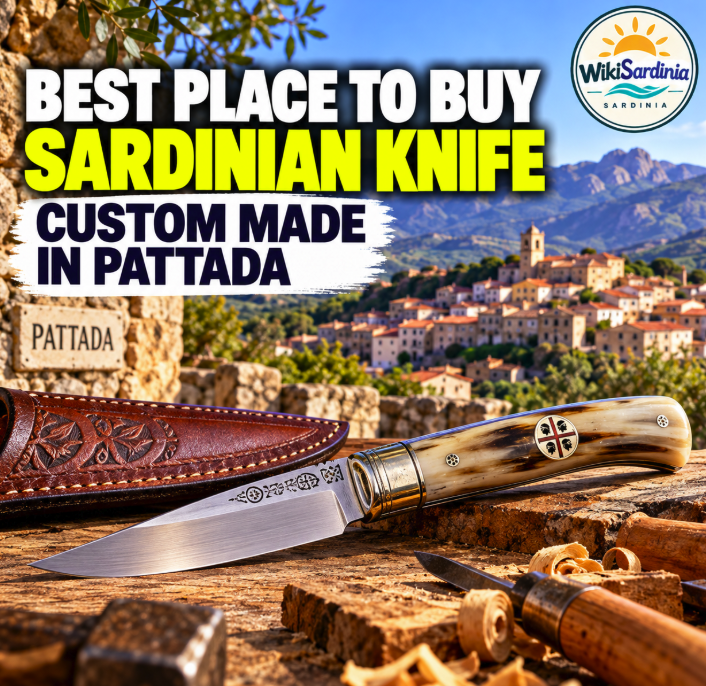
Traditionally, the knife is a folding design with a slender, often leaf-shaped blade and a carefully fitted handle. Individual makers have their own methods and aesthetic preferences, so there is no single universal finish that every authentic example must share.
The best reason to visit Pattada is to learn directly from the people who continue the craft, rather than assuming every knife labeled 'Sardinian' was made there.
What is a pattadesa?
A pattadesa is a traditional Sardinian folding knife associated particularly with Pattada. It is known for its elegant profile, handmade character and connection to the island's rural and artisanal heritage.
Handle materials and blade finishes vary. Depending on the maker, examples may incorporate wood, horn or other appropriate materials, with details influenced by the craftsperson's style and customer preferences.
Not every folding knife sold in Sardinia is a pattadesa, and not every knife described as 'Pattada style' was necessarily made by a Pattada artisan.
Where should you look for a custom knife in Pattada?
Start with established local artisan workshops and makers who can explain where their work is produced. Ask whether visits are possible, whether they accept commissions and how long a custom order might take.
Workshop opening hours and order availability can change, and some artisans may work by appointment rather than operating a conventional retail store. Contact the maker before traveling rather than relying on an unverified online listing.
For up-to-date leads, local tourism information and artisan associations can be useful starting points. Confirm a workshop's current address, contact details and whether it actually makes knives on site.
What can be personalized?
Customization depends on the maker. A commission may involve choices such as handle appearance, suitable material options, decorative engraving or a presentation case. The maker should explain which requests fit the traditional design and which are practical or legally appropriate.
For a meaningful souvenir, consider asking about a maker's signature, the history of the pattern or a simple personalized inscription. Avoid assuming that every workshop offers every form of customization.
How to recognize genuine craftsmanship
A reputable maker should be able to discuss their work clearly, describe the materials used and explain how the knife was produced. Look for consistency in finish and a transparent explanation of the workshop's role.
Ask whether the knife is entirely handmade, assembled from prepared components or produced using a combination of traditional and modern methods. These approaches are not automatically signs of poor quality; what matters is accurate representation.
Do not rely only on decorative motifs, tourist packaging or the word 'Sardinian' printed on a label as proof of provenance.
Questions to ask before commissioning a pattadesa
- Who makes the knife? Confirm the craftsperson and workshop.
- Where is it produced? Ask whether the work takes place in Pattada.
- Which materials are used? Request clear descriptions and lawful provenance where relevant.
- What can be customized? Discuss engraving, handle aesthetics and presentation options.
- How long will it take? A custom order may not be ready during a short holiday.
- What is included in the price? Confirm taxes, case, shipping and any deposit.
- What are the collection or delivery options? Check safe and lawful transport arrangements.
How much does a handmade Sardinian knife cost?
Prices vary considerably depending on the maker, workmanship, materials, complexity and customization. There is no reliable universal price for a custom pattadesa, and quoting an unsupported fixed range could mislead visitors.
Request a written quote describing the proposed work, deposit terms, estimated completion time and delivery conditions. A handmade commission may cost more than a mass-produced souvenir, but price alone does not establish authenticity.
Can you watch an artisan at work?
Some workshops may welcome visitors by prior arrangement, while others are not open to casual visits. If watching the process is important to you, ask explicitly when making contact.
Respect workshop safety rules and do not assume demonstrations, photography or hands-on participation are included in a purchase.
Can tourists buy a Sardinian knife legally?
Purchasing an ordinary craft knife and carrying a knife in public are different legal questions. Italian rules on carrying objects capable of causing injury can restrict possession outside the home without a justified reason, and additional rules may apply to particular knife types or circumstances.
Do not treat a receipt, the fact that an item is a souvenir or a seller's informal reassurance as blanket permission to carry it anywhere. Ask the seller about compliant packaging and seek current official guidance for your situation.
Can you take a pattadesa on a plane?
Do not place a knife in cabin baggage. Aviation security rules generally prohibit knives and other sharp objects in the passenger cabin. Checked baggage may be subject to airline, airport, destination-country and security requirements.
Before flying, verify the airline's current policy and any import or customs restrictions at your destination. If the maker offers shipping, confirm that the carrier accepts the item and that shipment complies with applicable law.
What about protected animal materials?
Traditional knife handles may be associated with natural materials, but not every animal-derived material is legal to sell, export or import in every country. Ask for accurate material identification and lawful sourcing information, especially if you plan to travel internationally.
When in doubt, choose a material with straightforward provenance and confirm relevant customs rules before commissioning.
What else can you do in Pattada?
Make time to explore the town and its surrounding upland landscape. Pattada offers a different Sardinian experience from the beach resorts: a quieter inland setting, local traditions and opportunities to discover regional food and craft heritage.
A workshop visit can fit into a broader journey through northern Sardinia, but plan travel times carefully and confirm appointments in advance.
Is Pattada the only place to buy a Sardinian knife?
No. Knife-making traditions exist in other parts of Sardinia, and different local styles have their own histories. Pattada stands out because of its particularly strong association with the pattadesa.
If your priority is a specific design or an individual artisan, compare makers based on provenance and workmanship rather than assuming one town is the only legitimate source.
FAQ
What is the best place to buy a custom Sardinian knife?
Pattada is an excellent starting point for a traditional pattadesa, especially if you want to speak directly with local craftspeople.
Can I order a personalized pattadesa?
Some makers may accept custom commissions. Confirm available options, price and lead time directly with the workshop.
Are all knives sold in Pattada handmade?
Do not assume so. Ask about the individual maker and production process.
Can I carry my new knife while sightseeing?
Do not assume that buying it as a souvenir gives you a lawful reason to carry it in public. Follow current Italian law and transport guidance.
Can I take a Sardinian knife in hand luggage?
No. Knives should not be taken into an aircraft cabin; check checked-baggage and destination requirements.
How long does a custom order take?
Lead times vary by maker and the complexity of the commission. Ask before planning collection during your holiday.
What should I ask about the handle?
Ask about the material, provenance, care requirements and any restrictions relevant to export or import.
The bottom line
For a custom Sardinian knife with a genuine connection to local craftsmanship, Pattada is one of the best places to begin your search. Choose a maker who can explain the work, agree on customization and delivery in advance, and treat transport rules as part of the purchase—not an afterthought. The real value of a pattadesa lies in the tradition and skilled hands behind it.