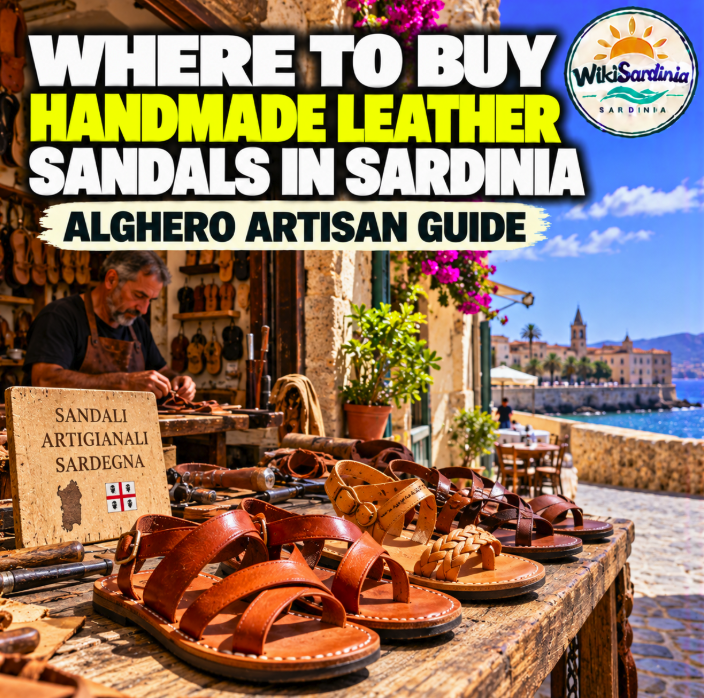
Where can you buy handmade leather sandals in Sardinia? If you are staying in northwestern Sardinia, Alghero is a convenient place to start looking. Its walkable historic center offers opportunities to browse independent boutiques, craft-oriented shops and seasonal retail displays. But there is an important distinction: a shop selling leather sandals is not necessarily a workshop that makes them by hand in Alghero.
This guide explains how to find genuine artisan-made sandals, what to ask a seller, how to judge materials and fit, and how to avoid confusing a Sardinian souvenir with a locally produced craft item. We do not name a supposedly “best” sandal maker without verifying the artisan and current shop details.
Why look for leather sandals in Alghero?
Alghero is a popular coastal city with a historic center, pedestrian shopping streets and an established visitor economy. It is easy to combine a shopping walk with exploring its stone lanes, waterfront and Catalan-influenced architecture.
Visitors interested in handmade goods can look for small businesses that explain where products are made, who makes them and whether repairs or adjustments are possible. A friendly shop assistant may be able to point you toward a local leatherworker even when the store does not produce sandals itself.
Where should you start your search?
Begin in Alghero's centro storico, especially its central shopping lanes and surrounding streets. Look for businesses using words such as artigianato, pelletteria, calzature artigianali or sandali in cuoio. These terms can help you identify relevant shops, but they do not prove that a product was made locally.
Browse on foot and ask directly whether the sandals are made in the shop, by a named artisan elsewhere in Sardinia, or by an outside supplier. Shop locations and opening hours change, especially after the summer season, so confirm details before traveling specifically for one seller.
Are all sandals sold in Alghero made in Sardinia?
No. Like many tourist destinations, Alghero sells products from a range of suppliers. Some may be handmade in Italy or elsewhere, some may be produced in larger workshops, and others may be mass-manufactured.
Even a sandal made of genuine leather is not automatically handmade. Likewise, a shop labeled “Sardinian” does not guarantee that every item was made on the island. The best approach is to ask clear, specific questions rather than relying on rustic decor or a handwritten price tag.
How to recognize genuinely handmade leather sandals
Handmade sandals do not have to look rough or uneven. Skilled craftsmanship often produces precise, consistent results. Examine the following details:
- Construction: ask how the straps attach to the sole and whether the sandal can be repaired.
- Materials: check whether the upper, lining and footbed are leather, and what material is used for the outsole.
- Edges and stitching: look for neatly finished leather edges, secure seams and smooth contact points.
- Fit: straps should hold the foot comfortably without cutting into skin or allowing excessive movement.
- Maker information: a seller should be able to explain who made the sandals and where.
- Aftercare: ask about resoling, strap repairs, cleaning and returns.
No single visual feature proves handmade origin. A credible maker's explanation and transparent sourcing are more meaningful than decorative imperfections.
What is the difference between cuoio and pelle?
In Italian, pelle broadly refers to leather or skin, while cuoio commonly refers to firmer leather, often associated with soles, belts and structured leather goods. Product descriptions can use these words somewhat differently, so ask which specific components are leather.
A sandal advertised as sandali in cuoio may have a leather upper and footbed but a rubber or synthetic outsole for grip and durability. That is not necessarily a drawback; the right construction depends on how you intend to wear the shoes.
Which sandal style is best for Sardinia?
For evenings in Alghero or relaxed city walks, simple leather sandals with secure straps can be a stylish choice. For long days on cobblestones, prioritize support, cushioning and a non-slip outsole over appearance alone.
Leather sandals are generally not the best footwear for rocky coastal paths, steep hikes or wet slippery surfaces unless specifically designed for those uses. Carry appropriate shoes for outdoor activities.
How much do handmade leather sandals cost?
Prices vary considerably depending on the maker, leather quality, construction, labor, custom fitting and brand. It would be misleading to quote one “normal Alghero price” without checking current shop inventories.
Instead of choosing by price alone, compare material specifications, fit, workmanship, repairability and whether the seller offers adjustments. A higher price does not automatically guarantee local production, just as a lower price does not always mean poor quality.
Can you order custom-made sandals?
Some independent shoemakers and leatherworkers may offer custom sizing, strap adjustments or made-to-order products, but this is not a service to assume every Alghero shop provides. Ask whether they take measurements, how long production takes, whether a fitting is required and if they can ship the finished sandals.
For a short holiday, clarify delivery timing before paying a deposit. If the artisan cannot complete the order before departure, ask about shipping costs and return arrangements.
Questions to ask the artisan
- Li fate voi a mano? — Do you make these by hand yourselves?
- Dove vengono prodotti? — Where are they produced?
- Sono fatti in Sardegna? — Are they made in Sardinia?
- La suola è in cuoio o gomma? — Is the sole leather or rubber?
- Potete regolare i cinturini? — Can you adjust the straps?
- Si possono riparare? — Can they be repaired?
- Fate spedizioni all'estero? — Do you ship internationally?
How to test the fit before buying
Try on both sandals while standing and walking, not just while seated. Your heel should rest securely on the footbed, and your toes should not hang over the edge. Check whether the straps rub around the toes, ankle or instep.
Feet can swell after a day of sightseeing or in hot weather. Allow for comfortable movement, but avoid buying sandals so loose that your feet slide forward. If the pair is made to order, discuss adjustments before finalizing the purchase.
Leather sole or rubber sole?
A leather sole can offer a traditional appearance and feel, but it may be slippery on wet stone. Rubber outsoles can provide better traction and wear resistance depending on their design. Alghero's old town has stone surfaces, so grip matters.
Ask the seller whether the sole can be replaced and whether the sandals are suitable for everyday walking or mainly occasional wear.
When is the best time to shop in Alghero?
Spring through early autumn is a busy period for visitor-oriented shops, but opening hours vary. In October, some seasonal stores may reduce hours or close, while year-round businesses continue operating. Verify opening times before visiting, especially on Sundays or during local holidays.
Shopping earlier in the day may give you more time to try sizes and ask about alterations, though individual stores follow their own schedules.
How to care for leather sandals after your trip
Brush off sand and dust with a soft cloth. Avoid soaking leather in seawater, and let wet sandals dry naturally away from direct heat. Use care products recommended for the specific leather finish.
Store sandals in a dry, ventilated place and inspect straps and soles periodically. If a sandal needs repair, a competent cobbler may be able to replace worn components, depending on its construction.
Can you take leather sandals home on a flight?
Ordinary finished leather sandals can generally travel in luggage, subject to airline baggage allowances and any destination-specific customs rules. Keep receipts for expensive purchases and check import allowances if you are arriving from outside your home customs territory.
Buying from an artisan does not automatically make the item exempt from taxes or customs declarations.
What other handmade souvenirs can you find in Sardinia?
Sardinia has many craft traditions beyond leather footwear, including weaving, ceramics, basketry, jewelry and regional knife-making. Different towns specialize in different crafts, so a shopping trip can become an opportunity to explore the island's cultural geography.
If your priority is specifically a locally made pair of sandals, focus on verifying the maker rather than assuming any artisan-themed souvenir shop sells Sardinian-made footwear.
FAQ
Where can I buy handmade leather sandals in Alghero?
Start by exploring independent shops in and around the historic center and asking for a named maker or workshop. Verify the seller's current location and opening hours.
Are handmade sandals a traditional Sardinian craft?
Leatherworking and shoemaking exist in Sardinia, but do not assume that every sandal style sold to tourists represents a unique ancient Sardinian tradition.
How can I tell whether sandals are really handmade?
Ask who made them, where they were produced and how they were constructed. Examine materials, finishing, fit and repair options.
Are leather sandals made in Alghero?
Some products may be locally made, but many shops stock goods from elsewhere. Confirm each pair's origin with the seller.
Can I have sandals made to measure?
Some shoemakers may offer custom orders, but availability and lead times must be confirmed directly.
Are leather soles good for walking on cobblestones?
They can be comfortable, but traction varies. Test the grip and consider a suitable rubber outsole for slippery surfaces.
Is October a good time to buy sandals?
It can be, but seasonal shops may have shorter hours or close. Check before visiting.
Can I order sandals online from a Sardinian artisan?
Possibly, if the maker offers online sales or shipping. Confirm sizing, delivery and returns before ordering.
How much should I spend?
There is no reliable universal price. Compare construction, material quality, maker transparency and comfort.
What should I ask before paying?
Ask about origin, leather type, adjustments, repairability, receipt, returns and any custom-order conditions.
The bottom line
Alghero is a practical starting point for shopping for leather sandals in Sardinia, but the best purchase is one whose craftsmanship and origin you can verify. Explore the old town, ask direct questions about the maker, try both sandals carefully and choose a pair that suits how you actually walk. A genuinely well-made, repairable pair can become a useful reminder of your Sardinian trip long after the holiday ends.
Planning resources
SardegnaTurismo — official regional travel and craft information; Map search: artisan footwear in Alghero; Map search: leather shops in Alghero. Map searches are discovery aids, not endorsements or verified artisan listings.