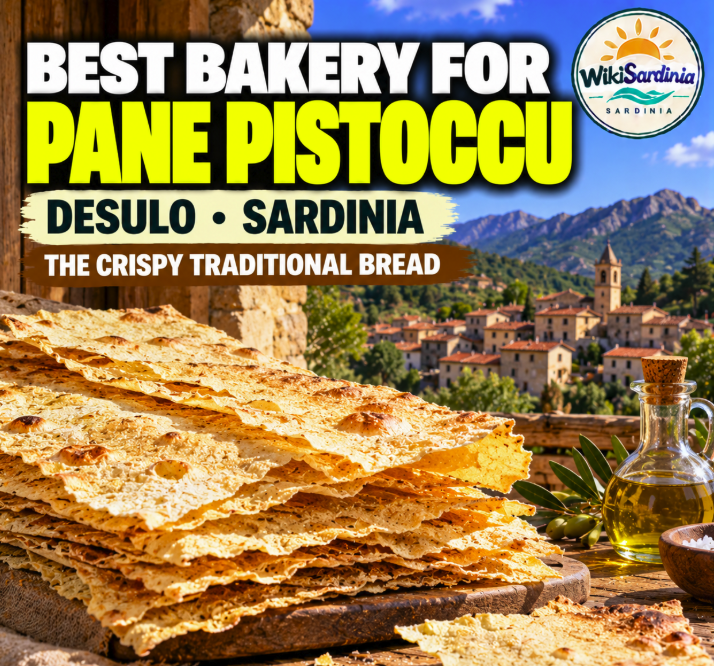
Looking for pane pistoccu in Sardinia? Head inland toward Barbagia and mountain towns such as Desulo, where traditional breads remain an important part of local food culture. Pane pistoccu is a distinctive Sardinian crispbread, often thicker and more substantial than the famous paper-thin pane carasau. It is excellent dry and crunchy, or briefly softened with water before serving.
There is one important point for visitors: we cannot currently confirm a specific bakery in Desulo with pane pistoccu available for walk-in purchase today. Rather than invent a “best bakery,” this guide explains what to look for, where to ask and how to recognize the product when you find it.
What is pane pistoccu?
Pistoccu is a traditional Sardinian flatbread that is baked until dry and crisp, allowing it to keep well. Recipes and shapes vary among communities and producers. It is often associated with the island's inland and eastern traditions, including areas of Ogliastra and Barbagia, and should not be presented as exclusive to Desulo.
Depending on the baker, it may be made with durum wheat semolina, wheat flour, water, yeast or sourdough and salt. The bread is typically flattened and baked, then dried or toasted to create its long-lasting crisp texture. Some examples are rectangular or elongated, but there is no single mandatory shape shared by every traditional producer.
Is pane pistoccu the same as pane carasau?
No. Both belong to Sardinia's extraordinary family of dry, long-keeping breads, but they are not interchangeable.
| Feature | Pane pistoccu | Pane carasau |
|---|---|---|
| Texture | Often thicker, firm and crunchy | Very thin, crisp sheets |
| Shape | Frequently rectangular or elongated, varies by bakery | Typically large, round sheets |
| Serving | Dry or briefly moistened | Dry, seasoned or layered in dishes |
| Tradition | Strong associations with inland and eastern Sardinia | Widely known across Sardinia, especially pastoral areas |
The exact thickness, ingredients and method depend on the local tradition and the individual baker. If you are curious, buying both for a side-by-side tasting is a wonderful way to discover the difference.
Why look for pane pistoccu in Desulo?
Desulo sits in the mountainous interior of Sardinia, within the historic Barbagia region. The town is known for its mountain setting, strong local identity and traditional food culture. It makes a rewarding stop for visitors who want to explore Sardinia beyond the coast.
Desulo is a sensible place to ask for traditional local breads, but that is not proof that every bakery produces pistoccu. Some shops may specialize in other regional breads, sell products made elsewhere or prepare certain types only on particular days.
Where can you buy pane pistoccu near Desulo?
1. Traditional bakeries in Desulo
Begin with independent bakeries and food shops in the village. Ask whether they make pane pistoccu on site, stock it from a nearby artisan producer or can suggest a local baker. Because traditional breads can be made in batches, availability may vary during the week.
Useful Italian question: “Buongiorno, avete pane pistoccu artigianale? È prodotto qui a Desulo?” (“Hello, do you have artisan pane pistoccu? Is it made here in Desulo?”)
2. Food shops and delicatessens in Barbagia
Small groceries, delicatessens and shops selling Sardinian specialties may carry packaged pistoccu from producers elsewhere on the island. Check the label for the producer's name and production address. A product sold in Desulo is not necessarily made there.
3. Nearby mountain towns
If you cannot find it in Desulo, ask about traditional bread producers in nearby Barbagia communities. The best lead may come from a local food shop, restaurant or tourism office rather than a search-engine ranking. Contact businesses before making a long detour through mountain roads.
4. Sardinian artisan food sellers
Some producers distribute traditional breads through regional specialty shops and online stores. When ordering, verify whether the listing says pistoccu, whether the product is made in Sardinia and whether the seller ships to your destination.
How to choose a good pane pistoccu
Quality is not defined by a single brand or a perfectly uniform appearance. Look for a pleasantly crisp texture, a fresh toasted-wheat aroma and clear information about the ingredients and producer.
- Read the label: identify the producer and place of production.
- Check the ingredients: recipes vary, so choose according to your preferences and dietary needs.
- Inspect the packaging: it should protect the bread from moisture and breakage.
- Ask when it was made: especially if buying directly from a bakery.
- Try a small pack first: texture and flavor differ among producers.
Do not assume that handmade bread must look irregular, or that a neatly packaged product cannot be traditional. What matters is trustworthy provenance and good baking.
How is pane pistoccu made?
Traditional preparation begins with a wheat-based dough that is mixed, rested and shaped into thin pieces. Depending on the local recipe, the bread is baked and then dried or toasted to reduce moisture and create its characteristic crispness.
That low-moisture texture helped make breads of this kind practical in rural and pastoral life, when food needed to travel and keep longer than soft fresh loaves. Methods have evolved, and today's artisan bakeries may use modern ovens while maintaining regional recipes.
Why is pistoccu so crunchy?
The crisp texture comes primarily from the baking and drying process. When bread loses enough moisture, it becomes firm and brittle rather than soft and elastic. The thickness of the dough, flour blend and baking technique affect the final bite.
Because pistoccu is often thicker than pane carasau, it can feel more substantial when eaten dry and may soften differently when moistened.
How do Sardinians eat pane pistoccu?
There are many enjoyable ways to serve it. You can eat it crisp alongside cheese, olives, vegetables or cured meats. Some people lightly wet the bread so it becomes pliable, then pair it with tomatoes, olive oil or other ingredients.
Try it with Sardinian pecorino and ripe tomatoes for a simple lunch. A drizzle of good local olive oil can bring out the toasted flavor. The bread also works as a base for rustic snacks, though recipes differ from family to family.
Should you soak pane pistoccu in water?
Often, yes—but only briefly if you want it softer. Depending on thickness and how dry the bread is, a little water may be enough. Start with a quick sprinkle or dip, then wait for the moisture to spread. Too much water can make it soggy.
If you enjoy crunch, eat it straight from the package. There is no need to moisten it unless your recipe or preference calls for that.
Can you take pane pistoccu home as a souvenir?
Its dry, crisp nature makes pistoccu a convenient food souvenir, provided the packaging stays intact and the bread is protected from humidity. Choose a sealed pack with a readable label and follow the manufacturer's storage instructions.
For international travel, check destination-country food import rules. If traveling to the United States, declare food products as required by customs and agricultural authorities; do not assume that every packaged food is automatically admissible.
How long does pane pistoccu keep?
Shelf life depends on the recipe, production method and packaging. Follow the best-before date and storage guidance printed by the producer. Keep it in a cool, dry place, away from moisture, which can affect crispness and quality.
If a package is damaged or the bread develops an unusual odor, visible mold or other signs of spoilage, do not eat it.
What else should you eat in Desulo?
A food-focused visit to Desulo is an opportunity to discover the flavors of Sardinia's mountains. Ask local restaurants and shops about seasonal cheeses, traditional sweets, cured meats and other regional specialties. Menus and availability change, so look for what is actually made locally rather than relying on a fixed tourist checklist.
How to plan a bakery visit in Desulo
- Contact the bakery or food shop before driving to the village.
- Ask specifically for pane pistoccu, not just pane carasau.
- Confirm whether the bread is produced locally or supplied by another Sardinian bakery.
- Check opening hours and whether fresh batches are prepared on particular days.
- Buy a small quantity to taste before choosing larger packs as gifts.
- Protect the bread from crushing and moisture during your trip.
FAQ
Where is the best bakery for pane pistoccu in Desulo?
We cannot verify a single best bakery or confirm current stock at a named Desulo business. Ask local bakeries and specialty food shops directly and check where their pistoccu is produced.
What is pane pistoccu in English?
It can be described as traditional Sardinian crisp flatbread, often thicker than pane carasau.
Is pane pistoccu from Desulo?
It belongs to wider Sardinian bread traditions, including inland and eastern areas. It is not exclusive to Desulo.
Is pane pistoccu the same as carasau?
No. Pistoccu is generally more substantial, while carasau is famous for its exceptionally thin sheets.
Is pistoccu always long and rectangular?
No. Shapes and thickness vary by local tradition and producer, although elongated or rectangular versions are common.
Do you eat pistoccu dry?
Yes. It can be eaten crunchy or briefly moistened before serving.
Can I buy pistoccu online?
Some Sardinian artisan food sellers offer it online. Check the producer, ingredients, shipping arrangements and current availability.
Is pane pistoccu gluten-free?
Traditional wheat-based pistoccu contains gluten. Anyone with celiac disease should only choose a specifically certified gluten-free product.
Is pane pistoccu a good souvenir?
Yes, if properly packed and stored dry. Check airline and destination-country food rules for international travel.
The bottom line
Pane pistoccu is one of Sardinia's most satisfying traditional breads: crisp, practical and full of character. Desulo is a wonderful starting point for exploring mountain food culture, but the best way to find an authentic loaf is to ask local bakers directly, verify where it was made and taste the difference for yourself. If a shop cannot offer pistoccu, ask who produces it nearby—and enjoy the journey through Barbagia.
Further reading
For regional food and destination background, consult SardegnaTurismo, Sardinia's official tourism portal. Bakery opening hours, stock and producer locations should be verified directly before visiting.