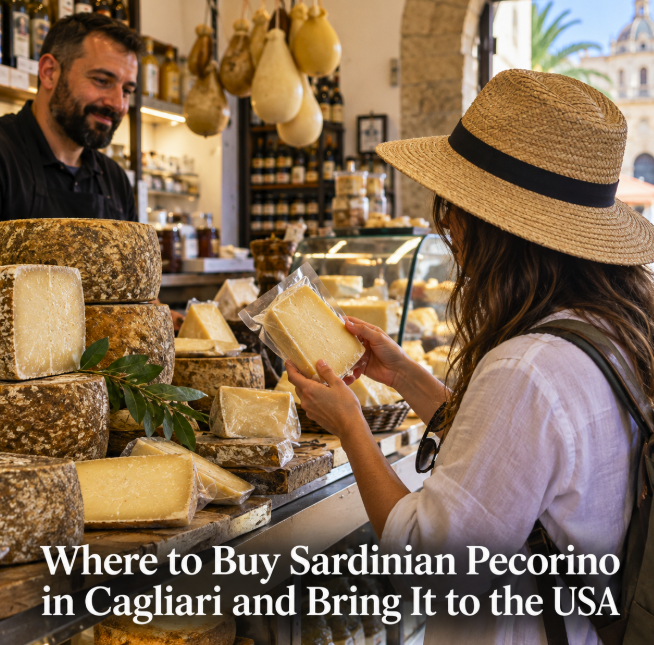
Buying a piece of Sardinian pecorino in Cagliari is one of the easiest ways to take a genuine taste of the island home, including for travelers returning to the United States. Cagliari has specialist cheese shops and traditional-food stores selling aged pecorino, Fiore Sardo DOP and other island cheeses, and current U.S. Department of Agriculture guidance specifically lists solid hard and soft cheeses without meat among the dairy products that may enter from any country. Every agricultural product must still be declared on arrival in the United States, and the final decision belongs to U.S. inspectors.
Where to shop for Sardinian cheese in Cagliari
One particularly convenient option for visitors is Sapori di Sardegna, at Vico dei Mille 1 in central Cagliari. Its current cheese selection includes Fiore Sardo DOP from Orgosolo, Fiore Sardo DOP from Sa Marchesa, smoked pecorino Mi'Inari, Pecorino Castellano Sardo and other Sardinian cheeses. For a traveler who wants to compare several styles rather than simply buy the first wheel of pecorino encountered, this kind of specialist selection is useful.
Formaggi Aresu is another cheese-focused option in Cagliari, with shops listed on Viale Marconi and Viale Elmas. Travelers staying in the historic center can also consider Comus in Piazza San Giuseppe, which specializes in Sardinian foods and explicitly lists aged pecorino among its products.
Specialità Monte Linas operates two Cagliari locations, in Via La Maddalena 24 and Piazza Garibaldi 40, selling Sardinian cheeses alongside cured meats, wines and traditional sweets. Another interesting alternative is Biancospino Agricola, whose Cagliari pickup point is in Via Antonio Michele Gazano 1 and whose current catalog includes Sardinian pecorino in different sizes.
Travelers with a car can widen the search beyond the city. Formaggi Picciau has its factory shop in Decimomannu, outside Cagliari, and produces several sheep's-milk cheeses including Pecorino Romano DOP and aged Sardinian pecorino. The producer says its milk comes from Sardinian pastures.
Which pecorino travels best?
For a long flight, an aged, firm cheese is usually the practical choice. Ask the shop for a mature pecorino or Fiore Sardo DOP and explain that it will be carried on an international journey. A smaller wedge is easier to pack than a whole wheel, and vacuum packing can help contain aromas and protect the cheese during transport.
Keep the original commercial label whenever possible and retain the receipt. This is particularly useful for travelers entering the United States because USDA guidance recommends keeping original packaging and receipts as evidence of the product's country of origin.
Fiore Sardo DOP is worth looking for if the goal is something particularly connected to Sardinia. Pecorino Romano DOP is also widely produced on the island, while individual cheesemakers offer their own aged pecorini with different textures and levels of sharpness. A specialist shop can usually explain the differences and help choose a cheese suited to eating at home rather than grating over pasta.
Can you bring Sardinian pecorino into the United States?
According to USDA APHIS guidance updated in January 2026, certain dairy products are exempt from restrictions that apply to many other milk products. The agency specifically includes solid hard or soft cheeses, provided the cheese contains no meat and is not a pourable product such as ricotta or cottage cheese.
That makes a solid Sardinian pecorino a considerably more straightforward food souvenir than many travelers assume. However, permission is not automatic simply because a cheese fits that description. Travelers entering the United States must declare all agricultural products to U.S. Customs and Border Protection. Inspectors make the final determination at the port of entry.
USDA recommends retaining packaging, labels and receipts that establish where the product came from. It also states that travelers who declare agricultural products will not face penalties if an inspector subsequently decides that an item cannot enter.
Regulations can change in response to animal-disease conditions, so travelers should check the latest USDA APHIS guidance shortly before departure rather than relying solely on information saved when planning the trip.
Cheese yes, salami is a different story
A Sardinian food shop can be tempting when preparing gifts, but U.S.-bound travelers should not assume that rules for cheese also apply to cured meat. Current USDA guidance says travelers may not bring cured hams and salami from Italy into the United States in passenger baggage; those products require commercial import procedures and documentation.
For that reason, a commercially packaged, solid pecorino is a much simpler choice for someone who wants an edible Sardinian souvenir to take to the United States.
The most useful request at the counter is straightforward: ask for an aged Sardinian pecorino suitable for travel, request vacuum packing if the shop offers it, keep the original label and receipt, and declare the cheese when entering the United States. That combination allows travelers to shop locally in Cagliari while following the current rules on the journey home.