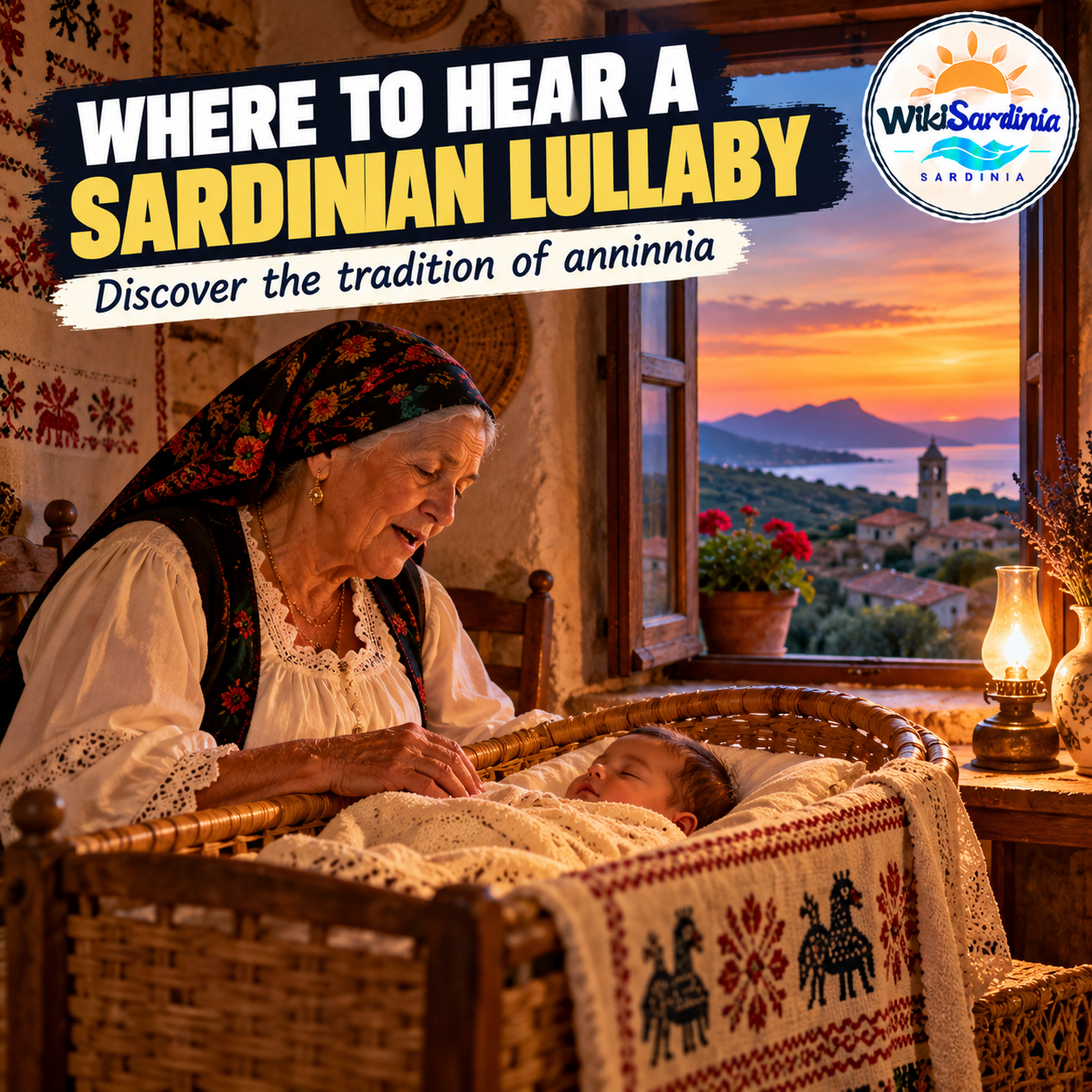
If you want to hear a traditional Sardinian lullaby, look for anninnìa (plural anninnìas): the Sardinian tradition of singing a child to sleep. These gentle songs are part of the island’s oral heritage, passed through family voices and local musical traditions. Their melodies, words and vocal styles can differ from one community to another.
Where can you listen to a Sardinian lullaby?
A simple place to start is online, where cultural music projects and Sardinian choirs share documented recordings. The Coro di Nuoro’s “Coro Anninnò” project presents songs for children and families, including Ninna nanna de Anton’Istene and Su ninnieddu. The project connects contemporary performances with poems, traditional songs and Sardinian-language repertoire.
You can also listen to “A Ninnia,” performed by Gabriella Ledda, a lullaby in Campidanese Sardinian from Quartucciu in the Cagliari area. The recording is presented with the lyrics and translations, making it easier to appreciate the words as well as the melody.
What about “Ninna nanna di Bobore”?
If you have heard the phrase “Ninna nanna di Bobore,” it may refer to a particular singer, local version or a title remembered informally. We could not verify it as one standard, uniquely identifiable title. One documented figure in Nuoro’s choral tradition is Bobore Nuvoli, founder of the Coro Ortobene; the choir’s repertoire includes several well-known Sardinian songs. To find the exact version you remember, try searching the singer or choir’s name alongside ninna nanna or anninnìa.
What makes Sardinian lullabies special?
Like lullabies elsewhere, Sardinian cradle songs are meant to soothe a child, often through repetition, a rocking rhythm and a close, intimate vocal delivery. Their words may express affection, hopes for the child, prayers or everyday concerns. Local language gives each version a particular sound, and the singing can be simple and direct rather than highly ornamented.
The word anninnìa is closely associated with the Sardinian lullaby tradition. There is no single melody that represents the whole island: versions can differ in dialect, rhythm, wording and interpretation, depending on the singer and place.
Where might you hear one in person?
Choir concerts, cultural festivals, folk-music events and programmes organised by local cultural associations are good opportunities to hear Sardinian vocal traditions live. However, lullabies are not performed at every folk event, so check the programme before travelling and look specifically for children’s songs, traditional singing or a choir’s Sardinian-language repertoire.
A small listening guide
- For a choral interpretation: start with the Coro di Nuoro’s “Coro Anninnò” project.
- For a solo voice in Campidanese: listen to Gabriella Ledda’s recording of “A Ninnia.”
- To explore local variations: search for anninnìa together with a Sardinian town or language variety.
- To hear it live: check local choir and cultural-association calendars rather than assuming a regular performance is available.
Listen to Sardinia’s quieter musical heritage
A traditional Sardinian lullaby offers a different window into the island: not the loud energy of festival stages, but the intimate sound of a voice singing to a child. Start with the documented recordings above, then explore other local versions. If “Ninna nanna di Bobore” is the specific performance you remember, a singer’s name, a few words of the lyrics or where you heard it may help identify the exact recording.