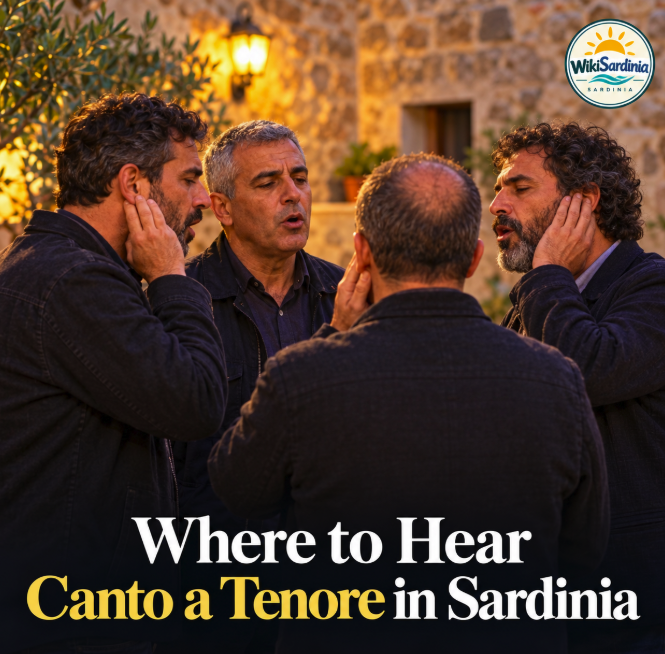
For travelers hoping to hear Sardinia’s canto a tenore, Bitti is a strong place to begin: the town has a museum dedicated to this vocal tradition. Finding a live performance tonight is a different task. Our research on 5 October 2026 did not identify a confirmed public appearance for that evening, so this guide offers reliable starting points rather than an invented concert listing.
That distinction helps you plan a better visit. Recorded listening, a scheduled performance and an informal gathering are different experiences, each with its own arrangements. Choose the one you want, then confirm the details before making a journey.
Listen for four voices in a close circle
UNESCO describes canto a tenore as a polyphonic practice rooted in Sardinia’s pastoral culture. Four men sing different parts, called bassu, contra, boche and mesu boche. The bassu and contra have a particularly deep, guttural sound; a solo voice carries the text while the others accompany it.
The singers stand close together in a circle. UNESCO originally proclaimed the tradition in 2005, and it entered the Representative List of the Intangible Cultural Heritage of Humanity in 2008. Its account places many practitioners in Barbagia and other areas of central Sardinia, with singing embedded in community life.
For a first listening session, pay attention to how the voices relate rather than trying to label everything immediately. Notice the lead phrase and the accompanying sound. You can enjoy the performance before understanding the words, then seek explanations of the text and local style afterwards.
Start with the museum in Bitti
The regional tourism authority’s museum guide places the Multimedia Museum of Canto a Tenore at Via Mameli 52 in Bitti’s historic centre. It is housed in a wing of the Museum of Farming and Pastoral Civilisation.
The guide describes four rooms using recordings, screens and listening installations. One arrangement lets visitors explore the individual voices as well as their combined sound. That makes the museum a useful introduction if you have heard a brief clip online and want to understand what you are listening to.
This is a museum visit, not a promise that four singers will perform live when you arrive. Confirm the current opening hours, ticket arrangements and available visitor services before travelling. If a live demonstration matters to you, ask specifically whether one is scheduled and whether it requires a separate booking.
How to find a live performance for your evening
Begin with the municipality or cultural organiser in the place you are visiting. Look for a programme that names a canto a tenore group, gives a full date including the year, and identifies the venue and start time. A poster saying “traditional music” is not enough to establish which form of singing you will hear.
Ask your accommodation host for leads, then verify them with the organiser. A useful question is: “Is there a public canto a tenore performance on this date, and do visitors need tickets or a reservation?” Confirm whether the performance is a standalone concert or one part of a larger event.
Take particular care with search results for autumn festivals. Old programmes can remain online and appear in a current search. The date a page was recently crawled or updated does not necessarily match the year of the event.
No confirmed listing found in our search means we cannot recommend a specific performance for 5 October. It does not prove that no singing will happen anywhere on the island that evening.
Hear the tradition without expecting a show on demand
UNESCO notes that canto a tenore can occur informally in local bars as well as at occasions such as weddings and religious festivities. That describes the tradition’s social setting, not a nightly timetable tourists can rely on.
If you encounter an informal gathering, let the participants decide whether visitors can listen. Ask before filming or moving close to the singers, and avoid interrupting for a requested song. A private celebration should not be treated as a public performance.
If a live date does not fit your trip, the UNESCO page includes a video, and Bitti’s museum offers another way to spend time with the music once its opening is confirmed. Both can help you arrive at a future concert with a more attentive ear. Plan around a verified opportunity and leave room for the people who keep this living tradition going.