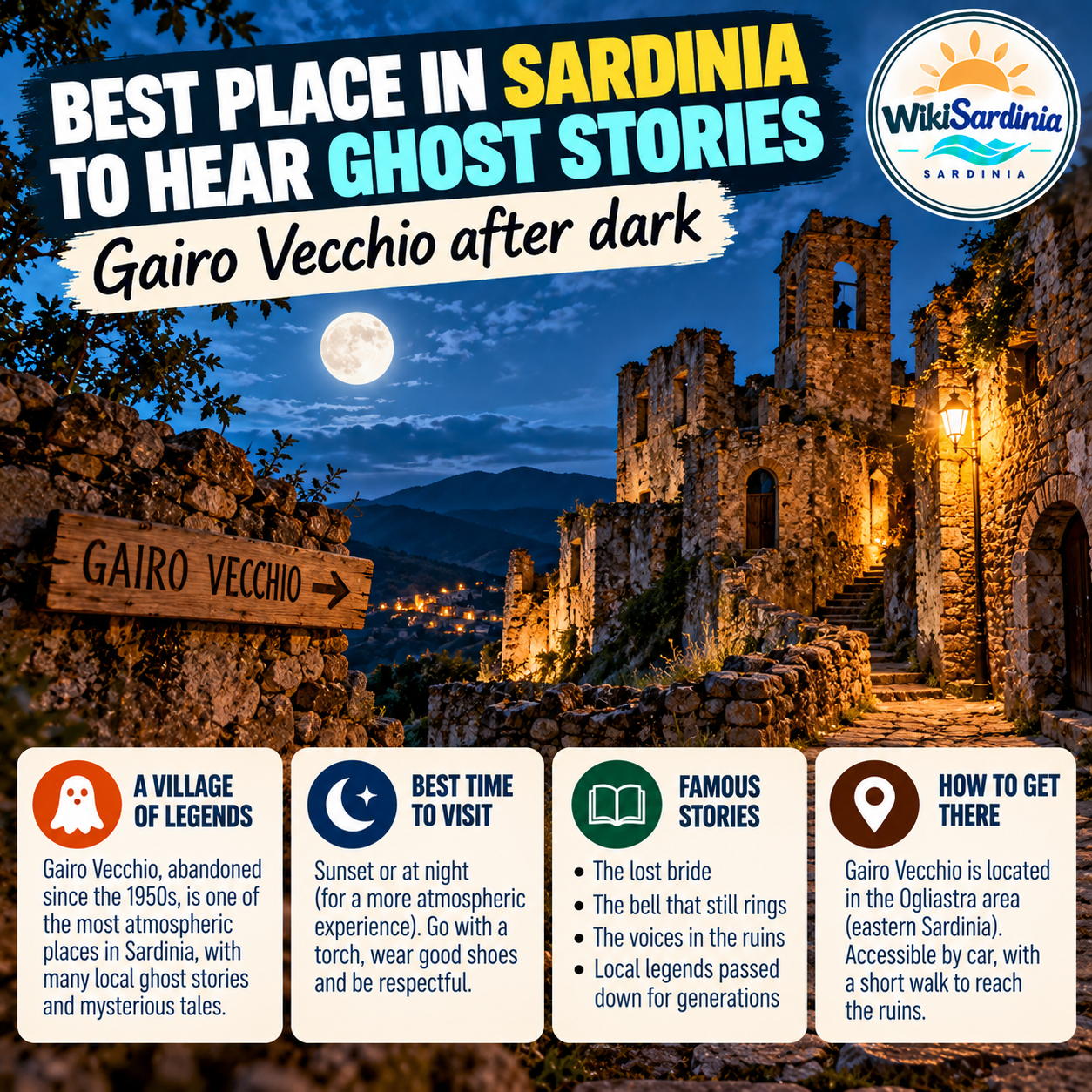
For an atmospheric setting for Sardinian ghost stories, few places look as evocative as Gairo Vecchio, an abandoned village in the Ogliastra area of eastern Sardinia. Its weathered stone houses and empty lanes invite visitors to imagine the lives once lived there. The village’s real history is compelling in its own right, while ghost tales should be enjoyed as folklore rather than evidence that the place is haunted.
Why does Gairo Vecchio feel so mysterious?
Gairo Vecchio was gradually abandoned after repeated flooding and landslides affected the area, especially during the devastating floods of 1951. Residents moved to newer settlements, including Gairo Sant’Elena. The remains of the old village preserve a powerful sense of place: empty buildings, narrow streets and traces of everyday life left behind.
That atmosphere has made abandoned villages like Gairo Vecchio natural settings for stories about strange sounds, unexplained sightings and memories of the past. However, individual ghost stories vary, and visitors should not assume that every tale is an established local legend.
Where can you hear Sardinian ghost stories?
If you want to hear stories rather than simply explore the ruins, ask local cultural associations, guides or residents whether they share folklore about Gairo and the surrounding Ogliastra villages. A local guide can put tales into context and distinguish documented history from modern legends. Check in advance whether guided walks or storytelling events are actually scheduled; do not assume there is a regular ghost tour.
Should you visit Gairo Vecchio at night?
The village may look especially dramatic at dusk, but a night visit is not automatically safe or permitted. Old buildings can have unstable walls, loose stones, open drops and unsafe floors, and visibility is poor after dark. Access arrangements may change, so check current local guidance before going.
- Stay in publicly accessible areas: obey signs, barriers and any restrictions.
- Never enter abandoned buildings: roofs, staircases and floors may collapse without warning.
- Bring a torch for legal paths: do not use it as a reason to explore restricted ruins.
- Go with a guide if possible: local knowledge helps you understand the village’s history and avoid hazards.
- Respect residents and the site: keep noise down, take rubbish away and do not move objects or damage walls.
Folklore, memory and real history
Ghost stories often grow around places marked by loss, dramatic events or sudden changes. Gairo Vecchio’s abandonment is rooted in real environmental disasters and the relocation of its community. That history offers a meaningful starting point for storytelling without inventing supernatural events or treating local people’s memories as a tourist spectacle.
Make the visit respectful
Visit in daylight if you are unfamiliar with the site, check access rules before travelling and consider arranging a local guide. If you are hoping to hear Sardinian legends, ask for stories shared by the community and remember that folklore is part of living cultural heritage. Gairo Vecchio’s atmosphere is powerful enough without taking risks inside its ruins.
In short: Gairo Vecchio is a striking place to explore the history and atmosphere behind Sardinian ghost-storytelling. Treat supernatural tales as folklore, verify whether a guided visit is available, and never enter unsafe or restricted ruins—especially at night.