In photographs of Sardinian festivals, women sometimes appear to be wearing several skirts at once: pleated fabric, an embroidered apron, underskirts and richly coloured outer layers. This has inspired a memorable question: why did Sardinian women wear three skirts? A popular explanation claims that the three skirts represented mourning, marriage and widowhood. The real history is more interesting—and more complex.
Did Sardinian women really wear exactly three skirts?
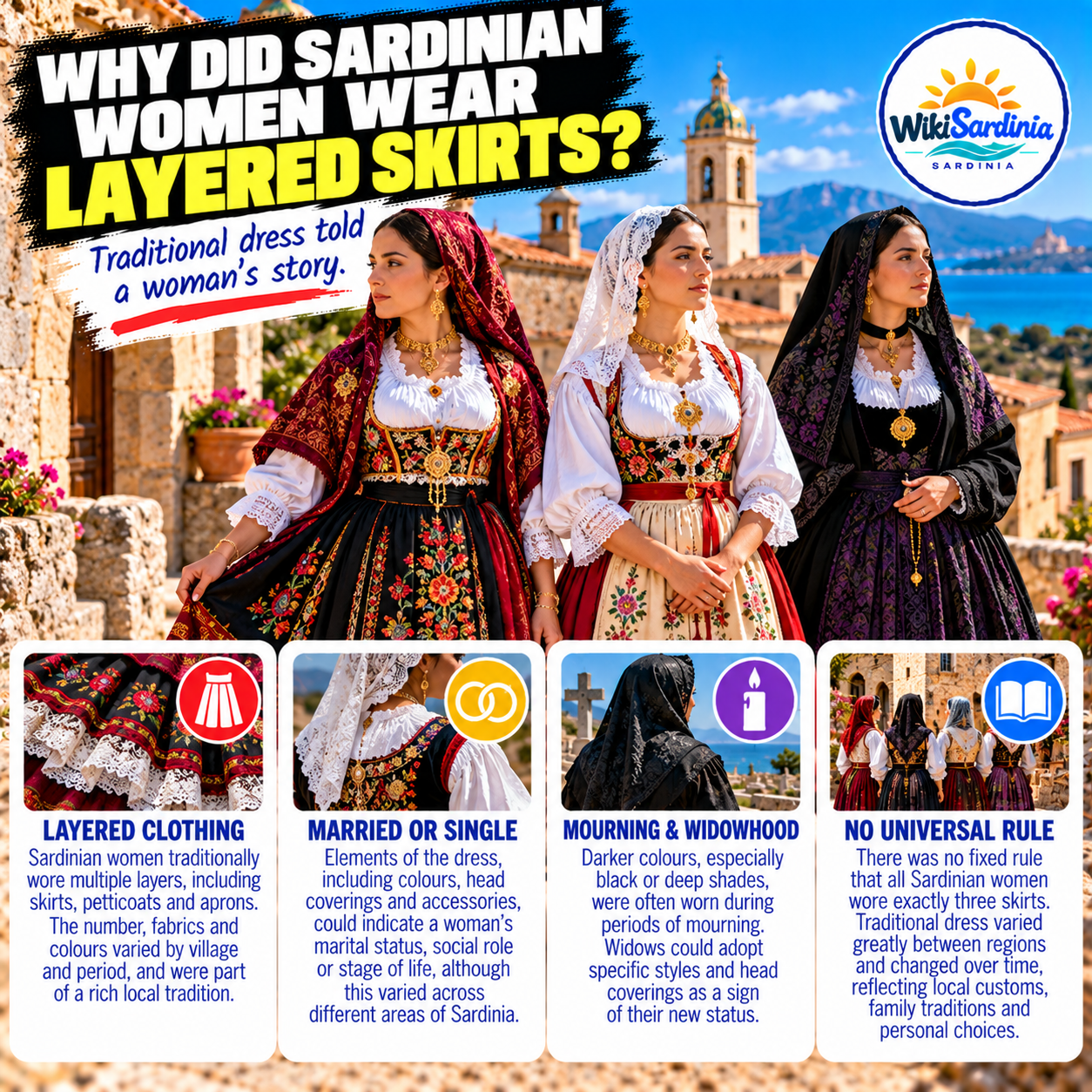
There is no documented island-wide rule requiring every woman to wear exactly three skirts, nor a universal code assigning one skirt each to marriage, mourning and widowhood. Sardinia has a remarkable diversity of traditional clothing, with styles that differed from village to village and changed over time. Some outfits included multiple skirt-like layers, petticoats and aprons; others had different combinations of garments. Their number depended on local custom, occasion, season, social position and the particular costume.
Clothing was a language
Traditional dress did far more than cover the body. Its colours, textiles, embroidery, jewellery and head coverings could reveal where a woman came from, whether she was young or older, her social position and sometimes whether she was unmarried, married or widowed. The Italian Ministry of Culture describes the traditional Sardinian woman's outfit as a complex form of social communication. That is the real kernel of truth behind the “three skirts” story: clothing could communicate life events, even though there was no single three-skirt system.
Why were skirts layered?
Layering served both practical and decorative purposes. Underskirts could add warmth and volume, while an outer pleated skirt gave the costume its distinctive shape. Aprons protected fabric in everyday life and could become highly ornamental in festive dress. In some communities, particular garments could be arranged differently according to the weather or occasion. The effect could look like three or more skirts to an observer, even when the garments had different names and functions.
Marriage and festive clothing
Wedding and ceremonial outfits often displayed precious fabrics, detailed embroidery, bright colours and elaborate jewellery. The exact choices varied enormously. In Desulo, for example, traditional clothing carried highly specific visual meanings related to a woman's personal circumstances. Elsewhere, headscarves, aprons or decorative elements could help distinguish ceremonial dress from ordinary clothing. It would be misleading, however, to assume that every bright skirt meant a woman was married.
Mourning: when colours changed
Mourning is one of the clearest examples of how Sardinian dress expressed personal history. Dark colours—particularly black—were often associated with bereavement, but the rules were not identical across the island. Some communities distinguished full mourning from lighter forms of mourning, using different shades and modifying embroidery or accessories. Official documentation of traditional dress from Tonara records a “half-mourning” outfit associated with the loss of a close relative other than a husband. The fabric and restrained decoration communicated that specific condition.
What did widows wear?
Widowhood could be marked through a darker version of an existing costume, changes to head coverings and the removal or alteration of decorative elements. The SardegnaCultura account of the Desulo women's ceremonial dress describes how a widow might dye garments black after her husband's death. It also records nuanced distinctions between different kinds of bereavement and even the restrained colours considered appropriate when a widow remarried. These details show how deeply clothing was connected to community expectations.
Different villages, different rules
The traditional dress of Oliena was not the same as that of Desulo, Ittiri, Orune or Riola Sardo. Silhouettes, headpieces, fabrics, embroidery and the meaning of individual details varied by locality. In Riola Sardo, for example, the municipality describes a pleated skirt and a separate front apron as distinct elements of the women's outfit. Looking at these garments as if they were simply “three skirts” can erase the craftsmanship and local vocabulary behind them.
Where can visitors see Sardinian traditional clothing?
One of the best starting points is the Museo del Costume in Nuoro, associated with the Istituto Superiore Regionale Etnografico (ISRE). Its collections help explain the island's diversity of textiles and ceremonial dress. Traditional clothing is also visible at cultural and religious events, including the Cavalcata Sarda in Sassari and the Feast of Sant'Efisio in Cagliari. Visitors should remember that these are living cultural traditions, not simply costumes created for tourists.
So what is the real meaning of the “three skirts”?
The idea that every Sardinian woman wore three skirts—one for marriage, one for mourning and one for widowhood—is an oversimplification. What is true is more compelling: a woman's traditional dress could tell her story. A change in colour, an apron, a shawl or an embroidered detail might communicate family circumstances and community identity. To understand the meaning, you need to know the village, the garment and the occasion.