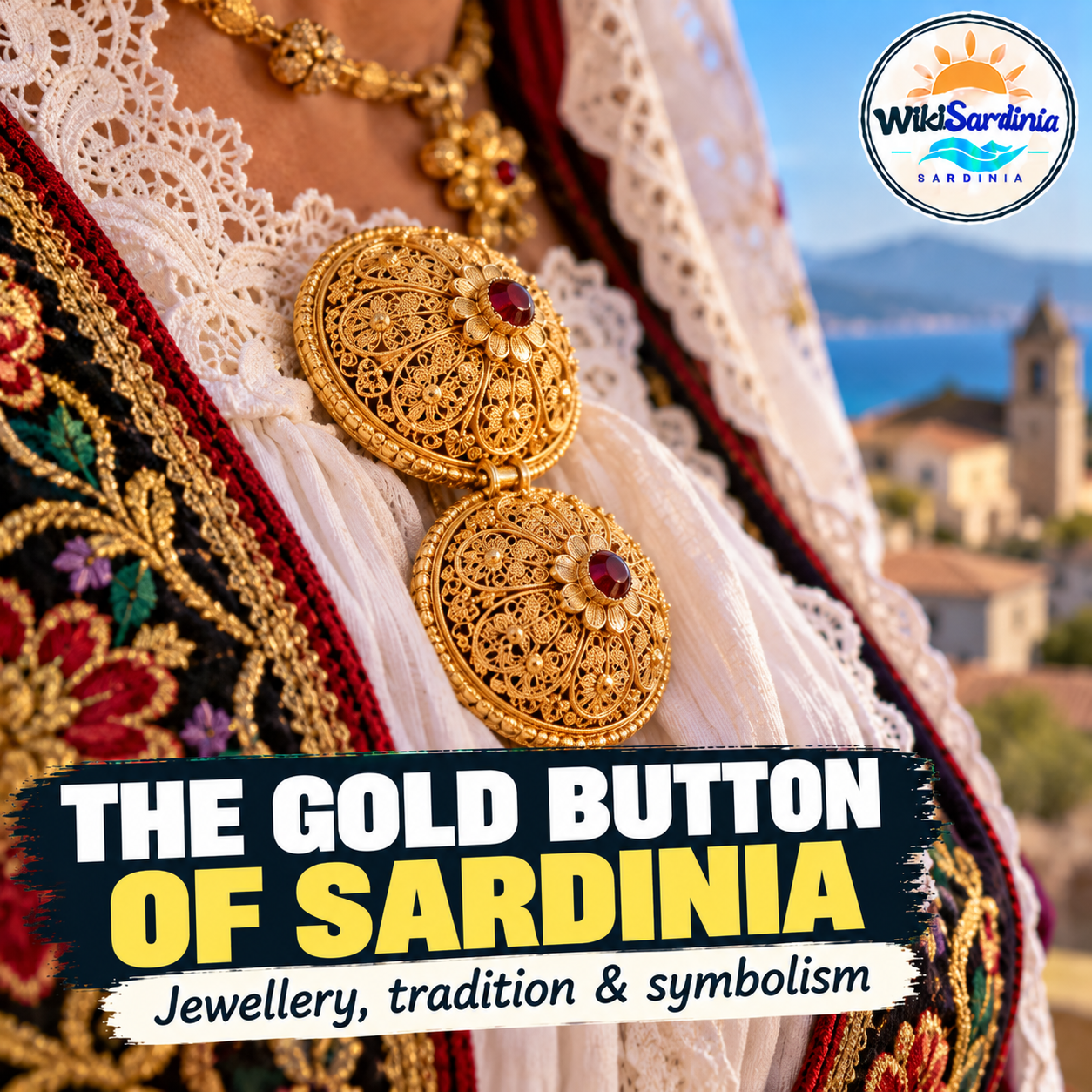
The ornate gold “button” seen on some traditional Sardinian women’s costumes is called the bottone sardo. It is more than a fastener: crafted in gold or silver, often with delicate filigree and a small central stone or bead, it is one of the distinctive jewels of Sardinian traditional dress. Depending on the local costume, buttons may be worn in pairs or arranged in rows along the sleeves.
What was the gold button used for?
Originally, Sardinian buttons had a practical role. They could close a shirt at the neck or cuffs, or fasten the sleeves of a jacket. In some festive women’s costumes, particularly in the Logudorese tradition, a series of buttons—sometimes seven to twelve on each sleeve—formed an ornamental button arrangement known as a buttonera. Silver is widely used, although gold examples are also well known.
What does the bottone sardo symbolise?
The button’s rounded, double-domed shape is often interpreted as resembling the female breast. In Sardinian jewellery tradition, this has led to associations with femininity, motherhood, nourishment and fertility. The motif is also linked in popular explanations to Tanit, a Phoenician-Punic goddess associated with fertility.
These meanings are part of the traditional symbolism and stories attached to the jewel; they should not be treated as definitive proof that every button was originally made for a single religious purpose. Designs and meanings can vary by area, maker and family tradition.
Is it the same as the Sardinian wedding ring?
No. The bottone sardo is a button or ornamental jewel associated with traditional clothing. The fede sarda is a traditional Sardinian wedding ring, usually made with intricate gold filigree and tiny granules that can evoke grains of wheat and wishes for prosperity. Another historic love symbol is the maninfide, a jewel showing two hands clasped together.
Can you wear a Sardinian button today?
Yes. While buttons still appear on traditional costumes, contemporary jewellers also adapt the design into pendants, earrings and other pieces. If you are buying one as a souvenir, ask whether it is handmade in Sardinia, which metal and stones it contains, and whether the design follows a particular local tradition.
Where does the craft live on?
Sardinian filigree is practised by artisans across the island, with local workshops and styles varying from town to town. Cultural collections and official craft archives document the button’s role in traditional clothing and show examples made by contemporary goldsmiths. You can begin with the regional cultural portal’s guide to traditional Sardinian buttons, the official tourism guide to Sardinian jewellery and symbolism, and the Sardinia Artistic Crafts archive.
A small jewel with a big story
The gold button is a striking example of how a useful object can become a treasured piece of cultural identity. It fastened garments, decorated festive costumes and gathered symbolic meanings over generations. Whether you see it on a traditional sleeve or as a modern pendant, the bottone sardo offers a glimpse into Sardinia’s rich goldsmithing heritage—distinct from, but often mentioned alongside, the island’s famous wedding ring.