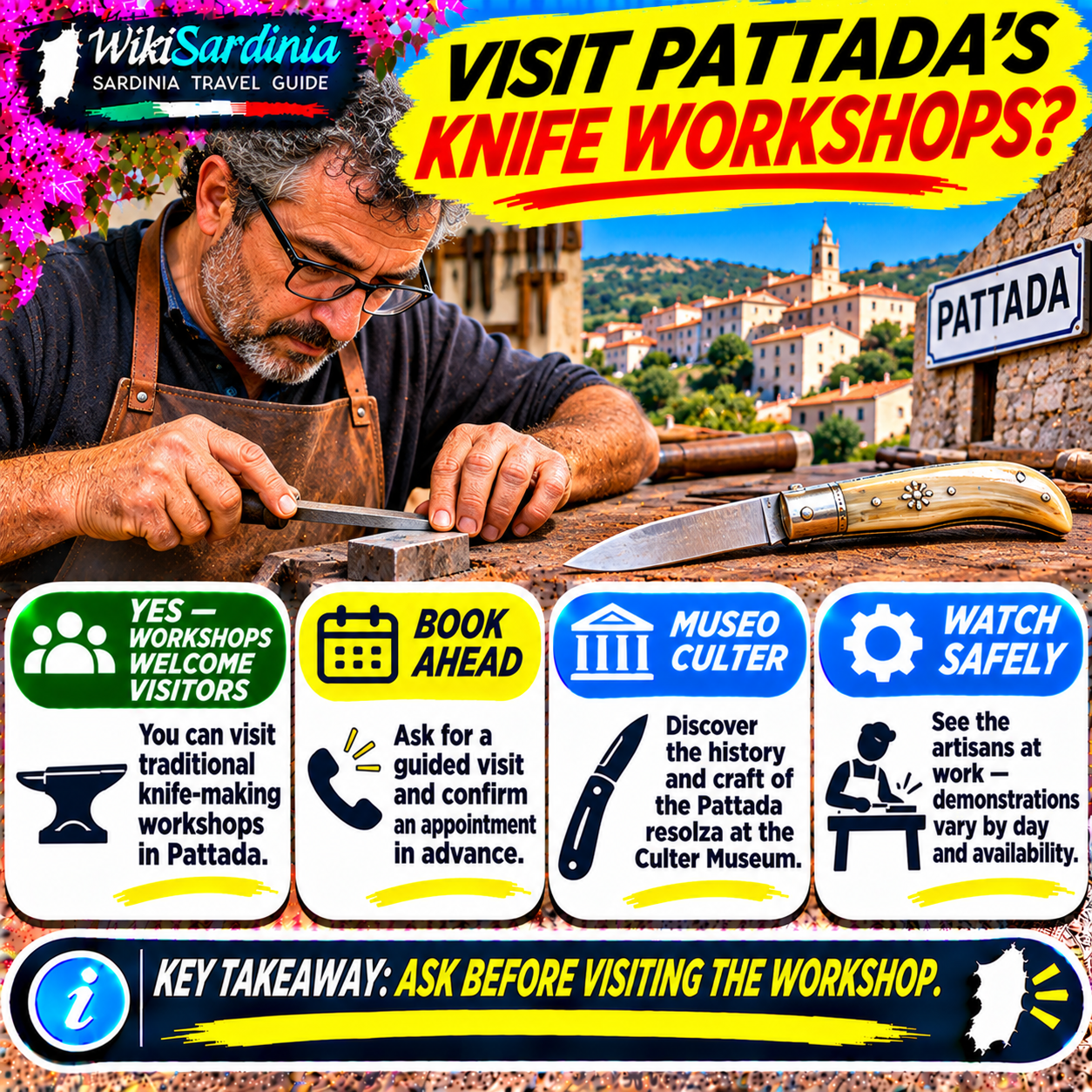
Yes, tourists can visit traditional knife-making workshops in Pattada, a small town in northern Sardinia renowned for the handmade folding knife known as the resolza pattadese. Some workshops welcome visitors, and at least one combines an active family atelier with a dedicated knife museum. However, contact the maker before you travel: opening a showroom, touring a workshop and watching a live forging demonstration are different experiences, and not all are available at all times.
Why is Pattada famous for knife-making?
Pattada, in the Logudoro area of northern Sardinia, has a long tradition of making practical blades for rural life. The best-known design is the resolza, also called the pattadese, a folding pocketknife associated with local shepherds, craftspeople and collectors. The form is often recognized by its elegant, leaf-shaped blade and carefully finished handle. Today, individual makers interpret the tradition in both classic and contemporary ways. Visiting a workshop offers an opportunity to learn about Sardinian craftsmanship rather than simply buying a souvenir.
Can visitors actually enter a working workshop?
Yes, where the artisan explicitly welcomes visits. The family-run Giagu atelier says visitors can see its Pattada workshop, meet members of the family and learn about the knives it produces. Its contact page invites requests for atelier visits and appointments. Other local makers operate workshops and showrooms, but their public access arrangements may differ. Do not assume every forge is an unrestricted walk-in attraction or that an artisan can stop working whenever a visitor arrives.
Where is a confirmed workshop and museum?
Coltelli Giagu operates at Via Vittorio Emanuele 52A, 07016 Pattada (SS), according to its current website. The same building houses the Museo Culter, a collection devoted to the history of knives and international knife-making traditions. The atelier lists +39 340 164 2993 and info@coltelligiagu.it for enquiries. Its published opening hours cover most days, including Sunday, but the workshop's pages show slightly different Sunday schedules; confirm your preferred time directly. The separate older museum website and some institutional listings use the street number 64, so use the current atelier contact details and ask for directions before visiting.
What can you see at the Museo Culter?
The Museo Culter, established in 2011, presents knives from Sardinia and other parts of the world. Its displays connect historical metalworking and local tools with modern handmade knives. The museum's own descriptions include the working Giagu production area, traditional models and collections of international craftsmanship. A visit can help explain why the Pattada knife is valued for both its practical design and the skill involved in its manufacture. The Italian Ministry of Culture's regional heritage portal also documents the museum and its active workshop.
Can you watch a knife being forged?
Possibly, but ask for a demonstration rather than assuming one is scheduled. A knife is made through several stages, including shaping, finishing and assembling components. A visit might coincide with hand-finishing or other workshop activity instead of hot forging. The museum describes opportunities to follow aspects of production, but the exact stages visible depend on work in progress, staffing and safety. Ask whether the visit includes a live demonstration, how long it lasts and whether an English explanation is available.
Are there other artisans in Pattada?
Yes. Massimo Manca is another Pattada knife-maker whose workshop is listed at Via S'Ena 1; the local Tancas Abertas directory provides contact information, including +39 351 872 5650. Giampiero Pizzadili also documents his handmade Pattada knives and describes a museum space associated with his workshop on his official website. These are useful additional leads, but do not assume they offer the same tours, demonstrations or opening arrangements as Giagu. Contact each workshop directly before planning a visit.
Do you need to book in advance?
Booking or at least confirming ahead is strongly recommended. An artisan may be fulfilling an order, attending an event or unable to host visitors safely. When contacting a workshop, specify your intended date, group size and whether you want a simple showroom visit, a museum tour or a live demonstration. Ask whether there is an admission or guiding fee, how long to allow and whether photography is permitted. No universal booking requirement or fixed visitor price applies to all Pattada workshops.
Can tourists buy a handmade Pattada knife?
Some makers sell finished knives or accept commissions, but availability, prices and delivery times vary. A knife purchased directly from an artisan may come with details about its maker and materials. This is a separate decision from taking a cultural tour. Before purchasing, understand the legal requirements for transporting blades: in Italy, carrying knives in public without a legally recognized justification can have serious consequences, and a tourist souvenir is not automatically a valid reason to carry one ready for use. Ask the seller about safe packaging and lawful transport; do not carry an exposed blade around town.
Can I take a Pattada knife home by plane?
Do not put a knife in cabin baggage. Airline and airport security rules restrict knives and other sharp objects in carry-on luggage. Whether a particular knife may travel in checked baggage depends on applicable aviation rules, carrier policy and the laws of the destination and any transit countries. If you are flying back to the United States, check the current TSA guidance on knives, your airline's rules and relevant customs or local laws. Pack any permitted item securely so handlers cannot be injured, and do not assume every type of blade is legal to import or possess at home.
What makes a Pattadese knife distinctive?
The traditional resolza is a folding knife with a refined profile, often described as leaf-shaped, and a handle whose form is designed to sit comfortably in the hand. Makers use different handle materials and finishing techniques, and modern versions may depart from the classic form. The museum displays the historical development of local models, including the resolza and the older corrina. Not every knife advertised as “Sardinian” was handmade in Pattada, so ask the maker about provenance if authenticity matters.
Is the experience suitable for children?
A museum visit can interest older children who enjoy traditional crafts and history. However, a working knife-making shop contains sharp tools, hot equipment and potentially hazardous machinery. Follow the artisan's instructions, keep children close and never touch blades, equipment or unfinished work without permission. Ask the operator about age restrictions and whether the visit can be adapted for families. A showroom or museum-only experience may be more suitable than a close-up workshop demonstration.
Can visitors take photographs?
Ask first. Makers may allow photographs of displayed pieces but restrict images of private workspaces, customers' commissions or particular techniques. Keep clear of working areas and do not request unsafe poses with tools. A respectful visit gives the artisan space to explain the craft in their own way.
Is Pattada worth a detour if I am not buying a knife?
Yes, particularly for visitors interested in traditional Sardinian crafts and inland villages. The appeal is seeing how practical rural objects became highly skilled handmade work, meeting the people who preserve the tradition and understanding the region beyond its beaches. Pattada is inland, so plan your route from your accommodation carefully. A confirmed appointment and museum visit make a more reliable itinerary than arriving without knowing whether any workshop can receive visitors.
How should you plan your visit?
- Choose a workshop. Giagu has a documented visitor offer and museum; other makers may provide different experiences.
- Contact the artisan. Give your date, group size and preferred language.
- Specify what you want to see. A museum visit, showroom discussion and live demonstration are not interchangeable.
- Confirm practical details. Ask about opening times, fees, accessibility, photography and safety rules.
- Plan transport. Allow time for the journey through inland Sardinia and check the route before leaving.
- Check travel rules separately. If considering a purchase, verify lawful carriage and airline or customs restrictions.
Useful Italian phrases
“È possibile visitare il laboratorio?” — Is it possible to visit the workshop? “Serve prenotare?” — Do we need to book? “Si può vedere una dimostrazione?” — Can we watch a demonstration? “Quanto dura la visita?” — How long is the visit? “La visita è disponibile in inglese?” — Is the tour available in English? “Possiamo visitare soltanto il museo?” — Can we visit just the museum?
Sources and contacts
Coltelli Giagu — official atelier and visitor information; Coltelli Giagu — visit enquiries and contact details; Museo Culter — current museum description; Museo Culter — historical visitor information; Italian Ministry of Culture — Museo del Coltello; Tancas Abertas — Massimo Manca workshop; Giampiero Pizzadili — official artisan website; TSA — knives and air travel. Published opening times and admission arrangements may change; confirm directly.
The WikiSardinia takeaway
You really can visit a knife-making workshop in Pattada. Start with an atelier that explicitly welcomes visitors, such as Giagu and its Museo Culter, and arrange the details ahead of time. Seeing a working craftsperson and learning the history of the resolza pattadese can be a memorable cultural experience even if you never buy a knife. Just remember that a workshop visit does not guarantee a live forging demonstration, and transporting a blade requires separate legal and travel checks.