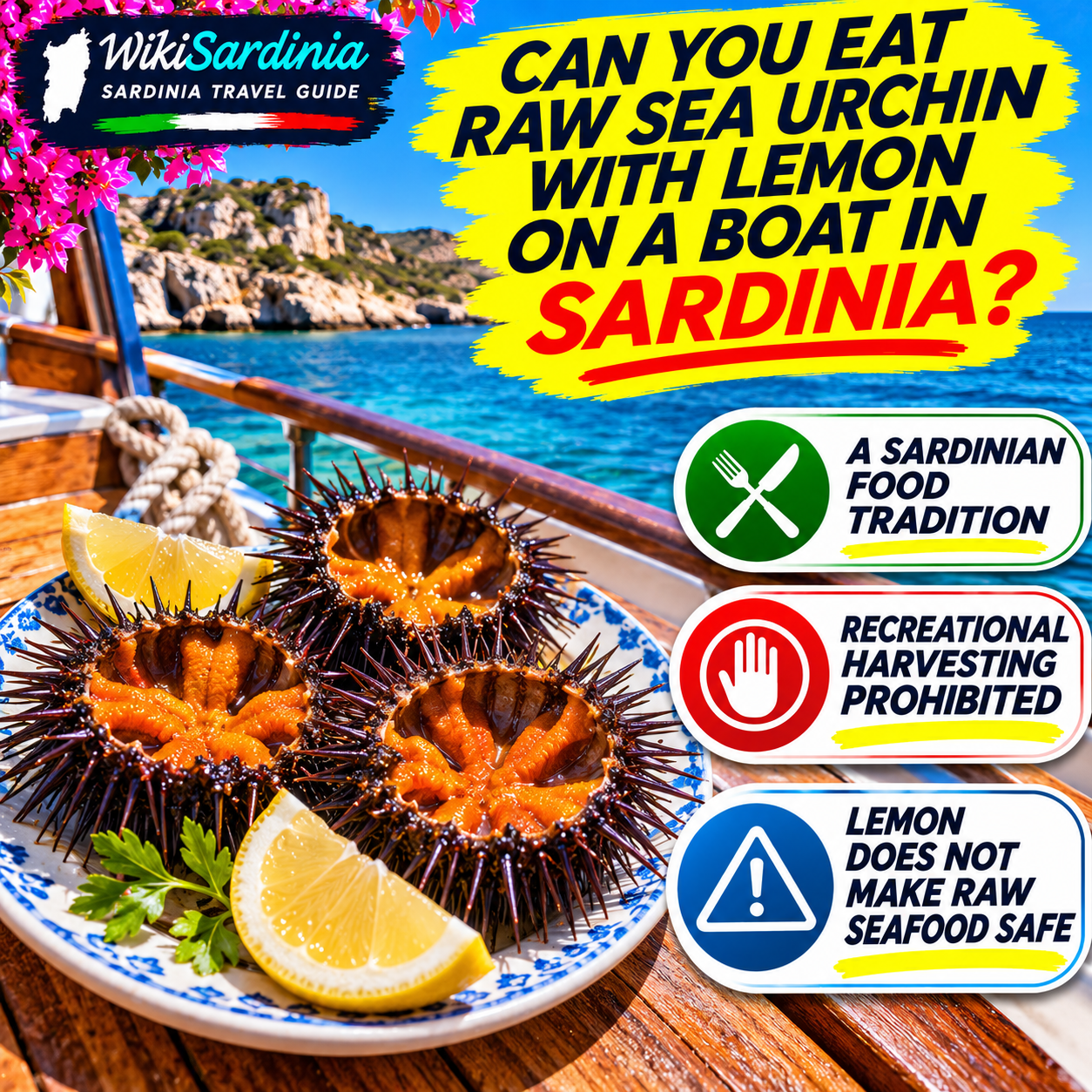
Yes, raw sea urchin roe with a squeeze of lemon is part of Sardinia's coastal food culture, and it can be served on a boat—but there are important legal and food-safety limits. Tourists must not assume they can dive into the sea, collect a few urchins, crack them open and eat them on deck. Recreational sea urchin harvesting was prohibited under Sardinia's 2026 rules, and in November 2026 the region was considering an additional multi-year moratorium to protect severely depleted stocks. If you are offered sea urchin during an excursion, ask where it came from, whether it was legally sourced and how it was stored. Lemon adds flavor; it does not disinfect raw seafood.
What exactly do Sardinians eat inside a sea urchin?
The edible orange or yellow portions inside an edible sea urchin are its gonads, often called sea urchin roe or polpa di riccio in culinary language. They have a rich, briny, sometimes slightly sweet flavor that enthusiasts associate with the Mediterranean Sea. The outer shell, spines and most of the internal contents are not eaten. The species traditionally harvested in Sardinia is Paracentrotus lividus. Not every sea urchin you see underwater is suitable or legal to harvest.
Do people really eat sea urchins raw with lemon?
Yes. A traditional way of enjoying sea urchin is to eat the roe fresh, sometimes with a little lemon and bread. The same ingredient is also used in dishes such as spaghetti ai ricci di mare. But a familiar culinary custom is not proof that eating the product raw is risk-free. People who prefer to avoid raw seafood should choose a fully cooked alternative; simply stirring roe into warm pasta does not necessarily cook it thoroughly.
Can tourists collect sea urchins while snorkeling in Sardinia?
No, not under the Sardinian 2026 recreational-harvesting rules. The regional decree for the 2026 season expressly prohibited sea urchin collection by recreational and sport fishers. Only specified categories of authorized professional fishers could harvest under the decree's conditions. Taking an urchin 'just to taste one' or asking a boat captain to collect it for you is not a workaround. Marine protected areas can have additional restrictions. Read the official 2026 regional decree and check for newer measures before your trip.
Is sea urchin fishing allowed all year?
No. Under the initial 2026 Sardinian rules, authorized professional harvesting was restricted to a defined season beginning on 2 January 2026, with further conditions on days, hours, minimum size and permitted fishing methods. A subsequent regional act dated 30 April 2026 modified the season's end date. Travelers should not assume that the same dates apply in 2027 or later. More importantly, on 2 November 2026, ANSA reported a proposed three-year suspension of harvesting, possession, transport, landing and sale of locally caught sea urchins and fresh derivatives. At that time, the start date was still to be established by a later decree. Therefore the proposal should not be described as a ban already in force until the final operative act is verified. See the regional amendment and the 2 November report.
Can a boat excursion legally serve raw sea urchin?
Potentially, but only if the operator can legally supply and serve it under the rules in force at the time. A licensed boat excursion is not automatically authorized to harvest protected seafood or sell untraceable raw products. Ask whether the roe comes through an authorized food supply chain and whether the boat is equipped and permitted to handle and serve the food safely. If the operator casually scoops urchins off the seabed for guests, do not assume that is lawful simply because it looks traditional. During a moratorium, locally harvested product may be prohibited altogether; the source and applicable rules matter.
Why are Sardinia's sea urchins protected?
Sea urchin stocks have been under significant pressure. Scientific monitoring described in the November 2026 report found serious concerns about the abundance and recovery of Paracentrotus lividus around Sardinia. Urchins also play ecological roles in coastal ecosystems, so removing them affects more than a single culinary ingredient. Respecting harvest restrictions helps protect the resource and the future of legitimate fishing communities. Avoid businesses that market illegal 'freshly picked straight from the sea' experiences.
Does squeezing lemon over raw sea urchin make it safe?
No. Lemon juice changes the flavor and acidity, but it is not a reliable method of eliminating harmful bacteria, viruses or other hazards in raw seafood. The US Centers for Disease Control and Prevention explicitly warns that lemon juice does not kill Vibrio bacteria in raw oysters, illustrating why citrus should not be treated as a safety step for raw marine foods. The precise microbiological risks differ by species and handling conditions, but the practical lesson applies: lemon is a condiment, not a substitute for safe sourcing, refrigeration and cooking. See the CDC seafood safety guidance.
What are the risks of eating raw sea urchin?
As with other raw seafood, hazards can arise from contamination, poor handling, inadequate temperature control or an unverified supply chain. Raw marine foods can carry microorganisms capable of causing gastrointestinal illness and, in some cases, more serious infections. You cannot determine that a raw product is safe simply because it smells like the sea or looks bright orange. The risk is especially concerning for pregnant travelers, young children, older adults and people with weakened immune systems or certain medical conditions. If you are in one of these groups, the safer choice is to avoid raw seafood.
How should sea urchin roe be handled on a boat?
A food-serving operator should use legally sourced product, clean food-contact surfaces, hygienic utensils and appropriate temperature-controlled storage. A boat in the sun is not a substitute for a refrigerated food-preparation area. Avoid roe that has been left exposed on a hot deck or transferred into unlabelled containers without traceability. Ask whether the product has been maintained at the required temperature and whether the crew follows applicable food-safety procedures. A pleasant setting does not eliminate the need for safe handling.
Is it safe to open a live sea urchin yourself?
Handling live sea urchins involves sharp spines, cutting tools and potential contamination. An inexperienced tourist can injure their hands, and opening an animal does not establish that it was legally caught or safe to eat. Do not attempt to collect or open wild sea urchins during a boat excursion. If you want to learn about traditional preparation, choose a legitimate food demonstration where the operator supplies a traceable product and follows hygiene rules. There is no need to turn the experience into an improvised harvesting lesson.
How does raw sea urchin taste?
Sea urchin roe has a distinctive marine flavor, often described as briny, creamy, rich and slightly sweet, sometimes with a mineral or iodine-like note. Texture and intensity vary with species, season, freshness and preparation. Lemon can add brightness but may overpower the subtler flavor if used heavily. People who dislike strong seafood flavors may prefer trying a small amount in a properly prepared dish rather than eating it straight from the shell.
Do Sardinians eat it with bread or pasta?
Both are familiar ways to enjoy sea urchin. Raw roe can be served with bread, while spaghetti ai ricci is a well-known coastal dish. Some recipes add roe at the end to preserve its delicate texture, meaning the finished dish may still contain undercooked seafood. If avoiding raw foods is important to you, ask the restaurant how the roe is prepared rather than assuming that pasta automatically makes it safe.
Can you find sea urchin in Cagliari, Alghero or Olbia?
Sea urchin has a place in Sardinian coastal food traditions, particularly in parts of the south and west, but current availability depends on harvest restrictions, supply and individual businesses. Do not expect every restaurant or boat excursion to serve it, and do not interpret an advertised menu item as proof that the ingredient was locally and legally harvested. Before ordering, ask whether it is available, where it comes from and whether it is fresh, preserved or otherwise processed.
Can sea urchin sold in Sardinia come from somewhere else?
Yes, a product served on the island need not have been harvested in Sardinian waters. Depending on supply and applicable rules, businesses may use product from other legal origins. That is why provenance matters. If a seller says the roe is Sardinian, ask for traceability rather than accepting the claim on appearance alone. A regional ban on local harvesting does not automatically answer every question about the legality of imported, processed or previously packaged products; those depend on the exact law and food rules.
What about protected marine areas such as La Maddalena or Tavolara?
Marine protected areas may prohibit collecting marine organisms or impose special zoning rules, and their regulations can be stricter than general regional fishing rules. Do not remove sea urchins, shells or other wildlife while snorkeling in protected waters. Check the park or marine protected area's current visitor rules before a trip. If an excursion promises to harvest urchins inside a protected area, request clear evidence of authorization rather than relying on the guide's assurance that 'everyone does it.'
What should you ask a boat captain before booking?
Ask: “Is the sea urchin legally sourced?” “Do you serve it through an authorized food service?” “Is the roe refrigerated and traceable?” and “Is it available under the current Sardinian regulations?” If the operator cannot answer, choose another experience. You can still enjoy a memorable day on the water with local bread, cheese, cooked seafood or other legally supplied foods.
What if someone offers you freshly collected urchins at sea?
Politely decline if the origin and legality are unclear. A spontaneous offer from another passenger or an unlicensed seller does not provide food-safety assurance. Sardinia's Forestry Corps has warned about illegally caught urchins and untraceable roe sold outside authorized channels, noting risks to both consumers and the protected resource. See the official enforcement notice.
Is a sea urchin tasting worth trying?
If you enjoy seafood and a reputable, legally operating food business offers properly sourced roe, tasting it can be an interesting introduction to Sardinian coastal cuisine. But there is no need to eat it raw to appreciate the tradition, and no culinary experience is worth ignoring conservation or hygiene rules. You may prefer to learn about the dish through a cooking class, an established restaurant or a conversation with a local chef. The responsible experience matters more than the dramatic image of opening an urchin on a boat.
What if you become ill after eating raw seafood?
If you develop severe vomiting, diarrhea, fever, dehydration or other concerning symptoms, seek medical advice promptly and explain what you ate and when. Seek urgent help for serious symptoms, especially if you have an underlying condition that raises the risk of severe infection. Italy's emergency number is 112. Keep any available information about the restaurant, excursion operator or product source to help clinicians and health authorities assess the situation.
Useful Italian phrases
“I ricci di mare sono di provenienza autorizzata?” — Are the sea urchins legally sourced? “Si possono mangiare crudi?” — Can they be eaten raw? “Il limone non li rende sicuri, vero?” — Lemon doesn't make them safe, right? “Sono stati conservati al fresco?” — Have they been kept chilled? “La raccolta dei ricci è vietata?” — Is collecting sea urchins prohibited? “Preferisco un piatto cotto.” — I'd prefer a cooked dish.
Official sources and updates
For the 2026 harvesting restrictions, consult the Autonomous Region of Sardinia's official sea urchin decree and the April 2026 amendment. For the proposed three-year moratorium reported on 2 November 2026, see ANSA's report, but verify the subsequent operative decree before treating it as law. For raw seafood risks, consult the CDC. For illegal harvesting and traceability, consult the Sardinian Forestry Corps.
The WikiSardinia takeaway
Raw sea urchin with lemon is a real Sardinian culinary tradition, but collecting wild urchins from a boat is not a casual tourist activity. Sardinia's 2026 rules banned recreational harvesting, and a further conservation moratorium was under consideration in November 2026. If a legitimate operator offers sea urchin, check the legal origin and food handling—and remember that lemon never makes raw seafood risk-free. The best way to respect this tradition is to protect the sea that made it possible.