Wild fennel (Foeniculum vulgare) grows in many parts of Sardinia and is used in traditional cooking for its distinctive anise-like aroma. But if you spot it beside a road, that does not automatically make it safe to pick and eat. The plant itself is edible when correctly identified, while the place it grows and the certainty of identification matter just as much.
Should you pick wild fennel from the roadside?
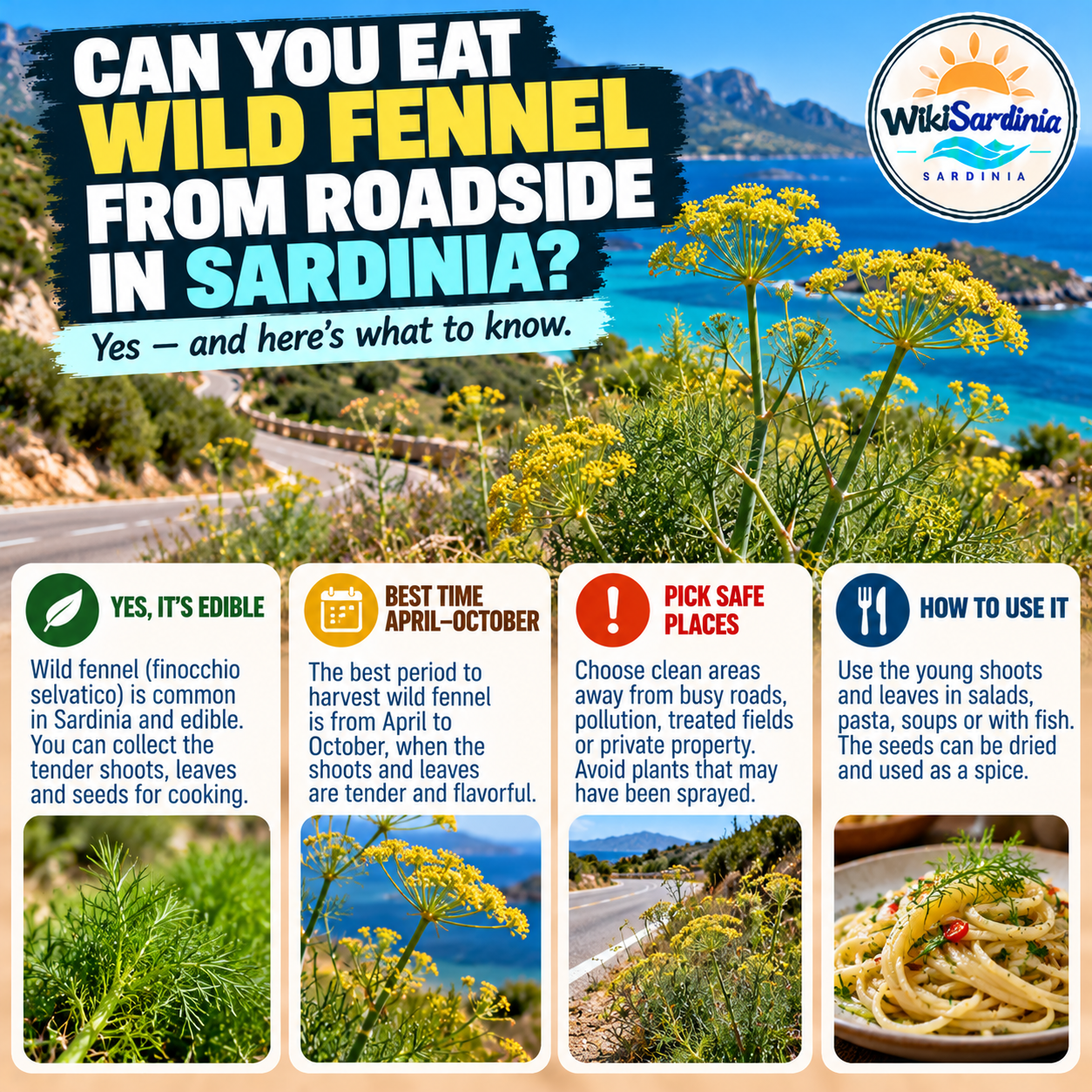
It is best to avoid plants growing immediately beside busy roads, car parks, industrial sites or land that may have been treated with herbicides or pesticides. Dust and contaminants can settle on vegetation, and washing cannot reliably remove every possible contaminant. Choose a clean, permitted location well away from traffic and ask locally if you are unsure whether the land has been sprayed or whether foraging is allowed.
When can you find wild fennel in Sardinia?
Wild fennel can be found through much of the year in Sardinia, but the best time depends on what you want to gather and on local weather. Tender shoots and leaves are generally most useful when young; flowers appear seasonally, and the seeds develop later. April to October can be a useful broad window in some places, but it is not a guarantee that every plant will be suitable throughout those months.
How is wild fennel used in Sardinian cooking?
The young leaves and tender stems can add a fresh, anise-like flavour to salads, vegetable dishes, soups and fish recipes. Flowering tops and seeds are used in some traditional preparations, including to flavour meat and other foods. Use only plant parts you have identified with confidence and follow a trusted recipe for the specific ingredient.
Be certain about identification
Wild fennel belongs to the carrot family (Apiaceae), which also includes some highly poisonous plants. Several species can look similar to an inexperienced forager, and smell or a quick glance is not enough to guarantee identification. If you are not completely sure, do not pick or eat it. Learn with an experienced local forager or a qualified botanist, and do not rely on an online photo alone.
Safe foraging checklist
- Avoid busy roads: choose clean sites well away from traffic, roadside drainage and car parks.
- Avoid treated land: do not harvest where herbicides or pesticides may have been used.
- Check permission: respect private property, protected areas and local collection rules.
- Identify carefully: never eat a plant unless you are certain of its identity.
- Wash thoroughly: rinse edible plant parts under clean running water, while remembering that washing does not make contaminated roadside plants safe.
- Harvest lightly: leave enough of the plant for wildlife and future growth.
The bottom line
Yes, wild fennel is edible and familiar in Sardinian cuisine, but the safest advice is not to collect it directly beside a road. Find a clean, permitted location, learn to identify the plant accurately and gather only what you can use. If you have any doubt about the plant or the site, leave it where it grows and buy fennel from a trusted local producer instead.