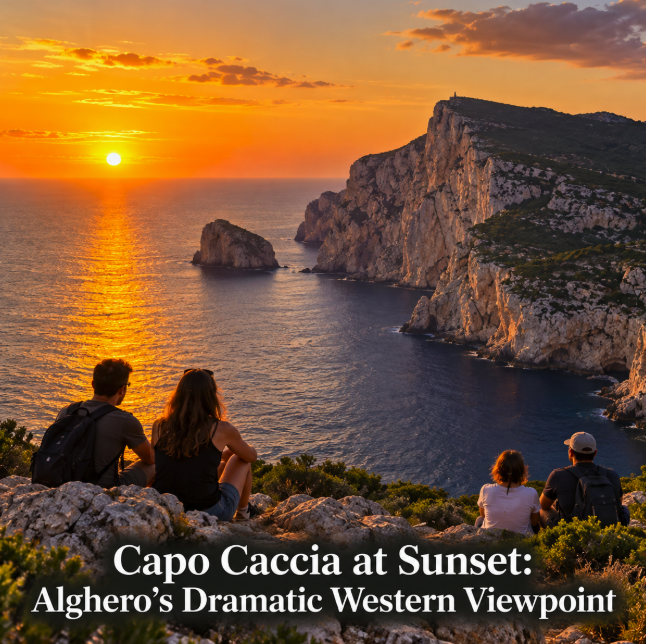
Capo Caccia is one of the most dramatic places to watch sunset near Alghero. The limestone headland rises above the open western sea, with the silhouette of Foradada offshore and the cliffs of the Capo Caccia–Isola Piana marine protected area dropping toward deep blue water. It is an easy sunset excursion from Alghero, but the best experience comes from treating the viewpoint as a separate outing rather than simply adding it to a late visit to Neptune’s Cave.
The key location to know is the Belvedere dell’Isola Foradada, the panoramic area overlooking the distinctive offshore island. Alghero Turismo uses this belvedere as a recognized meeting point for guided activities at Capo Caccia, confirming it as an established landmark rather than an unofficial roadside photo stop.
Why Capo Caccia works so well at sunset
Alghero faces the western side of Sardinia, so evening light is part of the landscape. From Capo Caccia, the view opens directly toward the Mediterranean rather than being enclosed by a bay or backed by the city.
Foradada gives the panorama its most recognizable feature. The rocky island is famous for the large natural opening through it, and Alghero Turismo’s descriptions of boat excursions around Capo Caccia specifically highlight the light effects around Foradada. As the sun lowers, the island and cliffs become silhouettes while the sea reflects the changing color of the sky.
The precise position of the setting sun moves through the year, so no viewpoint offers the exact same composition in every month. The spectacle is the broader combination of western horizon, limestone cliffs, open water and Foradada rather than a guaranteed alignment of the sun with the island’s opening.
Belvedere Foradada or the Neptune’s Cave entrance?
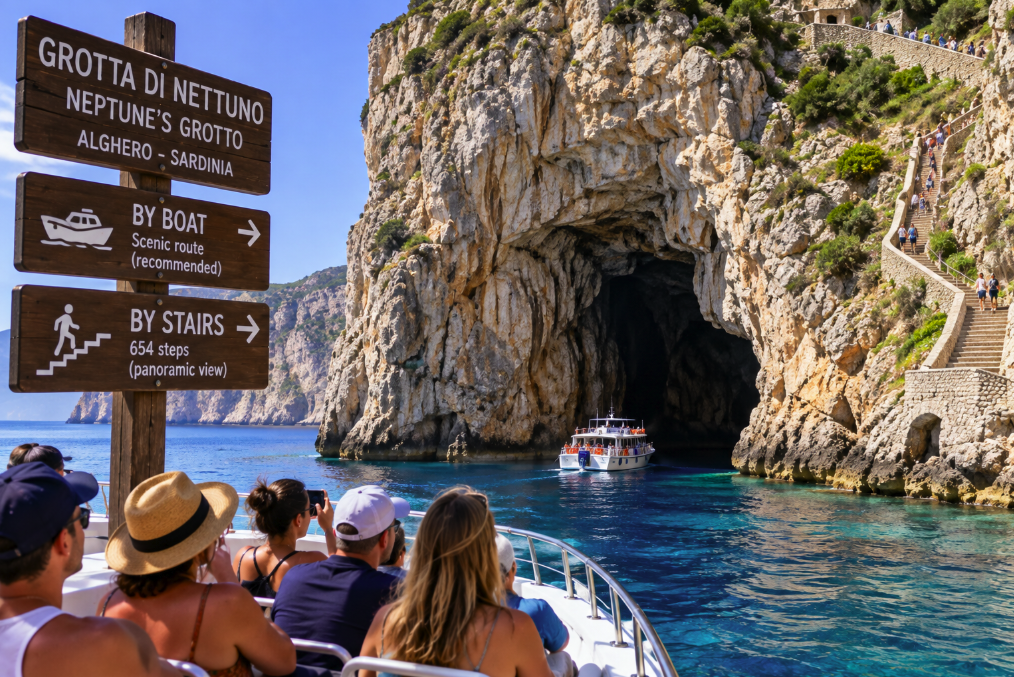
These are related but different experiences. The road ends near the land entrance to Neptune’s Cave, where the Escala del Cabirol descends the cliff in a long series of roughly 660 steps. This area offers impressive views, but a cave visit has its own timetable, reservation requirements and safety procedures.
The Foradada belvedere is better suited to the simple goal of stopping for the evening landscape. It gives you time to watch the light change without combining sunset with a rushed descent and climb from the cave.
If you want to do both on the same day, visit the cave first and leave enough time to return to the upper road area before sunset. Alghero Turismo currently lists Neptune’s Cave opening daily from 9:00, with the last tour at 19:00 through the end of September; later in autumn the last tour moves earlier. Land access via the Escala del Cabirol requires advance reservation through Alghero Experience.
Opening can also depend on weather and sea conditions. The official tourism information specifically advises checking the cave’s status on windy or bad-weather days.
How to reach Capo Caccia from Alghero
Capo Caccia lies northwest of Alghero at the far side of the Porto Conte area. Driving is the most flexible option for sunset because you can choose your arrival and departure time around the day’s light.
Public transport is possible. Alghero Turismo confirms that an ARST extra-urban bus operates throughout the year from the main terminal in Via Catalogna in Alghero toward Capo Caccia, with a journey of about 50 minutes. A private Beach Bus also operates seasonally from May to September.
For sunset, however, the outward journey is only half the problem. Always verify the final return bus for the specific date before relying on public transport. Sunset time changes considerably through the year, while bus schedules do not necessarily align with it.
When should you arrive?
Arrive at least 30 to 45 minutes before sunset if you want to enjoy the changing light rather than appear just as the sun reaches the horizon. On clear evenings, arriving about an hour early gives time to choose a safe position, photograph the cliffs and watch the colors develop.
Do not leave immediately after the sun disappears. The period just after sunset can produce softer pink, orange and violet light, especially when clouds catch the last illumination over the sea.
Because sunset changes daily, check the exact Alghero sunset time on the day of your visit rather than relying on a fixed time from a travel guide.
Wind can completely change the experience
Capo Caccia is exposed. A warm afternoon in Alghero can turn into a noticeably cooler and much windier evening on the headland.
Bring a light windproof layer even in summer, especially if you plan to remain after sunset. In spring, autumn and winter, a warmer layer is sensible.
Strong wind also changes the safety calculation. Stay well back from exposed cliff edges and do not climb onto unstable rocks simply to improve a photograph. The viewpoint is spectacular without taking risks at the edge.
What to combine with a sunset trip
Capo Caccia sits within a much larger landscape around Porto Conte. A full afternoon can include the beaches and coves around the bay, a visit to the wider natural park area, or Neptune’s Cave before ending at the viewpoint.
The Capo Caccia–Isola Piana Marine Protected Area also has a network of paths and panoramic routes. Alghero Turismo describes the territory as offering walking, cycling and other nature itineraries with numerous viewpoints.
For experienced visitors seeking something much more technical, the cliffs also host the Via Ferrata del Cabirol. This is not a casual sunset walk: Alghero Turismo lists it as a guided mountaineering-style route along exposed natural ledges, with specialist equipment and a duration of around four hours.
Is sunset visible from Alghero itself?
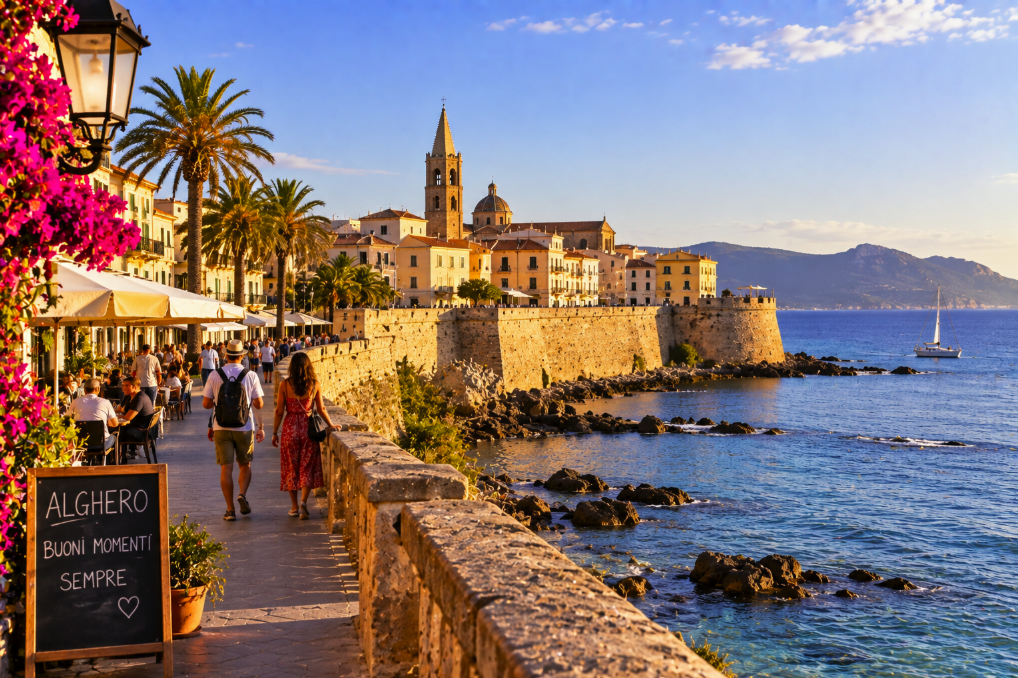
Yes, and this is one reason Alghero is so associated with evening light. From the city’s waterfront and surrounding coast, Capo Caccia itself becomes part of the sunset view. Alghero Turismo accommodation descriptions even highlight panoramas from town toward the promontory at sunset.
The difference is perspective. From Alghero, you see the distant profile of Capo Caccia across the bay. At Capo Caccia, you are standing inside the limestone landscape with open sea and Foradada immediately in front of you.
If you have only one evening and want restaurants and bars immediately afterward, staying in Alghero can be more convenient. If the sunset itself is the main event, the headland provides the more elemental setting.
A simple Capo Caccia sunset plan
Check the day’s sunset time and wind forecast, then aim to reach the Foradada viewpoint about an hour before sunset. Bring water, a windproof layer and shoes suitable for uneven rocky ground. Stay on safe, established areas rather than approaching exposed cliff edges.
If Neptune’s Cave is part of the day, book the land visit in advance and schedule it early enough that the 660-step return does not become a race against sunset. Remember that cave access can be suspended in adverse weather or sea conditions.
Then slow down. Capo Caccia is not a viewpoint that needs a complicated itinerary: the cliffs, Foradada and the western Mediterranean do most of the work. The best reason to come is simply to watch Alghero’s coastline change color as the day ends.