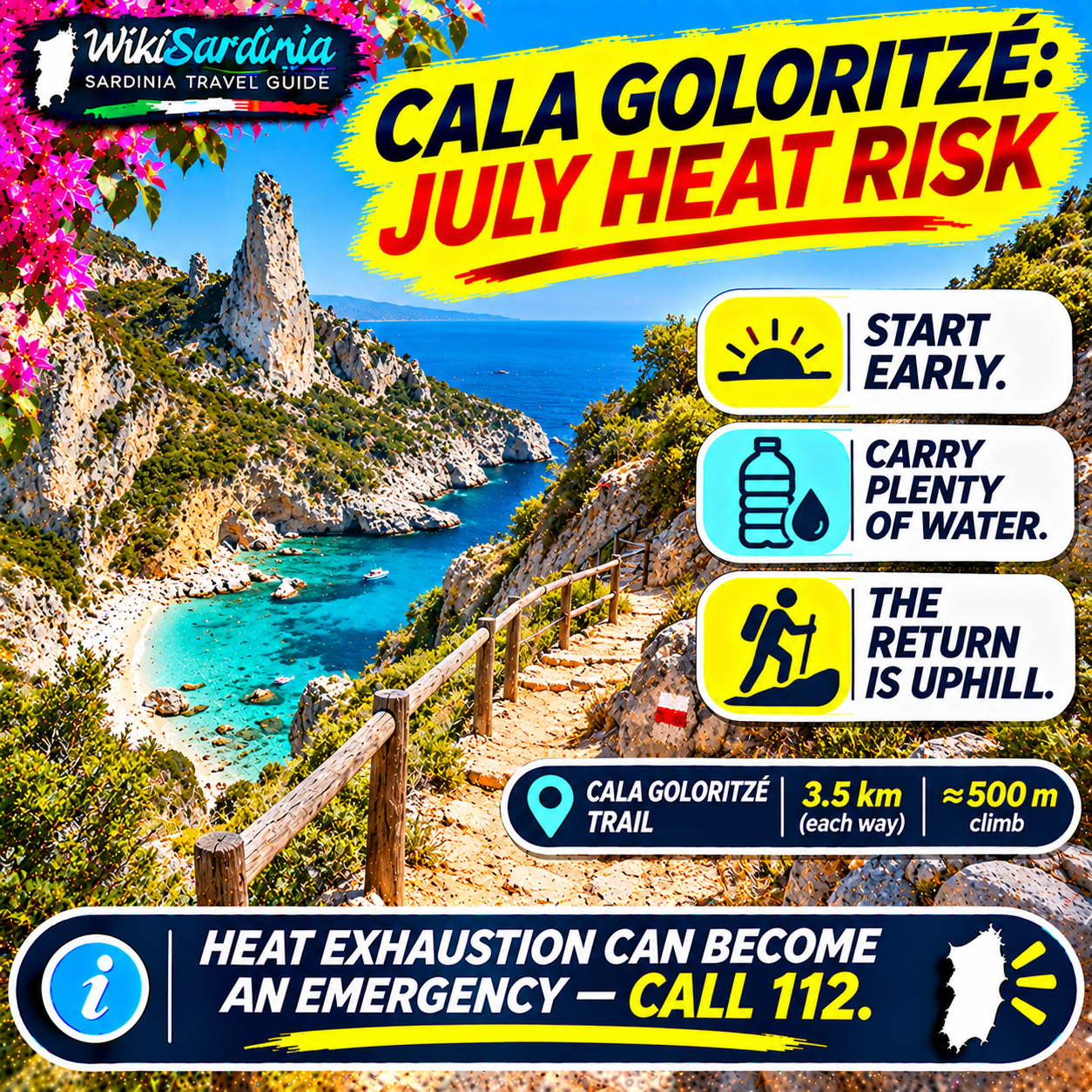
Yes. Heat exhaustion, dehydration and potentially life-threatening heatstroke are serious risks when hiking to remote Sardinian beaches in July. Cala Goloritzé is a particularly important example: the walk from Su Porteddu descends roughly 500 metres over approximately 3.5 km, so the harder uphill section comes after your beach visit, when you may already be tired and dehydrated. The official Baunei tourism service estimates around 90 minutes downhill and two hours uphill, recommends starting before 10 a.m., and requires closed shoes with good grip and adequate water.
Why is the return hike more dangerous in summer?
The route begins on the Golgo Plateau and descends to the coast. You must regain the elevation to reach your car. On a hot July afternoon, prolonged exertion, direct sunlight, accumulated fatigue and fluid loss can make the climb considerably more demanding than the outward walk. The route is not an ordinary stroll from a parking lot to a beach. Do not begin if the forecast, your fitness or a medical condition makes the trip unsafe.
How much water should I bring?
The local Baunei route information specifies at least two litres per person. Treat this as a minimum planning reference, not a guarantee that two litres will suffice for a full July outing. Hotter conditions, long beach stays, heavy sweating, individual health needs and slower hiking can require more fluids and suitable food or electrolytes. Do not drink excessively beyond thirst or ignore medical advice about fluid restrictions. Carry all the water you need for the descent, beach visit and ascent: there are no bars or shops on Cala Goloritzé beach.
When should I start and return?
The official tourism site recommends reaching the trailhead by 10 a.m. at the latest to reduce exposure during the hottest part of the day; an earlier start is generally preferable when permitted. Its published access information describes a 7:30 a.m. trail opening, afternoon trail-entry closure and beach departure by approximately 5 p.m. These access windows can change by season or management decision, and the latest permitted entry is not necessarily a safe starting time during extreme heat. Check the current rules before booking and plan the uphill return for the coolest practical permitted period.
Can I take a boat back if I am exhausted?
Do not plan on it. The official Baunei excursion guidance states that a return by boat is not permitted. Hikers must be capable of walking back up the trail. Emergency evacuation is a separate matter and must not be treated as a normal transport alternative. If you are unsure you can complete the ascent, choose a more accessible beach.
Do I need to book the hike?
Access to Cala Goloritzé is managed with reservations. The official Baunei page identifies the Heart of Sardinia app and website as booking channels, alongside municipal contacts. It has previously listed a €7 admission fee, a three-day booking window and specific seasonal access times; check the current season's rules rather than treating those figures as permanent. A confirmed booking does not make hiking safe during a heat warning.
What are the warning signs of dehydration and heat exhaustion?
According to the US Centers for Disease Control and Prevention, heat exhaustion can cause heavy sweating, thirst, weakness, dizziness, headache, nausea, irritability and reduced urine output. Stop exertion immediately, move to shade or a cooler place, loosen clothing and cool the body. If fully alert and able to swallow, take small, frequent sips of cool fluid. Do not continue climbing in the hope the symptoms will disappear. Seek medical evaluation, especially if symptoms are significant, worsening or not improving promptly.
How can I recognize heatstroke?
Heatstroke is a medical emergency. Warning signs include confusion, unusual behaviour, slurred speech, collapse, seizures or loss of consciousness. A person with heatstroke may be sweating heavily; dry skin is not required. Call 112 in Sardinia immediately. Move the person out of the heat if safe, begin rapid cooling with water, wet clothing, cold compresses or available ice packs, and follow emergency dispatch instructions. Do not give drinks to a confused or unconscious person. Do not delay cooling while waiting for rescuers. See the CDC's heat-health guidance.
What should I wear?
Wear proper closed-toe hiking footwear with grip, not flip-flops or flimsy beach sandals. Add a broad-brimmed hat, light breathable clothing, sunglasses and sunscreen. Bring a small first-aid kit, snacks, fully charged phone, offline map and a power bank. Carry a backpack that keeps your hands free on uneven terrain. The official route requires suitable closed footwear; beach shoes are not an adequate substitute for the climb.
Who should be especially cautious?
Children, older adults, pregnant visitors, people not acclimatized to Mediterranean summer heat and those with cardiovascular, kidney or other chronic illnesses may be more vulnerable. Certain medicines can affect hydration or heat tolerance. The CDC Yellow Book identifies dehydration, exertion, age and medical conditions as risk factors. Ask a clinician about individual restrictions if relevant. Even fit, healthy hikers can develop heat illness.
What if there is a heatwave or extreme-heat warning?
Check the latest local forecast and official civil-protection warnings before leaving. On extreme-heat days, postpone the hike rather than assuming an early start makes it safe. Temperatures can vary by terrain, and reflected heat from pale rock can increase discomfort. An admission reservation or a short holiday schedule is not a reason to ignore a dangerous forecast.
Will my phone work on the trail?
Coverage may be patchy, and a smartphone should not be your only safety plan. Download maps, save the trailhead and route details, tell someone when you expect to return and stay on the marked path. For an emergency, dial 112 and provide your position, nearest trail marker or GPS coordinates if available. If there is no signal, seek help without exposing yourself or others to further danger.
Are there food, water or shade facilities at the beach?
Do not count on drinking-water taps, cafés, shops or a staffed first-aid station. The local Cala Goloritzé visitor information says there are no bars or shops on the beach. Shade from cliffs changes throughout the day and should not be relied upon as continuous shelter. Bring food and water, and take all rubbish back with you.
What if I feel unwell halfway up?
Stop immediately, seek shade, cool down and assess whether you can safely continue. Tell your companions and do not separate unnecessarily. If symptoms are severe, you cannot walk safely, or anyone becomes confused or collapses, call 112. Do not force an ill person to climb or descend farther without professional advice. Give rescuers the trail name, your approximate location and number of people affected.
Is July the best month for this hike?
July offers long daylight hours and warm sea temperatures, but it also increases the risk of heat exposure. Spring and autumn can be more comfortable for hiking, subject to weather, daylight and access rules. If you are primarily seeking a beach day rather than a demanding trek, consider a beach with easier road access. The safest itinerary is one suited to your group's abilities and the conditions on the day.
Useful Italian phrases
“Mi sento svenire.” — I feel faint. “Ho un forte capogiro.” — I am very dizzy. “Abbiamo finito l'acqua.” — We have run out of water. “Una persona è confusa e sta male per il caldo.” — Someone is confused and unwell from the heat. “Siamo sul sentiero di Cala Goloritzé.” — We are on the Cala Goloritzé trail. “Mandate soccorso, per favore.” — Please send help.
July hiking checklist
- Check the heat forecast and postpone during extreme conditions.
- Reserve through an authorized Cala Goloritzé channel and verify current trail access times.
- Start early and plan the return ascent carefully.
- Carry at least the locally recommended two litres of water per person, adjusting upward to your needs and conditions.
- Bring food, sturdy closed shoes, sun protection and a charged phone with offline maps.
- Remember there is no routine boat pickup from the beach.
- Recognize heat-exhaustion symptoms; call 112 immediately for confusion, collapse or other heatstroke signs.
The WikiSardinia takeaway
Heat illness is a genuine safety concern on the Cala Goloritzé hike in July, particularly during the uphill return. This beautiful route requires preparation, enough water, appropriate footwear and a realistic assessment of the weather and your fitness. Do not underestimate the climb because the beach is only a few kilometres away. If someone shows signs of heatstroke, call 112 and begin cooling immediately.