You're packing for a summer trip to Sardinia and wondering whether to squeeze sunscreen into your luggage or buy it after landing. Are beachside shops dramatically more expensive, and could you save money by bringing a bottle from home?
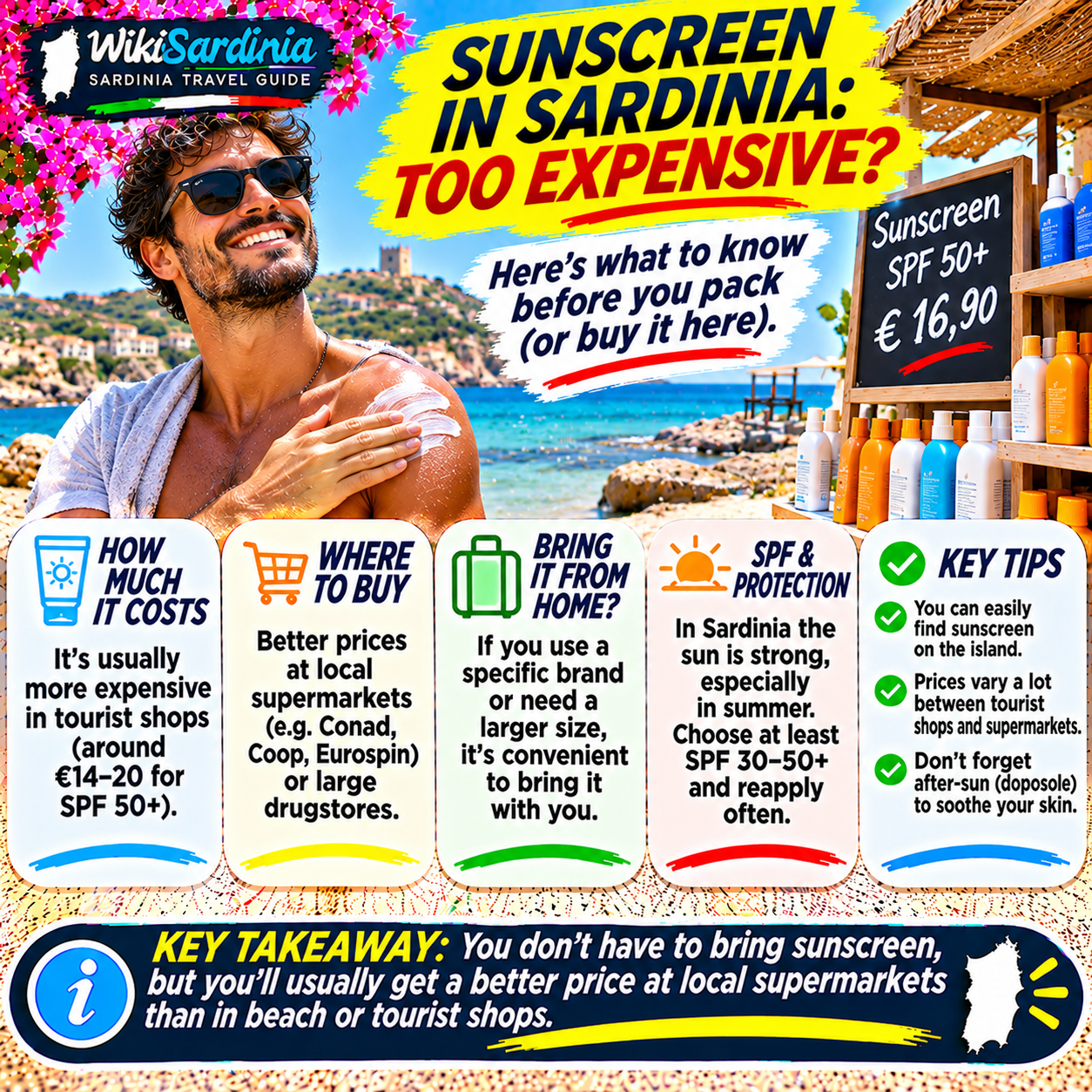
You can readily buy sunscreen in Sardinia, but prices vary by retailer, brand, bottle size and location. Tourist-oriented shops near popular beaches may prioritize convenience and offer a narrower selection, while supermarkets, pharmacies and parafarmacie give you other options to compare. There is no reliable island-wide price comparison showing that every tourist shop is significantly more expensive. The best approach is to bring enough sunscreen for your first day and shop locally if you need more.
Is sunscreen extremely expensive in Sardinia?
Not necessarily. Some premium sun-care products cost more than basic supermarket options, and a small convenience shop may have fewer promotions or sizes to choose from. However, a price tag alone is not enough to compare products: SPF, bottle volume, water resistance and formulation all matter. Rather than relying on a fixed euro estimate that may be outdated, compare the price per 100 ml for products that meet your needs.
Where can I buy sunscreen?
Look for crema solare or protezione solare in supermarkets, pharmacies (farmacie), para-pharmacies (parafarmacie), cosmetics shops and many seasonal beach retailers. Larger towns may have more brands and pack sizes, while small villages and isolated beaches can offer fewer choices. Check opening hours if you arrive on a Sunday or public holiday. Buying before heading to a remote beach is sensible because a kiosk or bar may not stock the product you want.
Should I bring sunscreen from the United States?
Bringing your usual sunscreen can be helpful if you have sensitive skin, allergies, a preferred formula or a specific product recommended by your dermatologist. It also means you are protected on arrival without shopping first. But there is no general need to bring your entire holiday's supply: suitable sunscreens are sold throughout Italy. Check your airline's current hand-luggage liquid restrictions before flying, especially if you are carrying a large bottle.
What SPF should I choose?
For outdoor holidays, choose a broad-spectrum sunscreen with SPF 30 or higher, applying enough to all exposed skin. SPF 50 or 50+ may be a sensible choice when you expect long periods outdoors, but no sunscreen blocks all ultraviolet radiation. In the European Union, look for UVA protection information on the label as well as the SPF rating. Combine sunscreen with shade, clothing, a hat and sunglasses rather than relying on a bottle alone.
Is Sardinia's sun stronger than at home?
UV exposure depends on the season, time of day, cloud cover and other factors, not simply on being in Sardinia. Summer beach days can involve substantial UV exposure, including reflected light from sand and water. Sunburn can occur even when a sea breeze makes the air feel comfortable. Check the local UV index and take extra care during high-exposure hours.
How often should I reapply sunscreen?
Follow the product label. A common recommendation is to reapply at least every two hours while outdoors and after swimming, sweating heavily or towel-drying, even when a product is described as water resistant. Apply sunscreen before sun exposure according to its instructions, and use enough to cover the skin evenly. Water resistance does not mean waterproof.
Are Italian sunscreens different from US products?
Products sold in Italy are regulated under European rules, and the available UV filters, packaging and label terminology may differ from products sold in the United States. You can still choose products by SPF, UVA protection, water resistance, skin compatibility and expiry date. If you need a particular ingredient or fragrance-free formula, read the label carefully or ask a pharmacist.
What if I have sensitive skin or children?
For sensitive skin, choose a product suited to your needs and avoid ingredients that have previously caused reactions. For children, combine suitable sunscreen with protective clothing, shade and breaks from direct sunlight. Babies and very young children need additional sun-exposure precautions; ask a pediatric healthcare professional for age-appropriate advice. If a product causes irritation, stop using it and seek advice when necessary.
Can I use last summer's sunscreen?
Check the expiration date and the period-after-opening symbol, and follow storage instructions. Sunscreen left in a hot car or exposed to prolonged heat may not remain in optimal condition. If the product has changed texture, smell or appearance, replace it. Store sunscreen in the shade rather than leaving it in direct sunlight on the beach.
How can I avoid overpaying?
Compare a few retailers in the town where you are staying, especially if you need several bottles for a family. Look at the price per 100 ml, not only the shelf price, and check whether the product has the SPF, UVA coverage and water resistance you need. Buying a familiar product before visiting a remote beach can save time and reduce the temptation to accept the only available option at an inconvenient price.
Useful Italian phrases
“Avete una crema solare SPF 50?” means “Do you have SPF 50 sunscreen?” “È resistente all'acqua?” means “Is it water resistant?” “Quanto costa questa confezione?” means “How much does this bottle cost?” “Avete una crema senza profumo?” means “Do you have a fragrance-free sunscreen?” And “Dove posso comprare la protezione solare?” means “Where can I buy sunscreen?”
The WikiSardinia takeaway
You do not need to bring every bottle of sunscreen from home to enjoy Sardinia. Pack enough for your first beach day, then compare suitable products in local supermarkets, pharmacies and other shops. Prices vary, so avoid assuming every tourist retailer is overpriced. The most important purchase is a sunscreen you will use correctly, alongside shade and protective clothing.